Alexander MacKenzie (1813-1875)
By Gary Nisbet
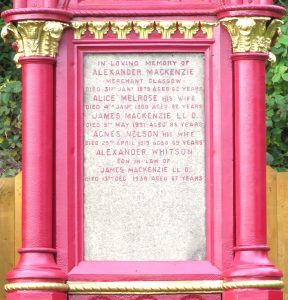
Alexander MacKenzie was a ‘manufacturer of art furniture’ and the owner of Alex. MacKenzie & Co., a long-forgotten firm specialising in wood products, such as parquet and wood mosaic flooring and venetian blinds, as well as being upholsterers, carvers and gilders, and carpet warehousemen and general house furnishers. He also had another business interest in the world of ‘art manufacture’, as a co-owner of George Smith & Co.’s Sun Foundry in Glasgow. This firm, unlike his other, now long forgotten decorating business, is legendary for its products in cast iron, such as MacKenzie’s own monument in the Necropolis. This has just recently been restored after decades of standing derelict. Images below illustrate the monument’s appearance before-and-after its restoration. A separate article regarding the monument’s history and restoration can be found here.
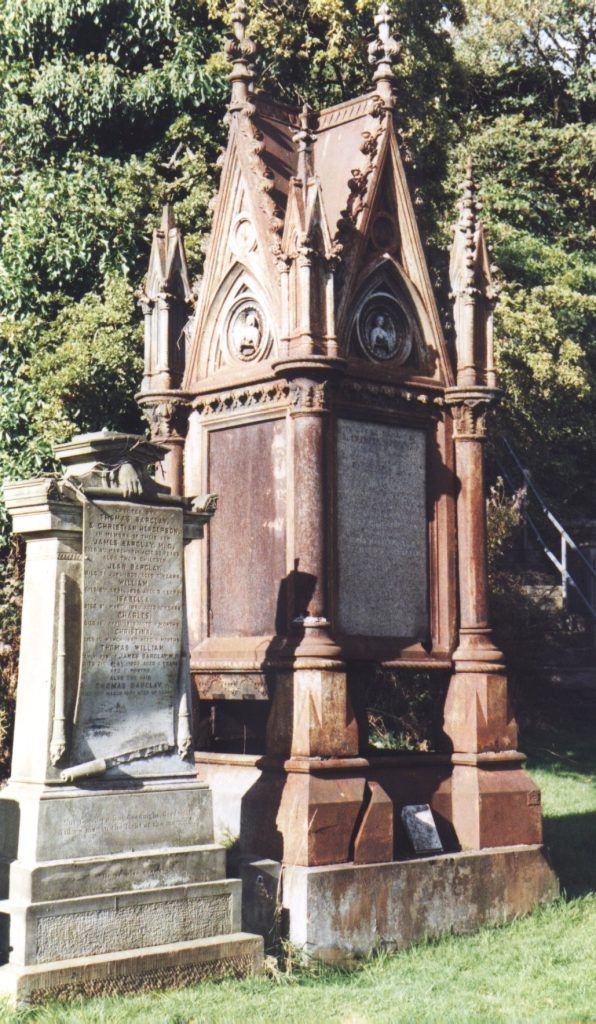
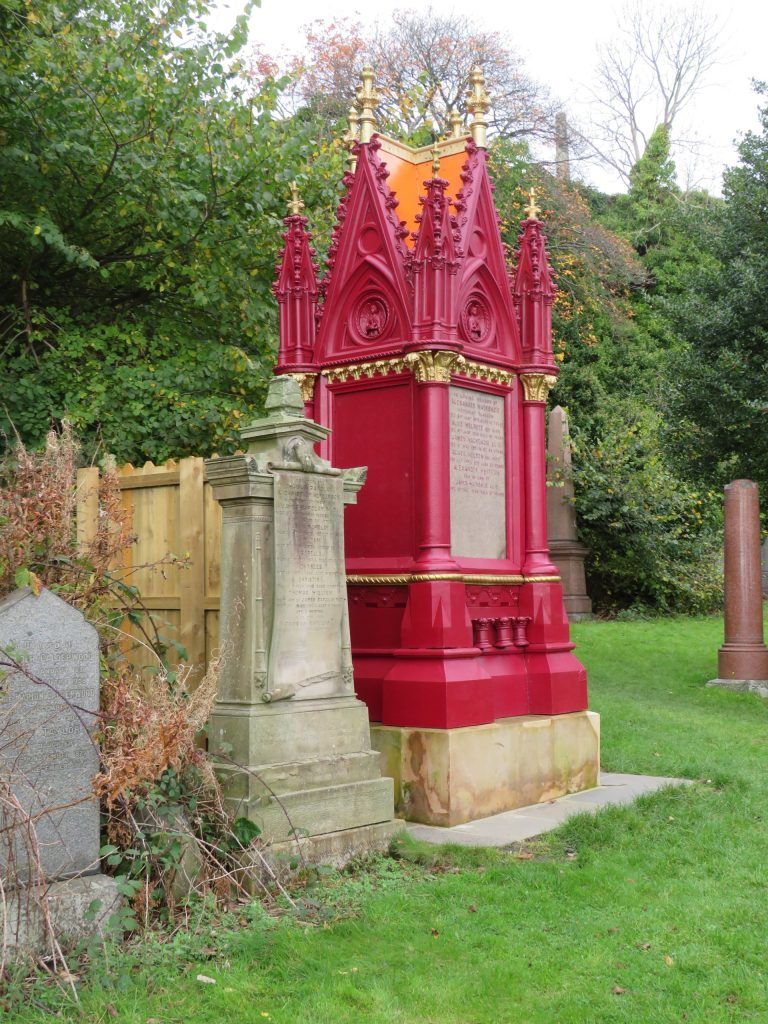
The MacKenzie Monument’s appearance before and after its restoration
MacKenzie was born in Cambusnethan, North Lanarkshire, on 11 Jan 1813. His parents were Alexander MacKenzie and Mary Smith, who married on 21 August 1808 in Hamilton, South Lanarkshire. Little is known about his early life and how he became involved in the woodwork and iron businesses that made his fortune. It is possible that his father was a woodworker and that he trained as a carver with him before moving to Glasgow to set up his own woodworking business. It was not until much later that he got involved with the Sun Foundry, by which time decorative cast iron as a building and decorative material had become extremely popular as the Industrial Revolution forged-on throughout the 19th century. Wood was an integral part of the manufacturing process for the foundry’s decorative ironwork, as every pattern or element of their products was first carved in wood, and firms like MacKenzie’s and others, such as Wylie & Lochhead were training grounds for the highly skilled pattern makers and carvers that these new ‘artistic foundries’ needed for their own products.
Alex. Mackenzie & Co. was his oldest and most profitable business concern, and lasted long after his death until the 1890s. With its main office and showroom at 87 and 89 Buchanan Street, and a steam powered factory at 165 North Street, the firm was founded around 1842, when he was in partnership as McKenzie (sic) & Crawford. Their partnership ended around 1852, after which he was joined by his own son, Alexander, and another gentleman, William Miller, who specialised in fine wood carving. Their work was of the highest quality and aimed at the quality clientele who could afford to purchase it. They also kept abreast with popular fashion and produced Japanese screens and Venetian glass items when they became all the rage in the 1880s. During the 1888 Glasgow International Exhibition held in Kelvingrove Park, the firm exhibited ‘Spanish and Hungarian bed-room furniture [and] a very elegant sideboard’. At the same time, they also provided the wood panelling for the Mahogany and Octagonal Salons in Glasgow’s newly built City Chambers, which increased the firm’s reputation considerably. They were also linked with many of the city’s great architects, for whom they produced all manner of finely carved woodwork for their projects. When the firm’s lease expired in 1891, they sold off an ‘Exhibition Axminster carpet woven in one piece’, and ‘Overmantels that were £24 for £12’. MacKenzie’s partner, William Miller, carried on the business alone as the ‘Charing Cross Cabinet Works’ during the 1890s, advertising ‘Architectural woodwork’ and ‘artistic carving’ as his specialities.
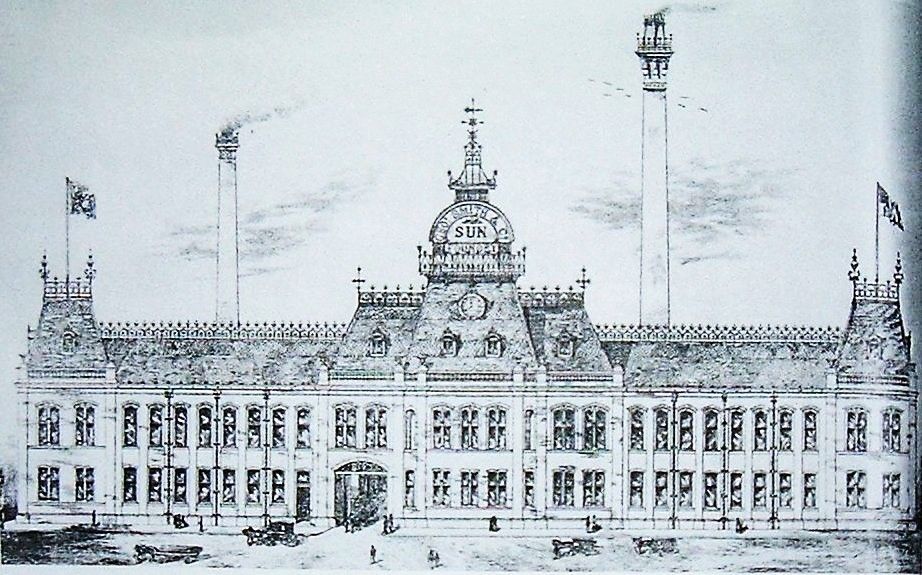
MacKenzie’s involvement with the Sun Foundry started in 1857 or so when it was first founded by George Smith and his two brothers. MacKenzie acted as its main financier then and for the rest of his life and after it, through a trust fund, until the foundry closed down in 1899. It is not known for sure whether MacKenzie or Miller had any practical or artistic input to the Sun Foundry and the design and making of its early patterns. However, they would certainly have approved of the results of the foundry’s highly attractive products, and both men were to witness the arrival of some the foundry’s most famous structures both in Glasgow and throughout the rest of the U.K. and abroad.
The Sun Foundry drinking fountain outside Alexandra Park, Glasgow, c. 1870s
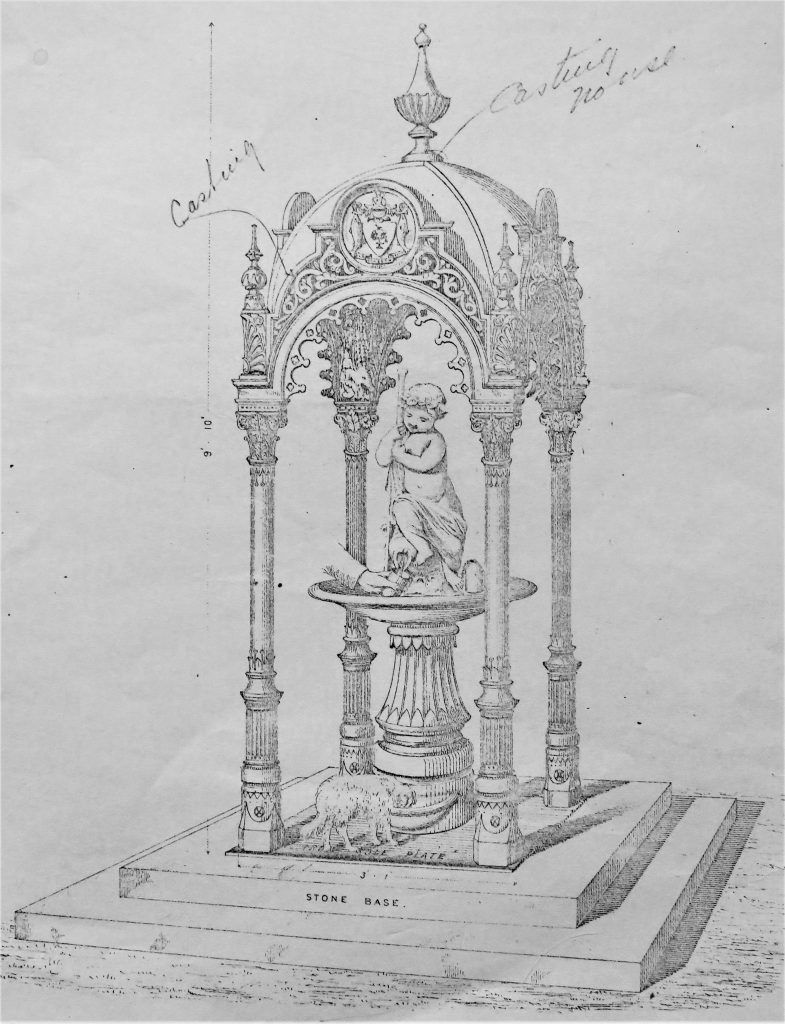
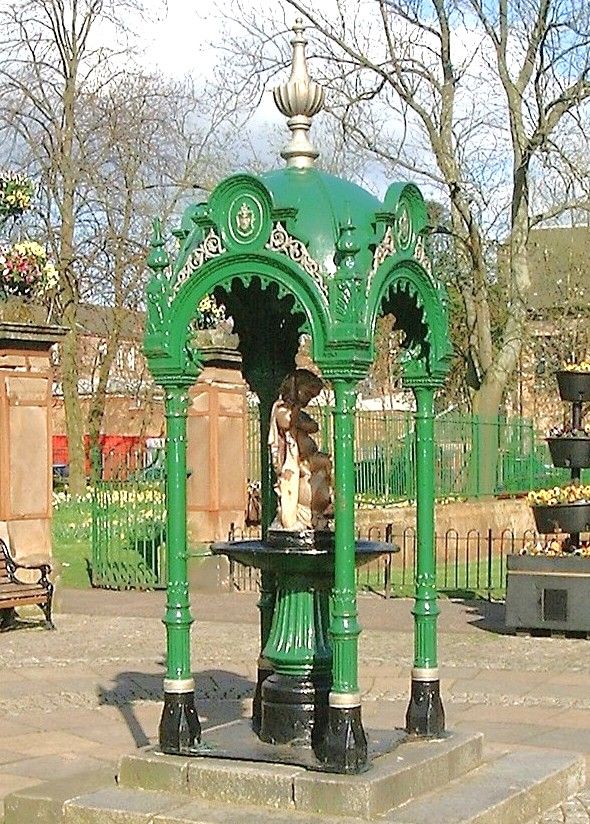
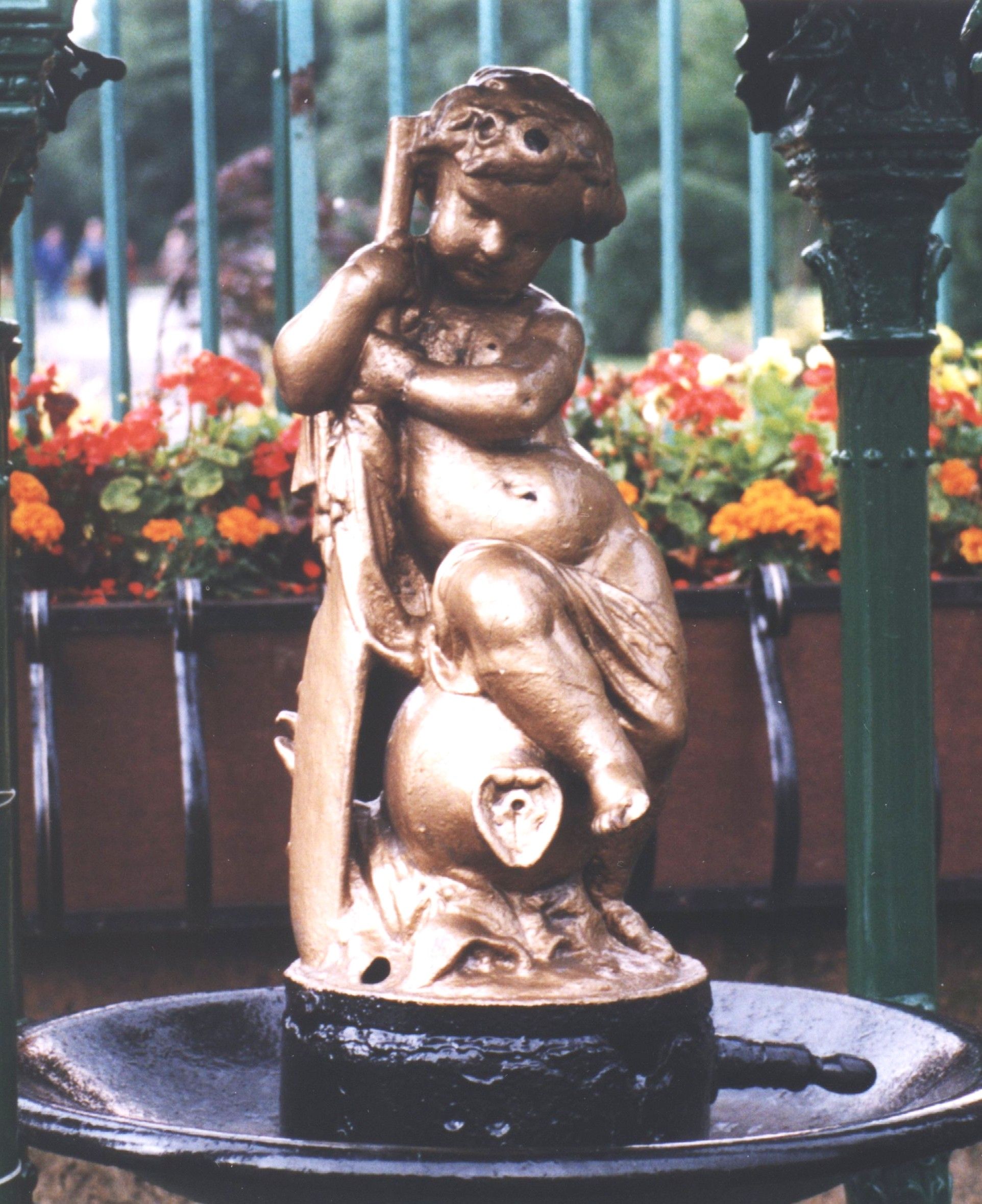
Although nominally a ‘silent’ partner in the foundry and generally forgotten today, the products that he financed are now much sought after by historians for cataloguing and restoring some of the finest examples of Scottish ironwork in existence today. These include many of the canopied drinking fountains that were once dotted around Glasgow and other towns and cities, with their distinctive ‘Boy with Paddle’ sculpture above their central wells. The firm was also responsible for the colossal Bridgeton Cross Tramway Shelter, which has recently been restored to its original 1875 condition. There are also many superb examples of their work outside Glasgow, such as the Grand Fountain in Paisley’s Fountain Gardens, of 1867, with its extraordinary display of cherubs, alligators and full-size walruses; and the similar but far-more restrained ‘Lochwood Water Scheme Fountain’ in Dumfries High Street, of 1882.
Sun Foundry products ranged from splendid public fountains to smaller utilitarian objects, such as lamp standards
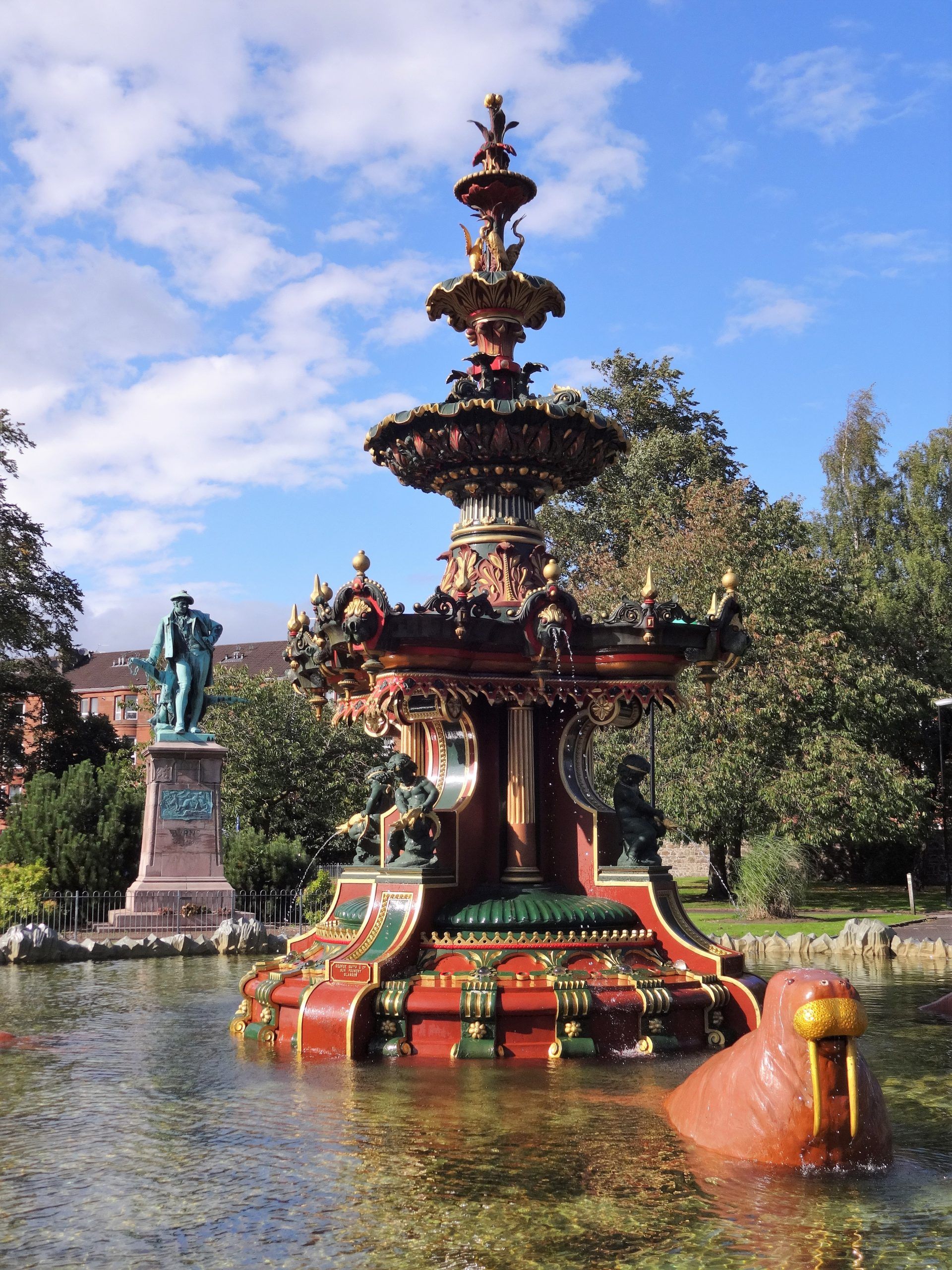
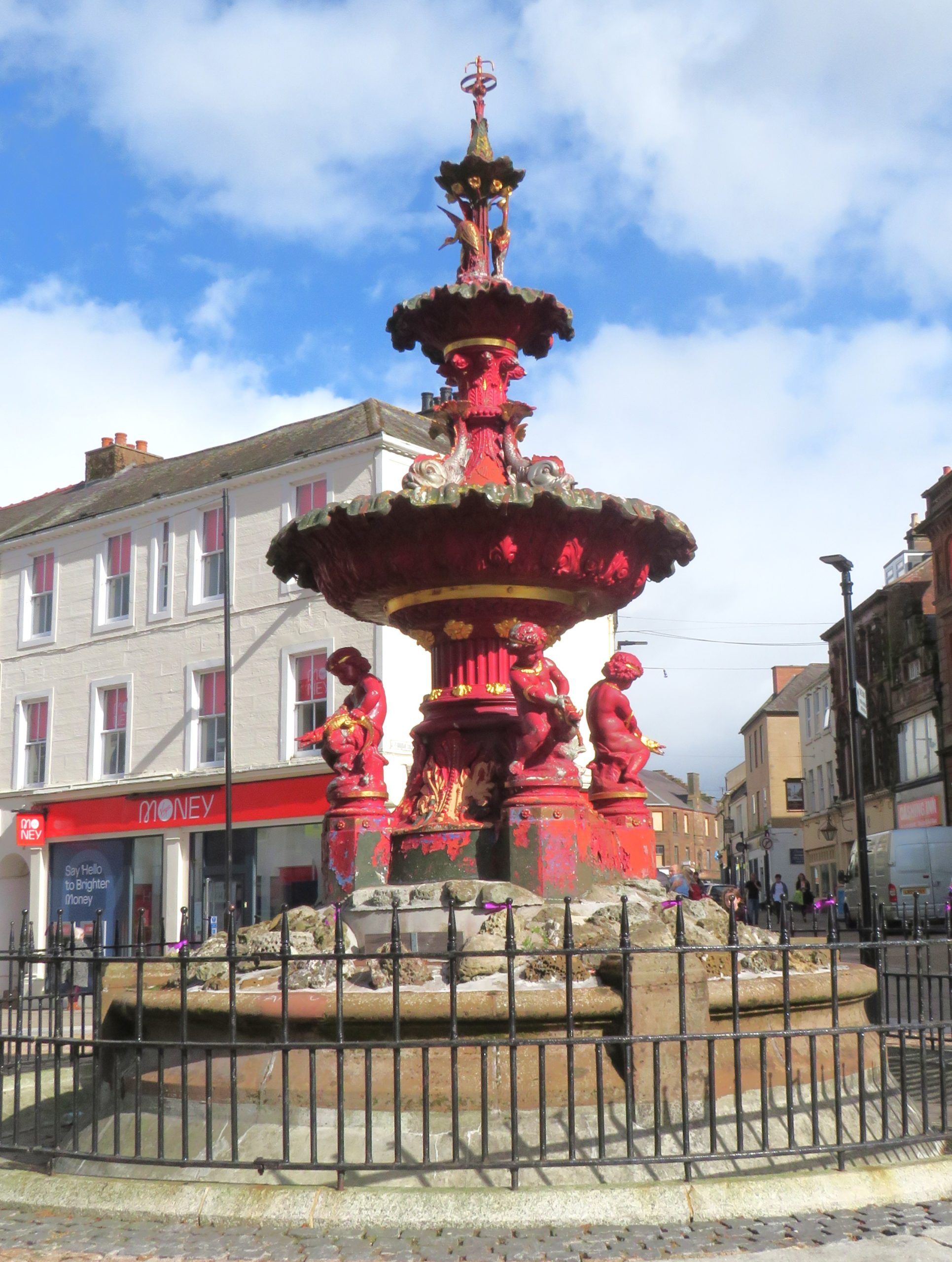
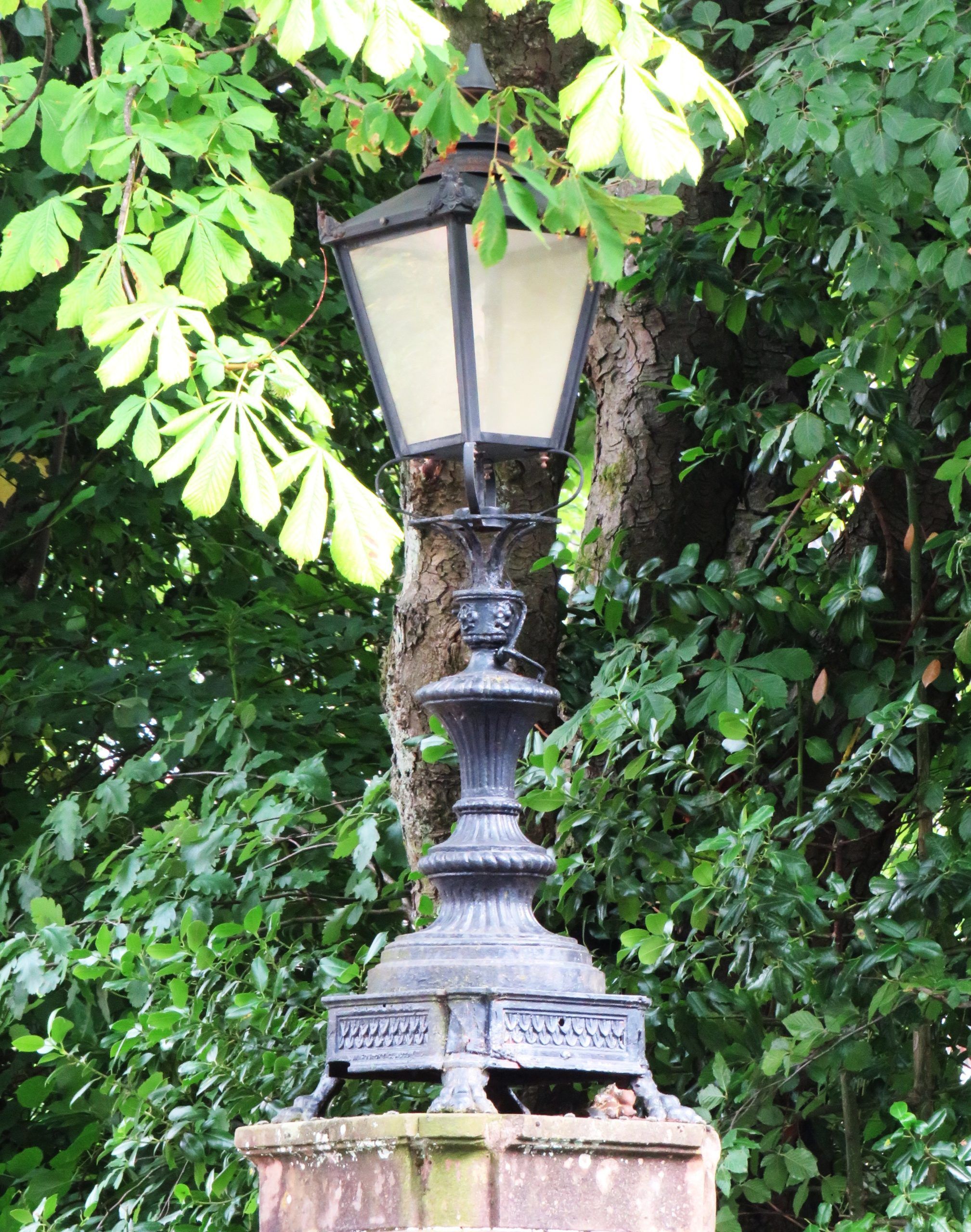
Sun Foundry products ranged from splendid public fountains to smaller utilitarian objects, such as lamp standards. Left, Grand Fountain, Paisley. Centre: Lochwood Water Scheme Fountain, Dumfries. Right: Gas lamp, Glasgow.
Their other products, such as fancy architectural crestings and finials, ornamental gates, lamp standards, grave markers and anything else that one can think of that could be produced accurately and artistically in cast iron, are ubiquitous and virtually inescapable in Scottish towns and cities. This is because they were mass-produced, hugely popular, and became part of the built fabric in the Victorian era and still survive today, not only as a reminder of how important the work of the Sun Foundry and its rivals were at the time, but also of the great contribution to Scottish culture in general that they made with products of great artistic and practical value to the wider population.
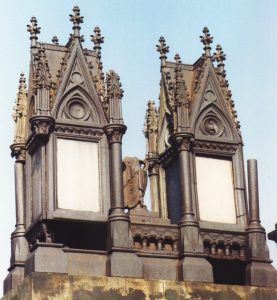
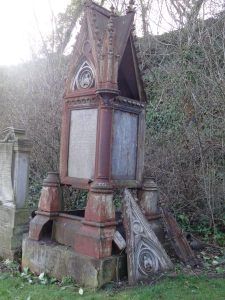
Based in Kennedy Street and Parliamentary Road in Townhead in the North of Glasgow, the Sun Foundry was a rival to Walter Macfarlane & Co.’s Saracen Foundry in Possilpark, McDowall & Stephen’s Milton Foundry in Port Dundas, and the Lion Foundry in Kirkintilloch, all of whom also produced similar structures to their own patterns or copied each-others’. Together with the Sun Foundry, they make up the most celebrated quartet of major decorative ironwork manufacturers in the West of Scotland, and indeed the world.
The time in which they operated in was a golden age for the industry and this is possibly referred to in the recent restoration of Alexander MacKenzie’s monument in the Necropolis and its splendid, almost celebratory, new livery of gold, red and orange paint. As with all Sun Foundry products, it is identified with their trademark, and the monument itself is a giant 3-D advert for their wares. It would also seem that an oblique reference is made to MacKenzie’s other career as a furniture manufacturer in its cabinet-like form and elaborate Gothic-style ornament.
Examples of Sun Foundry cemetery monuments:
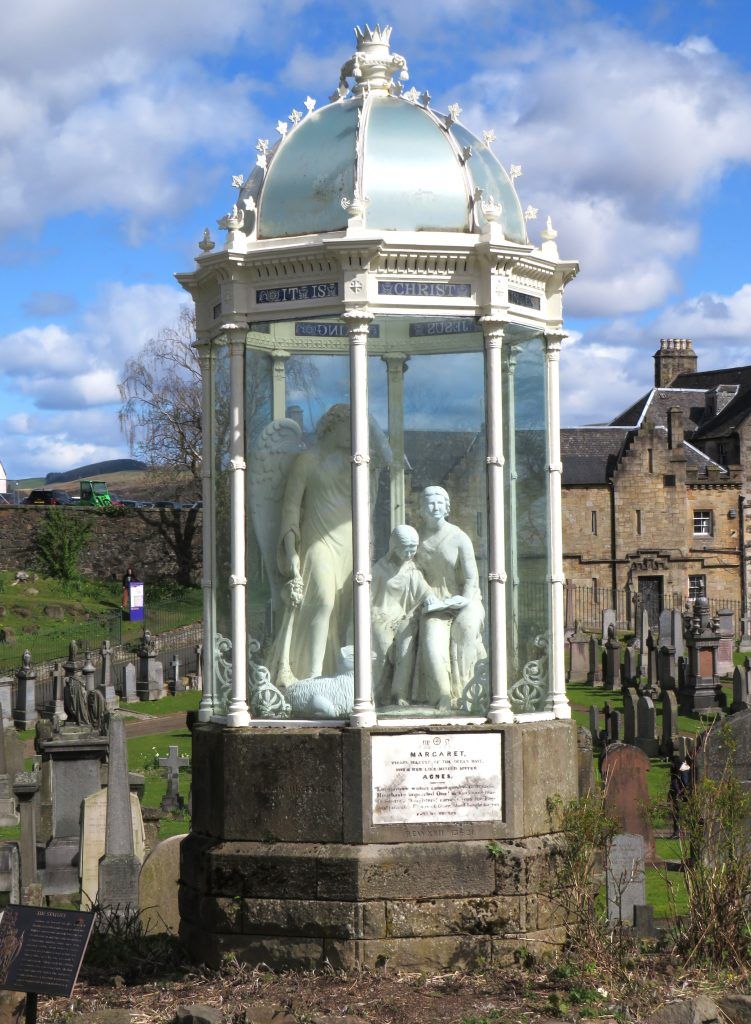
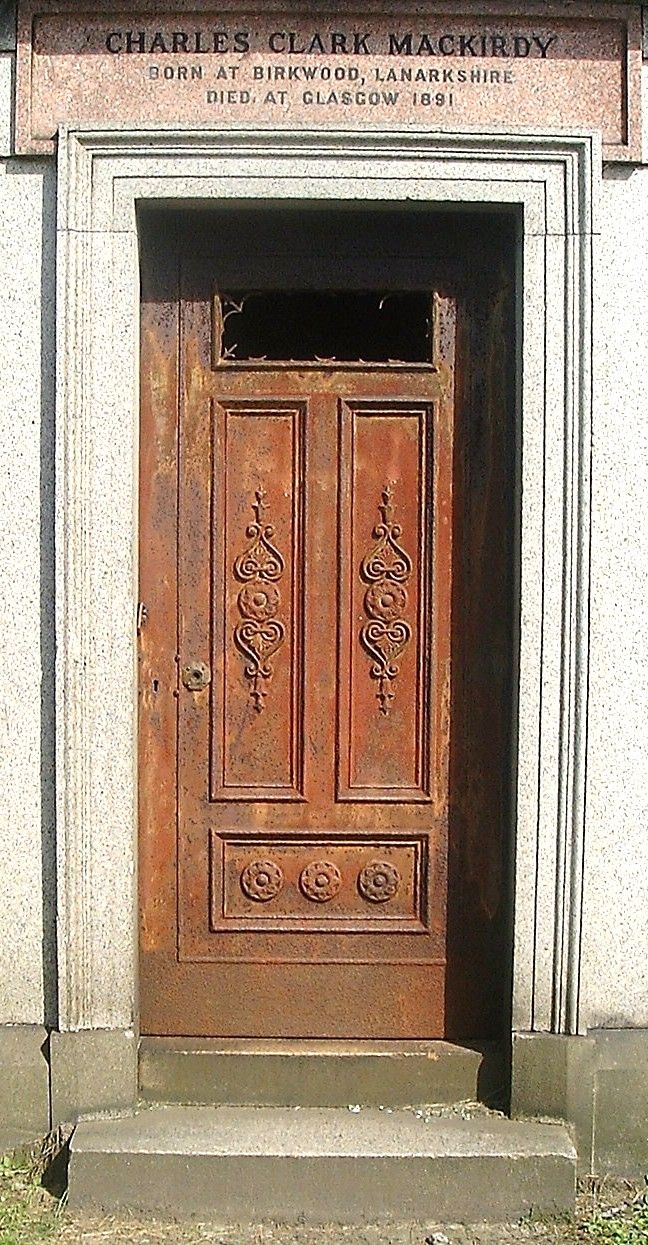
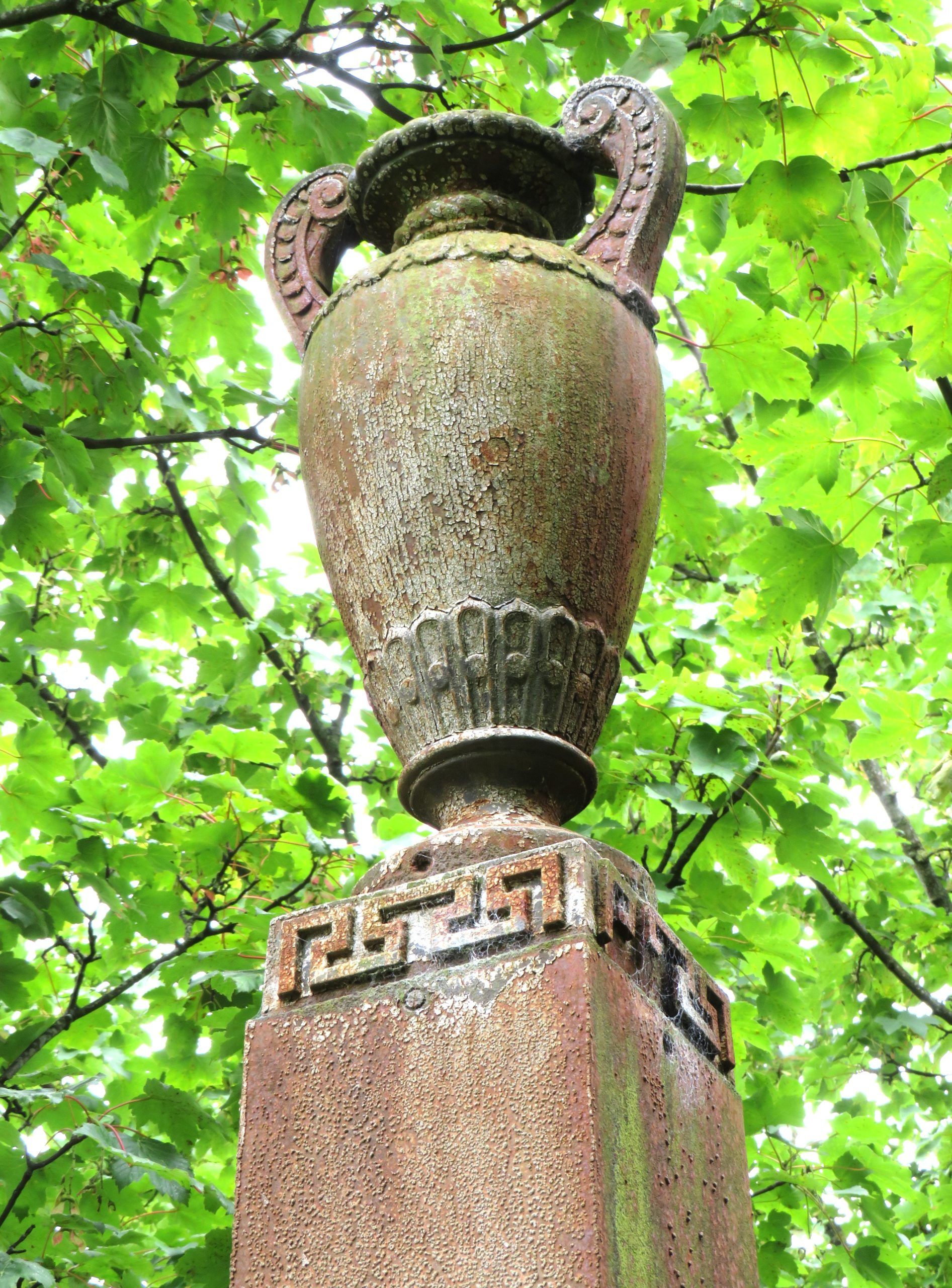
MacKenzie was also a politician and became the city councillor for the Tenth Ward (Anderston and City) in 1873. He died two years later, after a short illness, on Sunday, 31 January 1875, aged 62, at his home at 8 Belhaven Terrace in Glasgow’s Great Western Road. His wife, Alice Melrose, also died at their home, but much later, on 4 January 1900, when she was 82. Their names are inscribed on the monument’s front panel, together with those of four other family members who were interred in the lair in subsequent years. These were his brother David’s son, James Mackenzie, a lawyer by profession, who died aged 85, on 9 May 1931; his wife, Agnes Nelson, who died at her home, 3 Queen’s Gardens, Dowanhill, on 29 April 1919, aged 69; and their son-in-law, Alexander Whitson (also a lawyer), who joined them on 13 December 1936. Whitson died in a nursing home in Glasgow at the age of 67.
Alexander MacKenzie’s monument in the Necropolis
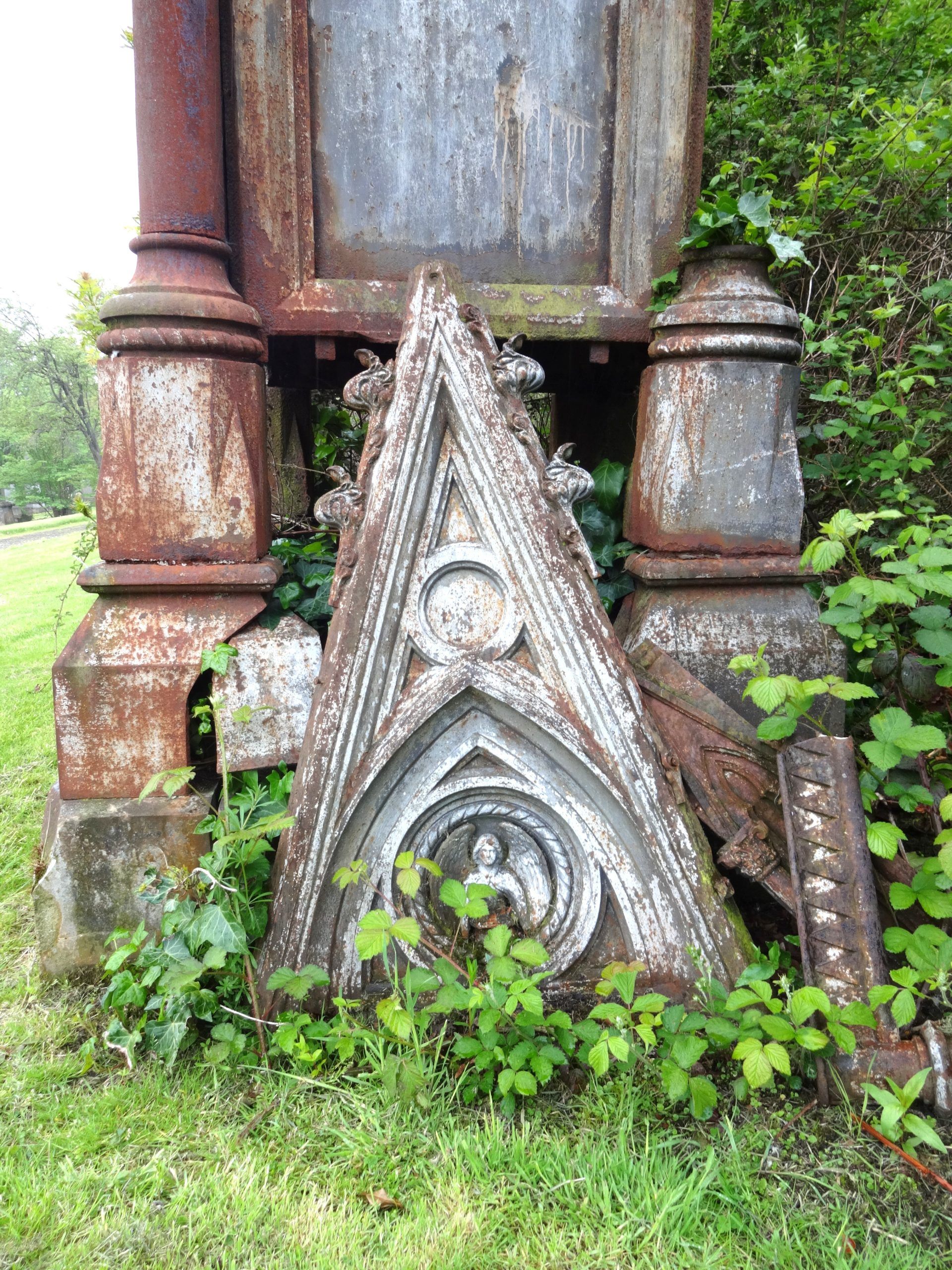
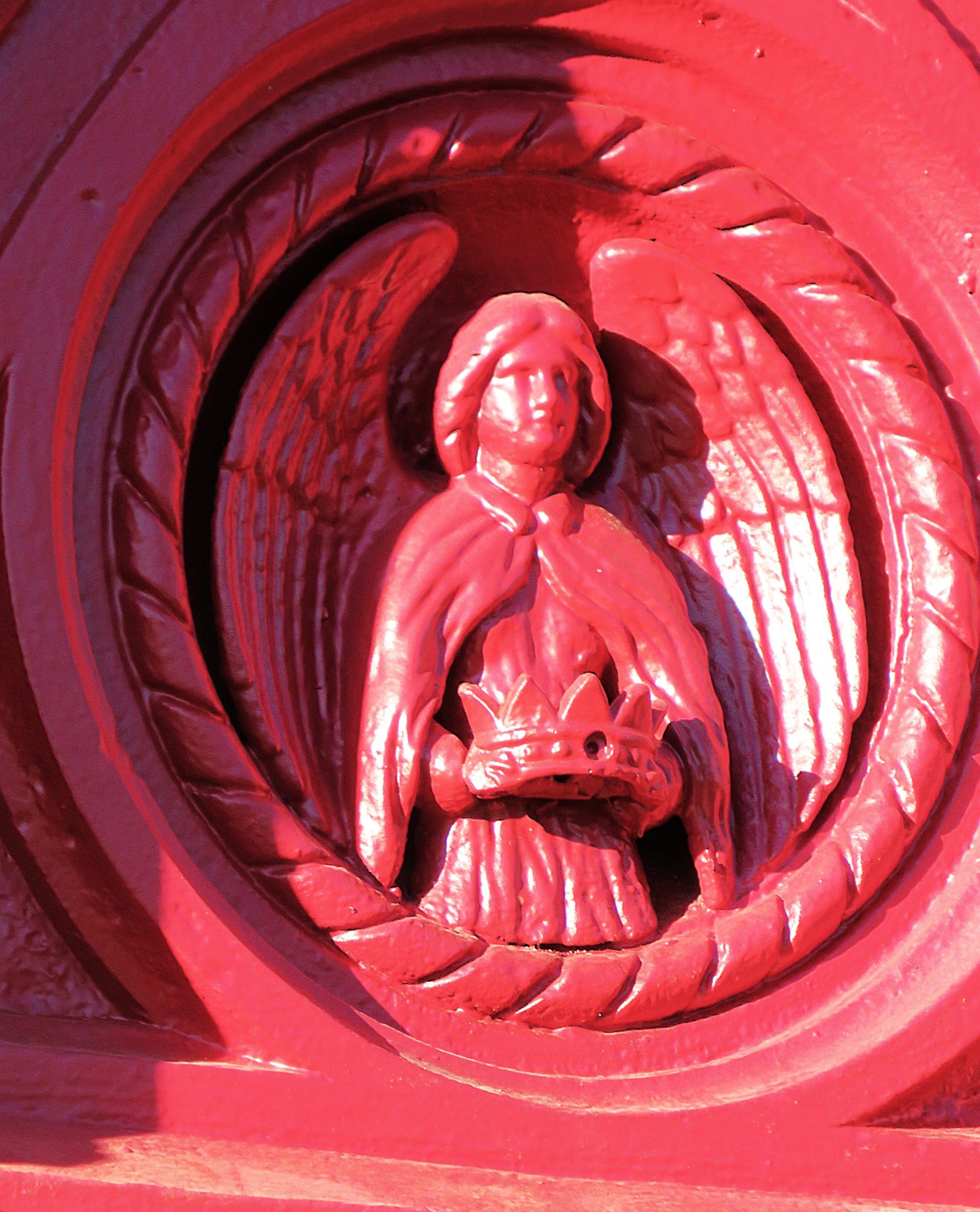
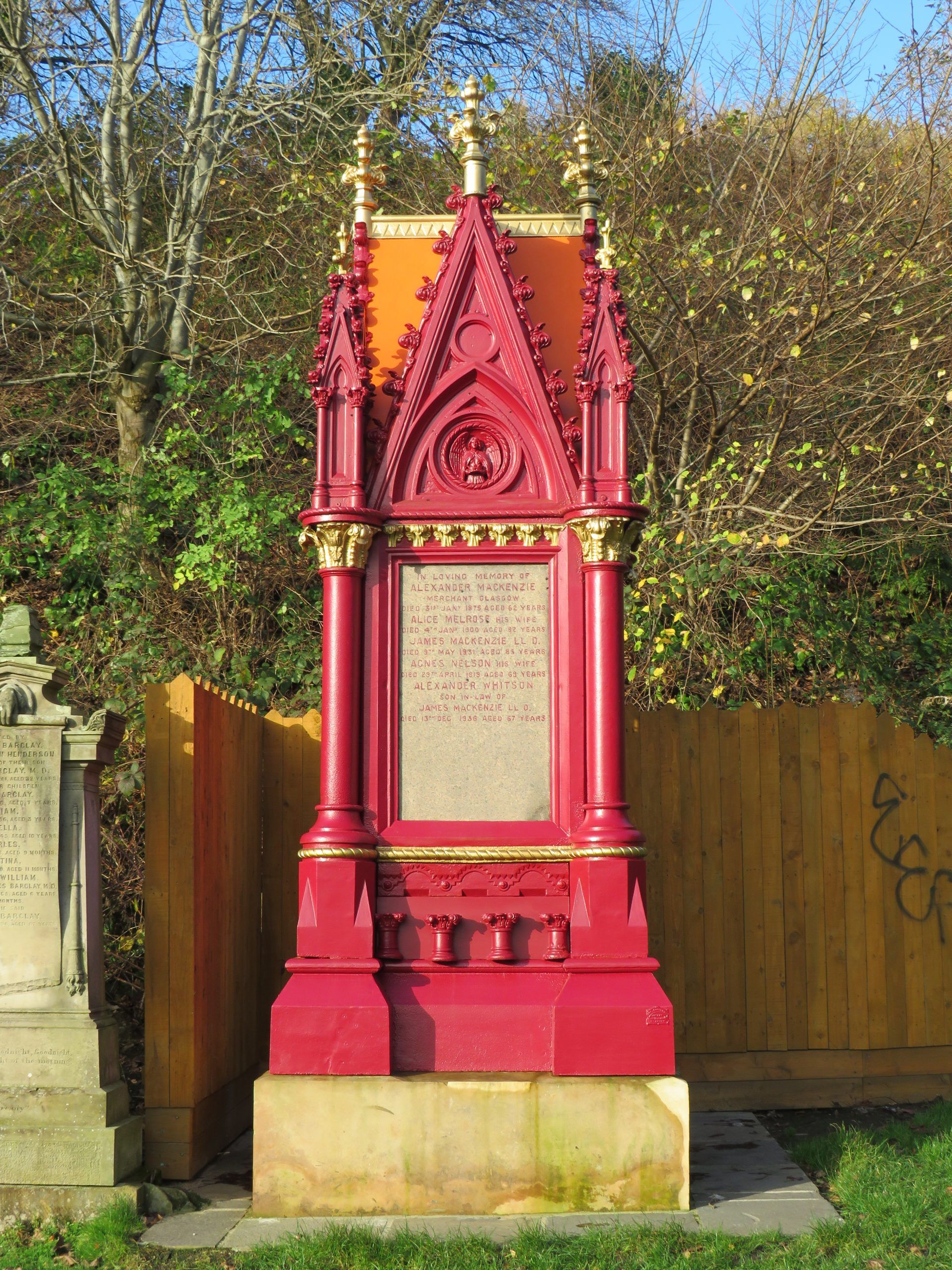
MacKenzie’s monument is unique in its form and existence, and is an extremely rare example of the larger-scale cemetery monuments that the Sun Foundry was producing in the 1870s. The only other known example was the Forrest Family monument in Sighthill Cemetery, which was built using two copies of the MacKenzie monument linked together on a wide base, and has long since been demolished. Like the latter, MacKenzie’s monument gradually fell into a derelict state and was on the verge of collapsing when it was rescued and restored to its original glory in 2018-25 by Glasgow City Council and Covanburn Contracts of East Kilbride.
Sources:
Glasgow Herald: Deaths (Alexander MacKenzie), 1 February 1875, p. 1;
Ibid: Deaths (Alice Melrose MacKenzie), 1 February 1875, p. 1;
Ibid: Deaths (Agnes Nelson MacKenzie), 31 April 1919, p. 1;
Ibid: Deaths (James MacKenzie), 9 May 1931, p. 1;
Ibid: Deaths (Alexander Whitson), 14 December 1936, p. 1.
Jimmy Black (1992): The Glasgow Graveyard Guide, Sighthill Cemetery, No. 15., p. 90.
James S. Mitchell: Alexander Mackenzie – Glasgow Necropolis.
Gary Nisbet (2025): The Alexander MacKenzie Monument in the Glasgow Necropolis: Its History and Restoration.
George Smith & Co (fl. 1858-1899), foundry, a biography.
Gary Nisbet: image of the Forrest monument, Sighthill Cemetery, c. 1985.
Civil Engineering & Rail Contractors | Covanburn Contracts.
Morag T. Fyfe (Archivist, FoGN): Information re. MacKenzie family.
All text, research and photographs by Gary Nisbet. 2026.