The indexers have reached 1891, and the number of records indexed in the last three months is as follows –
| Oct 2025 | 350 |
| Nov 2025 | 435 |
| Dec 2025 | 379 |
Our database of persons buried or commemorated in the Necropolis now stands at 53465 entries at the end of December 2025 of which 21869 entries represent persons buried in common ground with no grave marker.
James Nicoll died 1887
DEATH OF REV. JAMES NICOLL. We regret to announce the death of the Rev. James Nicoll, M.A., minister of Free St Stephens Church, Glasgow, which took place in his house in Hillhead early on Sunday morning. Mr Nicoll has not been in vigorous health for a number of years, but he was able to occupy his pulpit till the end of June, when he left the city for the usual summer holiday. He spent some weeks at Strathpeffer where he had a rather severe illness. After his return he rallied a little, but though he has been confined to bed for about a month the end came somewhat suddenly. Mr Nicoll was a native of Dundee, and studied at St Andrews, taking his divinity course at the Free Church colleges of Glasgow and Edinburgh. 1862 he was licensed the Presbytery of St Andrews, and soon afterwards was inducted to the Free Church at Alva. On the translation of Rev. Wm. Arnott to Edinburgh, Mr Nicoll received a call to Free St Peter’s, Glasgow, which he declined, but shortly afterwards he was appointed to be colleague and successor to Rev. Henderson, of Free St Enoch’s [1864]. In 1868, on the death of Rev. Mr Cowe, he became minister of Free Stephen’s, where he speedily succeeded in gathering a large and attached congregation. From natural disposition, and from the state of his health, Mr Nicoll shrank from taking any prominent part in public business, or in the work of the Presbytery. He chose to reserve himself rather for his pulpit and pastoral duties, to which he devoted himself with unwearying care. His sermons were frequently marked by striking originality of thought, and great beauty of diction, and he had an earnest and effective style of delivery. He was frequently urged to publish a selection of his sermons, but his innate modesty always led him to decline. Mr Nicoll has been a widower for several years, and he leaves a grown-up family of three sons.
Dundee Courier – Tuesday 30 August 1887
James Nicoll (1830-1887) was buried in Epsilon 556 alongside his wife Margaret Mitchell who predeceased him in 1883, Margaret’s sister Jane Mitchell, two sons and a daughter in law. His eldest son James H Nicoll (1863-1921) was a paediatric surgeon and had a distinguished career in Glasgow. His second son, David J T Nicoll and his wife Bessie are also buried in the grave. At the time of their deaths they were living in Gerrards Cross, Buckinghamshire.
The Crosset family
On the 9 January 1891 Mary Ann Crosset aged 11 and her younger brother Samuel aged 1 died from diphtheria. Their parents, Joseph Crosset and Jane Shearer, buried them in Compartment Omicron, lair 3A in the Glasgow Necropolis. In 1895 another son, James, was buried and in 1902 Joseph Crosset joined his children.
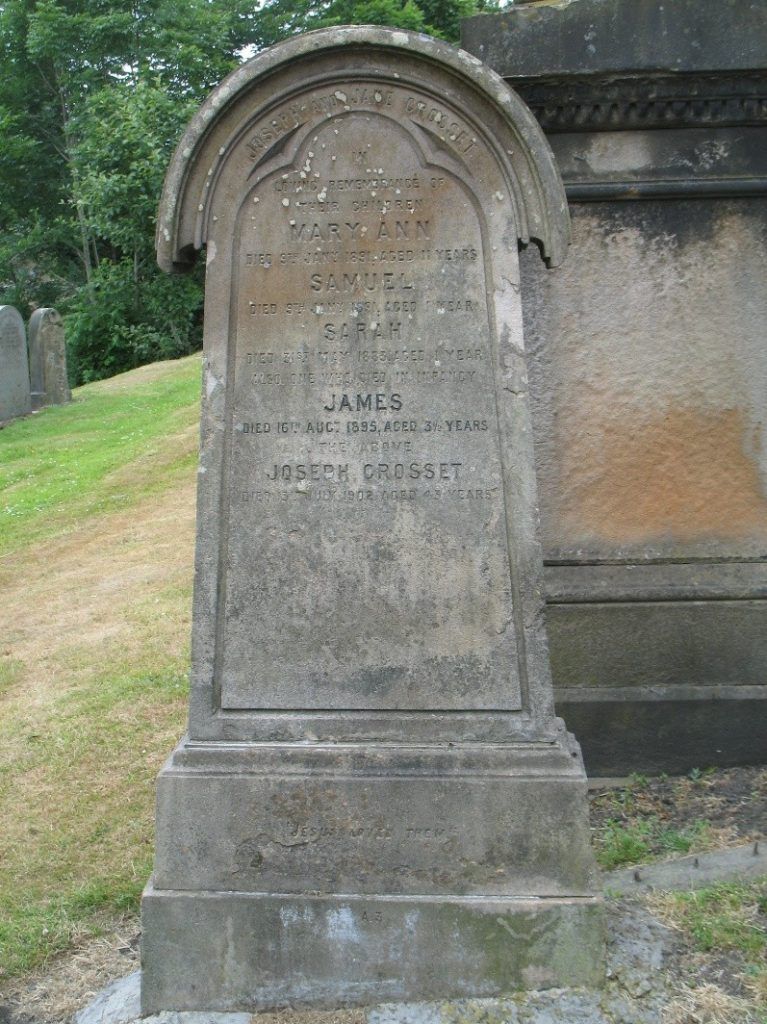
Joseph and Jane were Irish and do not appear in the 1881 census for Glasgow though they had arrived in Glasgow by 1883 when they buried a daughter, Sarah, in common ground in Sighthill Cemetery. The family appear in the 1891 and 1901 censuses at 145 Castle Street, Townhead and 85 Parliamentary Road respectively and Joseph died in 1902 at 58 Weaver Street. All three addresses are within a stone’s throw of each other and not far from the Necropolis. In both censuses Joseph’s occupation is given as labourer in cemetery and his death certificate describes him as a gravedigger. Bearing in mind his family’s plot in the Necropolis is it too much to suppose he worked there? It is an intriguing possibility but unproven. After Joseph’s death Jane and her children moved to Rutherglen. There Jane remarried to Samuel Millar but on her death in 1920 she was buried in the Necropolis beside Joseph and those children who predeceased her although her name was not added to the gravestone.
The stone is typical of the Tudor-Gothic style that was popular in the mid to late 1800s.
Alexander Park died 1860
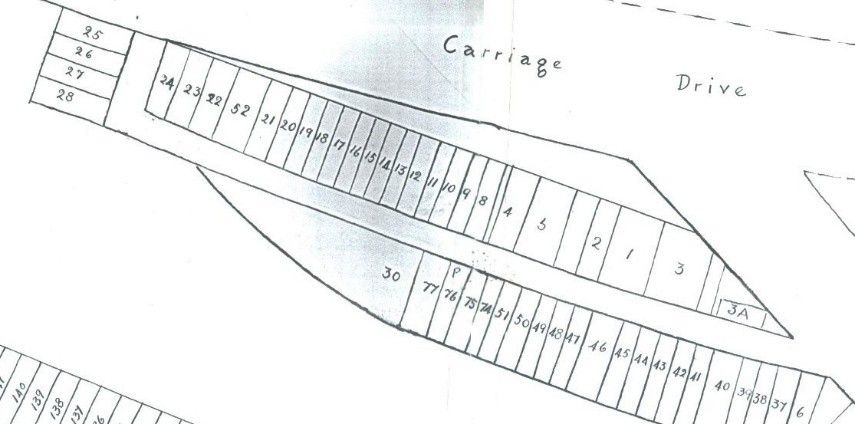
The Crosset lair (3A) is an odd number for a lair in the Necropolis and arises because there was already a monument on lair 3 dating from the 1840s when the Crosset stone was erected in 1883.
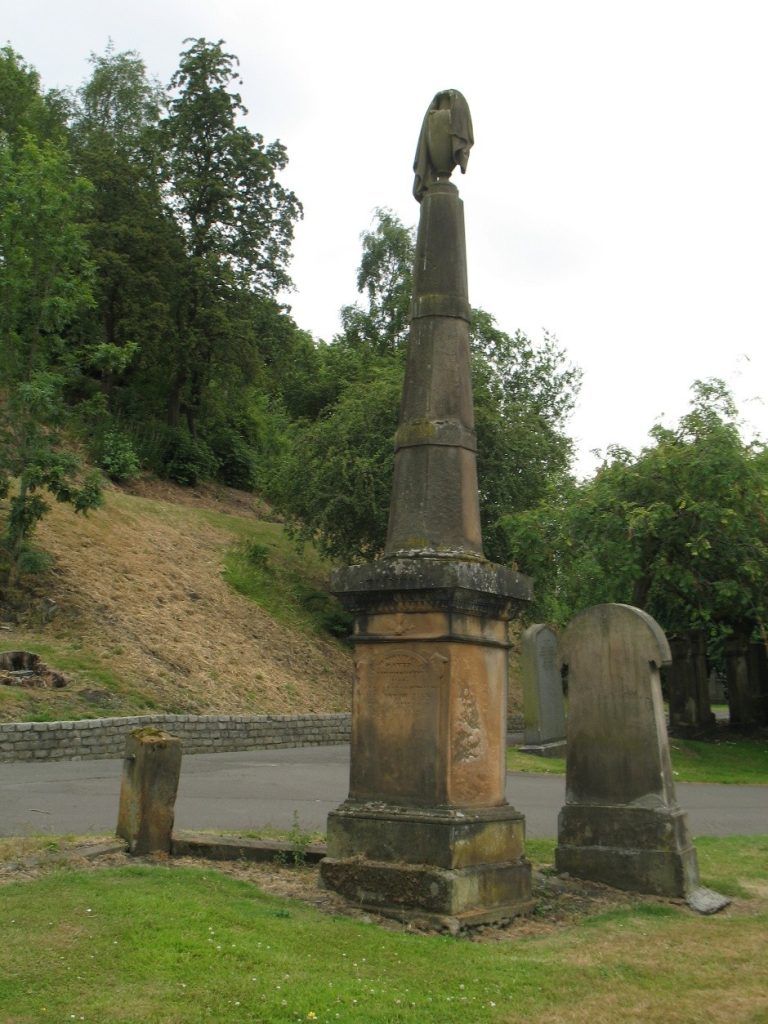
The monument on Omicron 3 was erected by Alexander Park in memory of his son David who died at the age of 4 in 1846. In the 1860s David was joined by his father, mother and a sister. In 1883 Joseph Crosset bought 2 ½ square yards of ground squeezed into a triangle between the Park lair and a corner of the path and this was numbered 3A.
Regarding the Park monument Gary Nisbet, the Friend’s sculpture consultant, notes that “The footstone is signed A. McLean, for sculptor Alexander McLean (1810-53), whose workshop and yard were outside the cemetery gates at the time the monument was made. He was one of the most accomplished and prolific of the Necropolis’ early sculptors, and was responsible for many of the finest monuments erected in the 1840s. … The monument was originally within a railing enclosure, some of the remaining coping stones and piers of which survive.”
Alexander Park was only 48 when he died on 8 January 1860. He died under a cloud as he had been declared bankrupt in January 1859. His sequestration was short lived and ended in April 1859 when he made over his assets to trustees for the payment of his debts. According to newspaper adverts these assets consisted of three properties, two plots of land with associated buildings on Garngad hill and a plot of land with tenements in Drygate Lane close to the entrance to the Necropolis. The Drygate Lane plot was known as Park’s Court and is well known to indexers of the Burial Registers due to the number of deaths that took place there between 1855 and 1871. It deserves to be dealt with in more detail elsewhere in Grave Matters 34.
The two plots on Garngad hill were sold by public roup and it is not known how much they realised. Park’s Court was put up for sale in October 1859 priced at £4,500. In November the price was reduced to £4,300 and it finally sold for £4,100 at the end of December 1859. A couple of weeks later, while James Wallace the trustee for the sequestered estate was preparing to pay Alexander’s creditors, Alexander died of pneumonia at his home 116 Garngadhill. He died intestate and all that was salvaged of his assets was £161 2s 8d plus household furnishings and plenishings valued at £29 4s 5d. Considering he had worked for many years as a pawnbroker and the rental from Park’s Court alone was calculated at £594 per annum to which can be added almost the same for the Garngad hill properties it comes as a surprise that he died in such mean circumstances.
Alexander Park married Mary Young in Glasgow in 1834. Ten children are known to have been born to the couple between 1836 and 1850 including twins and a second David following the one who died in 1846. In 1841 the family are found living in Drygate Lane and this address may actually represent Park’s Court which is not specifically named in the census that year. By 1851 the family had moved to Garngad hill, probably to the modern cottage on the Low Garngad Road where they were living in 1859 and where Alexander died in 1860. Alexander’s death was registered by his daughter Margaret and when his inventory was registered his eldest daughter Agnes was named as the executrix dative as next of kin to her father. This implies that Alexander’s wife Mary Young was dead by then but that is not the case. The Notices of Admission for Gartnavel Asylum record the admission of Mary Young or Park on 13 January 1860 five days after Alexander’s death and the day following his funeral. Mary lived on for another seven years in Gartnavel and died in 1867 from phthisis. The following year her daughter, Mary, aged 28, died from phthisis as a pauper in the City Poorhouse. Nothing is known of the other surviving children.
Matthew Montgomerie of Kelvinside
Much of the following is based on a memoir of his father John Park Fleming written by his son James Brown Fleming in 1888.
Matthew Montgomerie (1782-1868) and his brother in law, John Park Fleming, were partners in the legal firm of Montgomerie & Fleming from 1817 until Matthew’s death in 1868.
In 1839 the partners purchased the lands of Kelvinside (462 acres) from the trustees of Mrs Lithan-Cuthill and in 1845 they added the 104 ½ acres of Gartnavel. The combined estate lay on both sides of the river Kelvin from the Botanic Gardens almost to Anniesland Toll on the south side of the river and from the old toll house on Garscube Road to the later site of Maryhill Barracks on the north side.
In the year 1839, when the estate was purchased, the Great Western road, for which an Act of Parliament had been got in the year 1836, had just been finished. The minutes of the various meetings of the parties interested in the formation of that road show that it was entirely owing to the decided position taken up by Messrs. Robert and John Mowbray, brothers of, and trustees for Mrs Lithan-Cuthill, then proprietor of Kelvinside, that the road was made so good a road as it is. Many of the promoters took up the position that if it were made 60 feet wide as far out as the Kelvin, it would be sufficient to have a 40 feet road west of that, alleging that it was ridiculous to think that Glasgow would ever extend beyond the Kelvin, and that the road beyond that must always be a country road. The Mowbrays said at once distinctly and decidedly, if it was not to be a 60 feet road throughout they would have nothing whatever to do with it, and would oppose the scheme out and out, and so it came to be made a good road throughout, now forming by far the best outlet from Glasgow.
From the first it was resolved by Mr Montgomerie and Mr Fleming to make the suburb of Kelvinside the best residential district in the City. Mr Montgomerie having much the largest interest in the Estate, took the active management of it, and it is to him more than Mr Fleming that the Citizens of Glasgow are indebted for having at least one outlet from the City preserved from public works, and reserved for the erection of the very best class of dwelling-houses.
Mr Decimus Burton, the celebrated London architect, and the designer of the entrance to Hyde Park at Apsley House, familiar to every visitor to the Metropolis, at the time the most eminent man in his profession in London, was employed in 1840 to prepare a feuing plan. That plan was admirably conceived, taking advantage of all the natural contour lines of the ground, in place of, as in the case of Blythswood Hill, simply making rectangular blocks, as if you were dealing with one of the Cities of the Plain. The first feu from the estate was the Botanic Garden, the date of the feu contract of which was August 1841. The first villa feu was Marleybank, to Mr Robert Sword, writer. The first half of Windsor Terrace was built by the proprietors of the estate themselves, and Mr Fleming went to reside there at Whitsunday, 1847. Kew terrace was feued out in 1849-53, Grosvenor Terrace in 1854-57, Belhaven Terrace in 1866-69, and Marlborough Terrace in 1883-85. The earliest funeral to the Necropolis from Windsor Terrace was that of Robert Douie a teacher from the Grammar School which took place in 1853. The earliest funeral from Kew Terrace was also in 1853 when 6 years old Hannah Mary Watson was buried. By 1868 the Watson family had moved to Windsor Terrace and it was there her father David died that year. In 1857 the six children of Peter and Janet Aikman of 12 Grosvenor Terrace died in a period of 2 weeks from rubeola (measles) complicated by hooping cough. No deaths are recorded in Belhaven Terrace until 1872 when Margaret McPhail, wife of David Carson died at Number 9 in 1872. In the foregoing examples the fact a death took place at a particular address is not an accurate guide as to how long a family resided there.
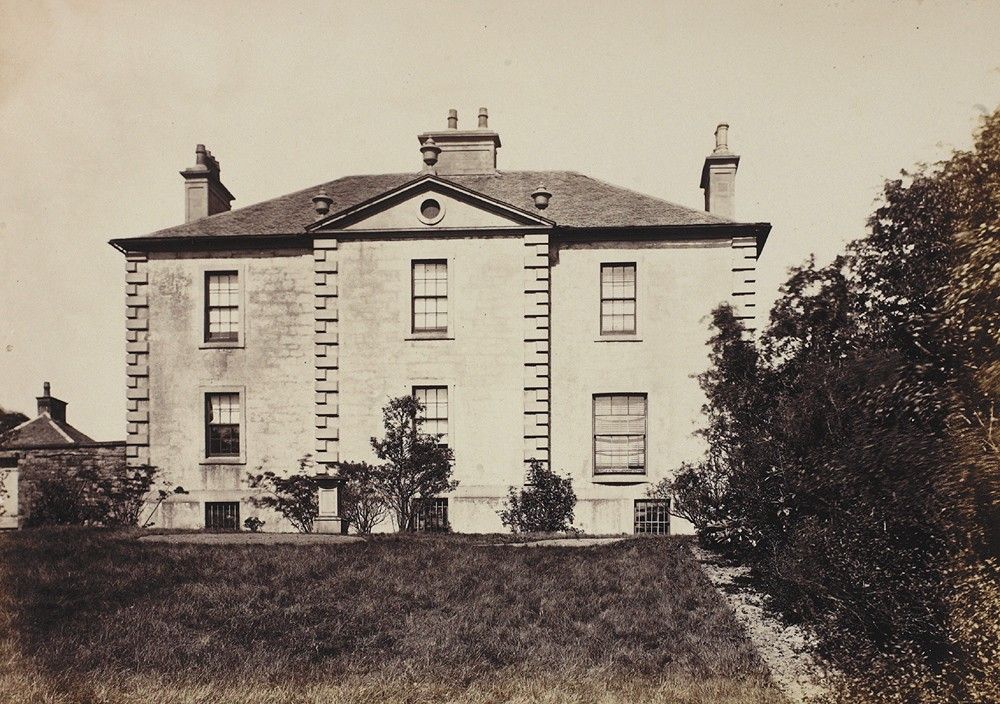
Kelvinside House itself lay on the north bank of the river. Together with 90 acres on that side of the river it was purchased by John E Walker (1821-1875), coach proprietor. By October 1869 plans for the development of the area by the new proprietor were being described in the local newspapers. This area north of the river Kelvin became known as North Kelvinside to distinguish it from the area south of the river which retained the original name of Kelvinside. Thomas Annan photographed Kelvinside House in 1870 just before it was demolished to make way for villas, terraces and ultimately tenements.
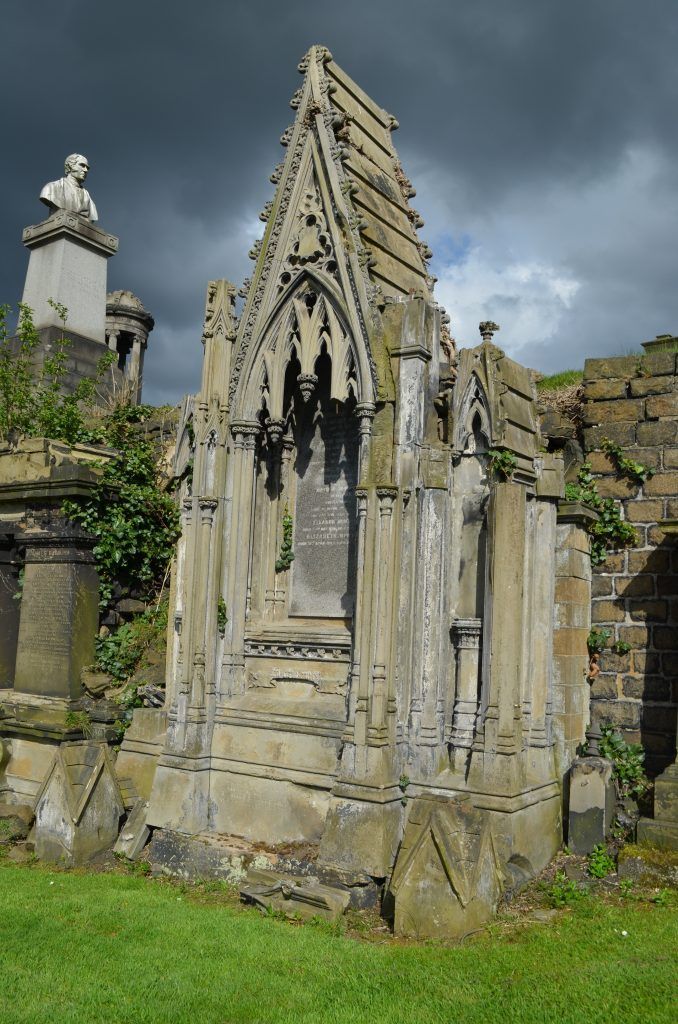
The Montgomerie family is buried in compartment Gamma. The memorial is an elaborate Gothic monument designed by the architect Charles Wilson. It was erected after the early death of Margaret Fleming, Mrs Matthew Montgomerie from consumption in 1835. Two sons and two daughters are buried beside their parents.
The Alexander MacKenzie Monument in the Glasgow Necropolis
By Gary Nisbet FoGN Sculpture and Cemetery Historian
All photographs, research and text by Gary Nisbet, 2025
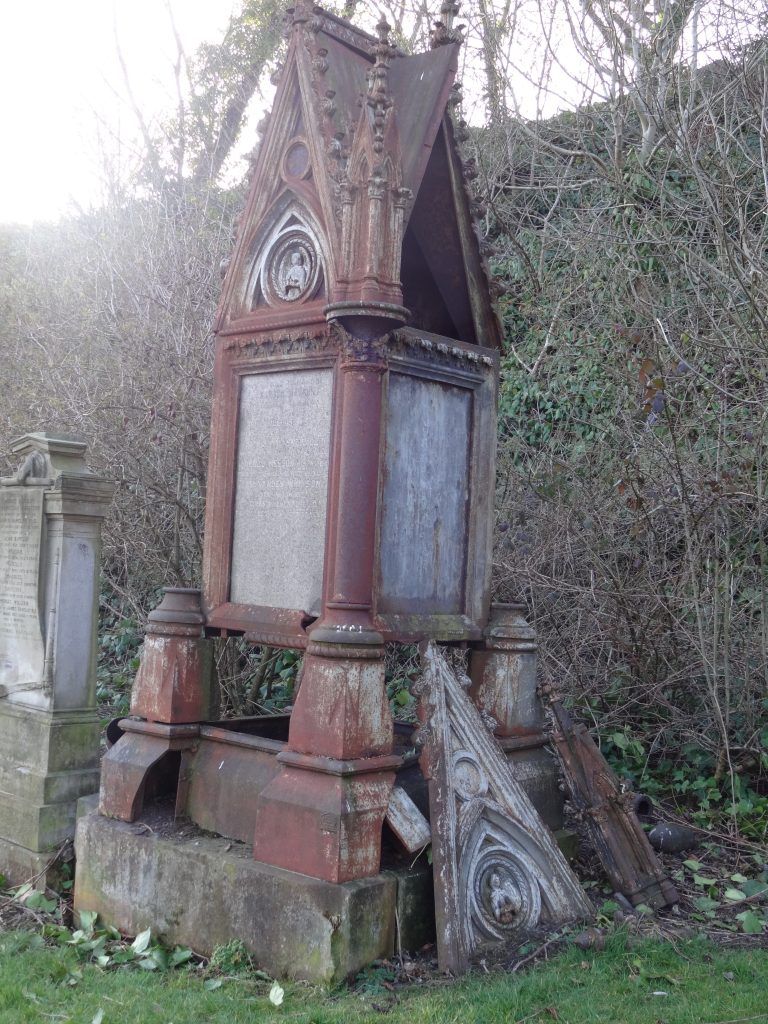
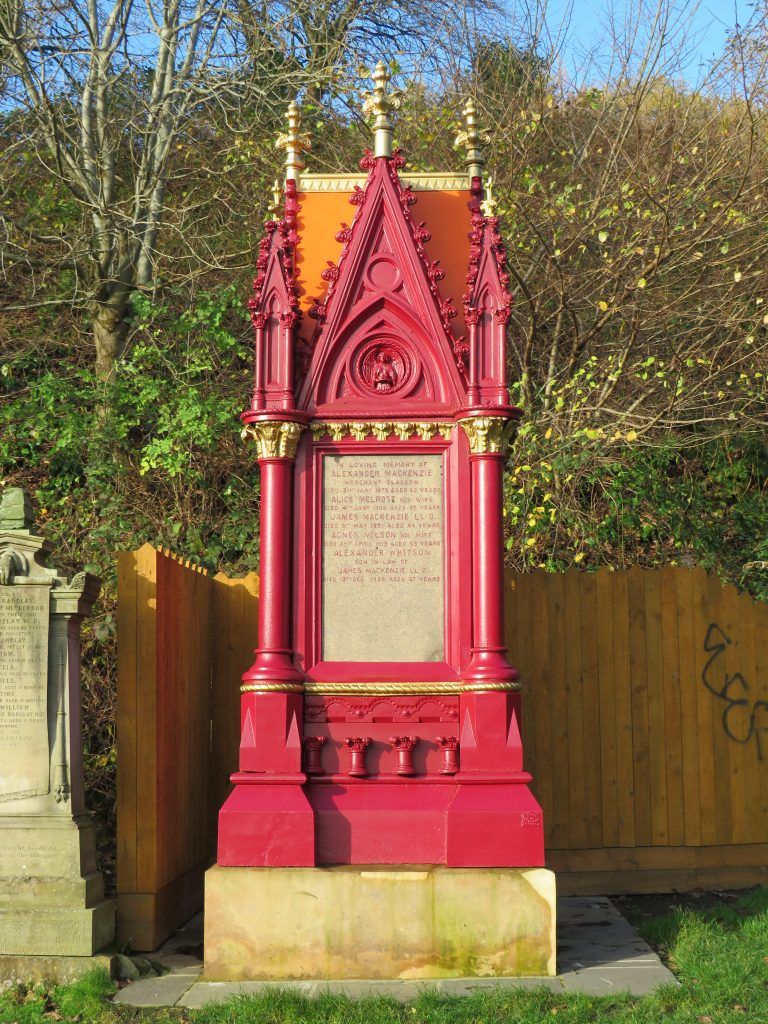
The monument to Alexander MacKenzie (1813-1875) in Upsilon, lair 48, is a Gothic tower which has recently reappeared after being away for restoration. Prior to this, it was in a dilapidated state and at risk of collapsing. Fortunately, Glasgow City Council opted for its restoration, rather than demolition, and it was fully restored and re-erected in September 2025. It is now one of the most spectacular sights in the Necropolis, with its once shattered elements reassembled and coated in a new livery of vivid red, orange and gold paint. To mark its return, we present a brief account of the monument’s history and restoration.
The monument was erected after MacKenzie’s death in 1875. He was the owner of Alexander Mackenzie & Co., a firm of general house furnishers, carvers and gilders, and parquet flooring makers, which had its main office and showroom at 87 and 89 Buchanan Street, and a steam powered factory at 165 North Street. He was also a co-founder and financier of George Smith’s Sun Foundry in 1857, which became famous for its artistic products in cast iron and eventually produced MacKenzie’s own monument. Mackenzie and his trustees were the foundry’s main financiers until it closed in 1899. He was also a politician and became the city councillor for the Tenth Ward (Anderston and City) in 1873.
Mackenzie died at his home at 8 Belhaven Terrace in Glasgow’s Great Western Road, on 31 January 1875, aged 62 after a short illness. He was buried on 2 February, in a lair that had previously been opened for his deceased 24-year-old daughter, Alice Inglis, in May 1865. Joining them later were his wife, Alice Melrose, who died on 4 January 1900, aged 82; their son, James Mackenzie, a lawyer, who died aged 85 on 9 May 1931; his wife, Agnes Nelson, who died at her home, 3 Queen’s Gardens, Dowanhill, on 29 April 1919, aged 69; and their son-in-law, Alexander Whitson (also a lawyer), who joined them on 13 December 1936.
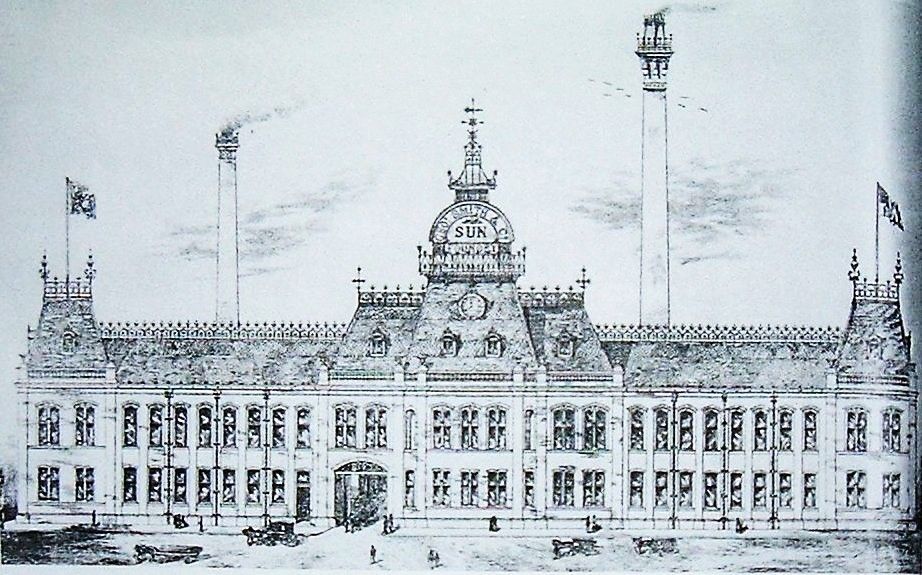
The monument was produced by George Smith & Co.’s Sun Foundry (fl. 1857-99) at 280 Kennedy Street in Townhead, where the façade of headquarters was used to display many of the architectural castings that the foundry produced (illustrated above). These types of castings can still be seen all over Glasgow, such as ornate railings, roof crestings, lamp standards and drain pipes, many of which, like MacKenzie’s monument itself, are inscribed with the foundry’s name as their maker. The firm advertised itself as ‘art metal workers, iron founders, bronze metalworkers, and sanitary engineers’ and had offices in most of the U.K.’s major cities. It was also famous for the many fountains it produced. The foundry narrowly survived the collapse of the City of Glasgow bank in 1878 and George Smith’s bankruptcy in 1886 with the assistance of MacKenzie’s money, and later relocated to Linwood, where it finally closed in 1899.
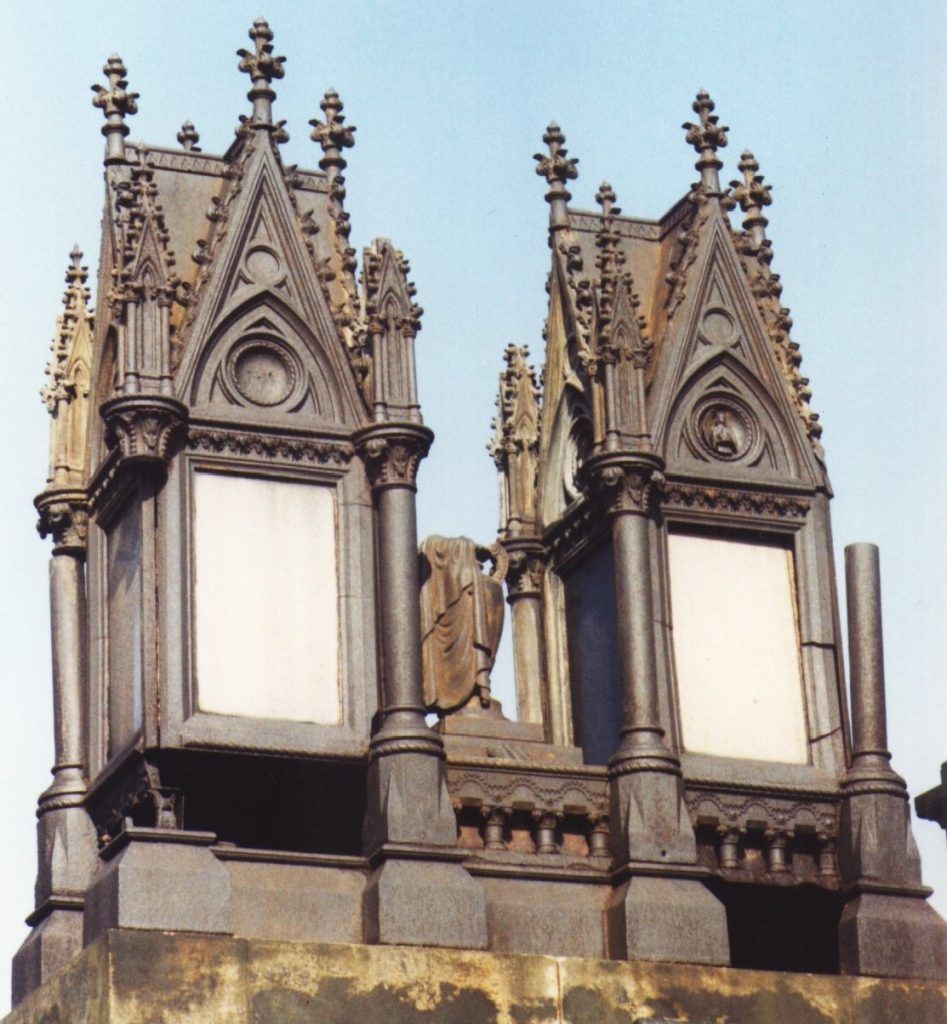
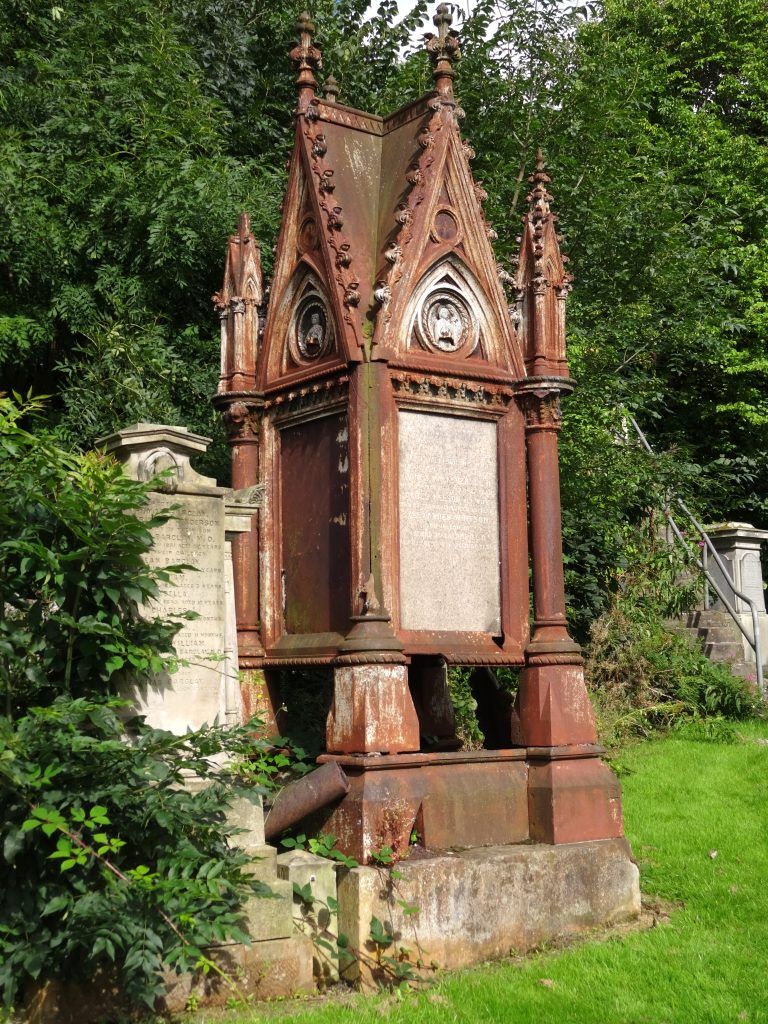
The foundry popularised the use of cast iron for mass-produced cemetery monuments in the 1860s, ranging from small to large-scale monuments in a variety of designs. Many of these still survive but are often now in a badly rusted or ruinous condition. The earliest mention of these types of monuments in connection with the Necropolis dates from a press report in 1864, when one was erected in Woodside Cemetery in Paisley. The article noted that they were “now becoming pretty general in the Glasgow Necropolis and elsewhere”. On a much larger scale, the foundry produced Alexander MacKenzie’s monument, which could be described as colossal compared with the size of their other monuments. But even this was small compared with another, similar monument that they produced for Sighthill Cemetery in Glasgow’s Springburn district. This was built by the Forrest Family around the same time as MacKenzie’s monument in the mid-1870s.
As can be seen in the images above, it is clear that both monuments were made from the same patterns, the most significant difference between them being their overall size and the manner in which they were used. The Forrest monument was double the size and comprised two versions of the MacKenzie monument linked together on a wide stone base and with a huge cast iron urn between them to separate them into single units, or pavilions. Unfortunately, the Forrest monument no-longer exists, having been demolished decades ago. The MacKenzie monument is now the only known surviving example of its type in the country.
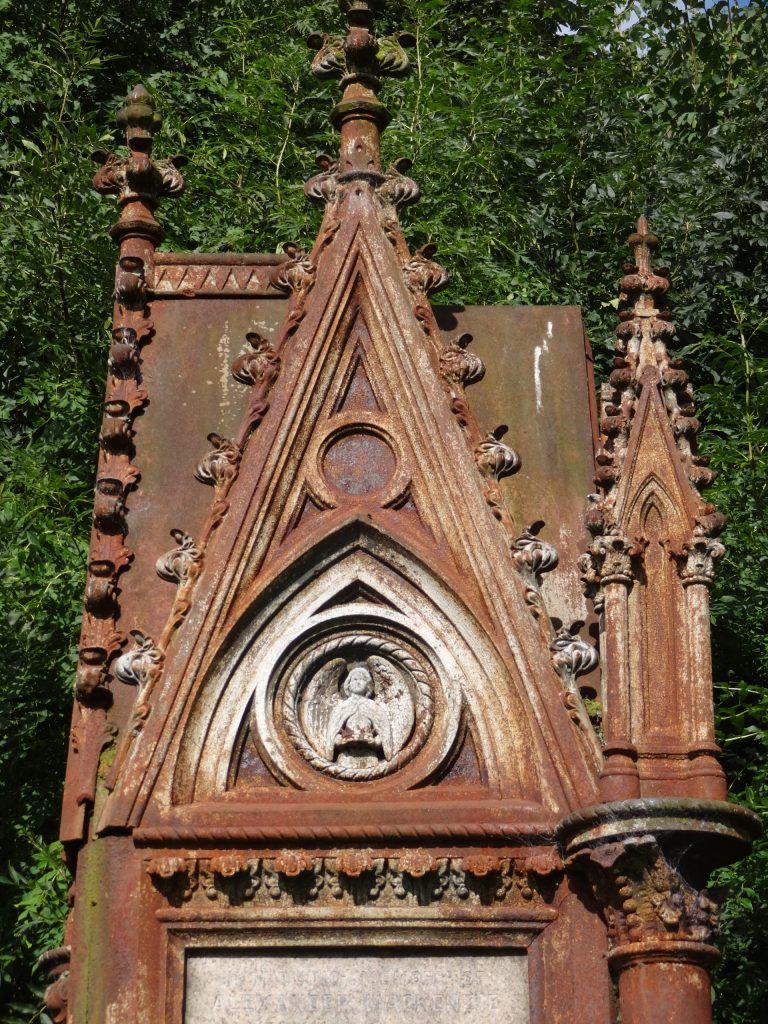
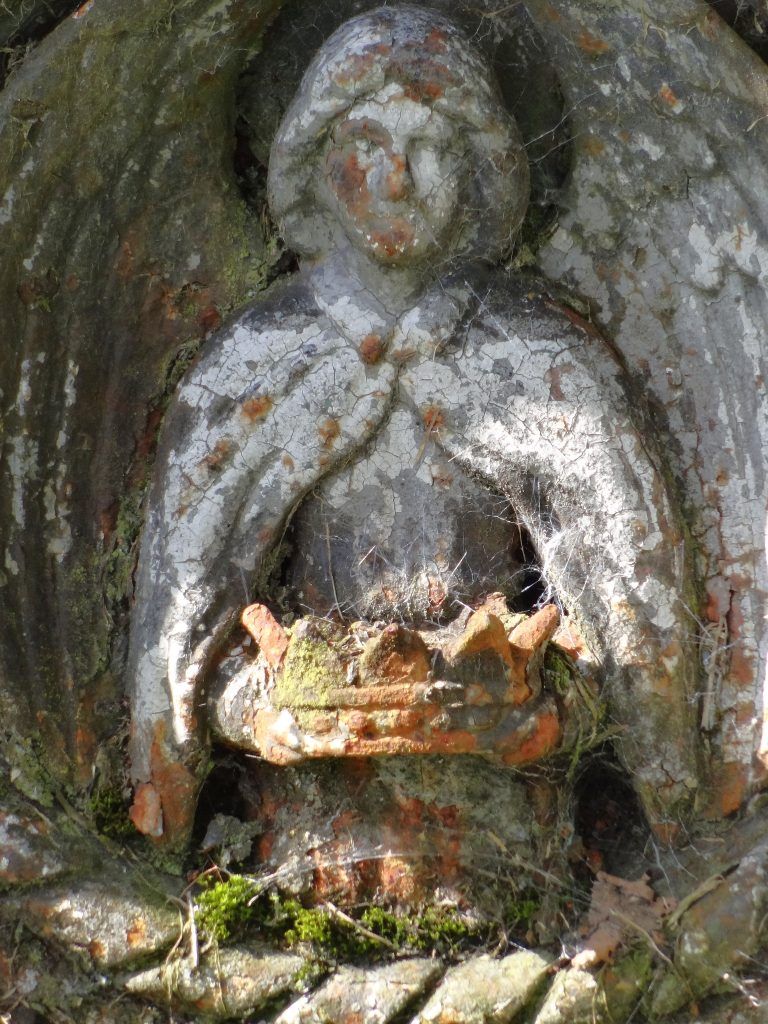
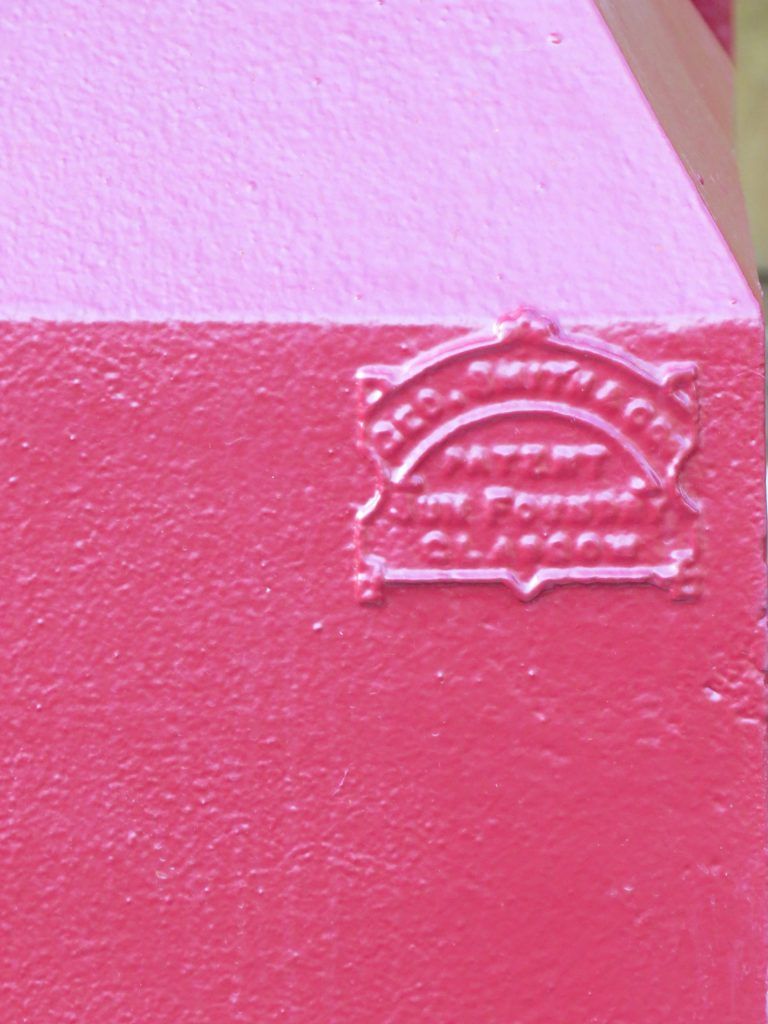
The MacKenzie monument is in the form of a Medieval reliquary, typical of the 1400s, which were built in churches to house sacred relics. These were generally highly ornate, often beneath a crocketed, gabled canopy supported on slender columns with stiff-leaf capitals, and adorned with carved angels or other religious motifs, just like Mackenzie’s tomb in the Necropolis. It is square in plan, 4.2m (14ft) tall, with its four sides containing grey-granite inscription panels, only one of which survives on its front. The columns support its crown-like, cruciform roof, with its pointed gables and flame-like crockets and finials. The gables contain half-length angels holding a crown in the roundels at their centre. Other features include a row of dwarf columns below the inscription panel, a course of rope moulding around the lower half of the monument, and a frieze of acanthus leaf which extends around its four sides above the inscription panels. It also has a small shield with the name of the monument’s makers on its metal base: Geo. Smith & Co. Patent Sun Foundry Glasgow.
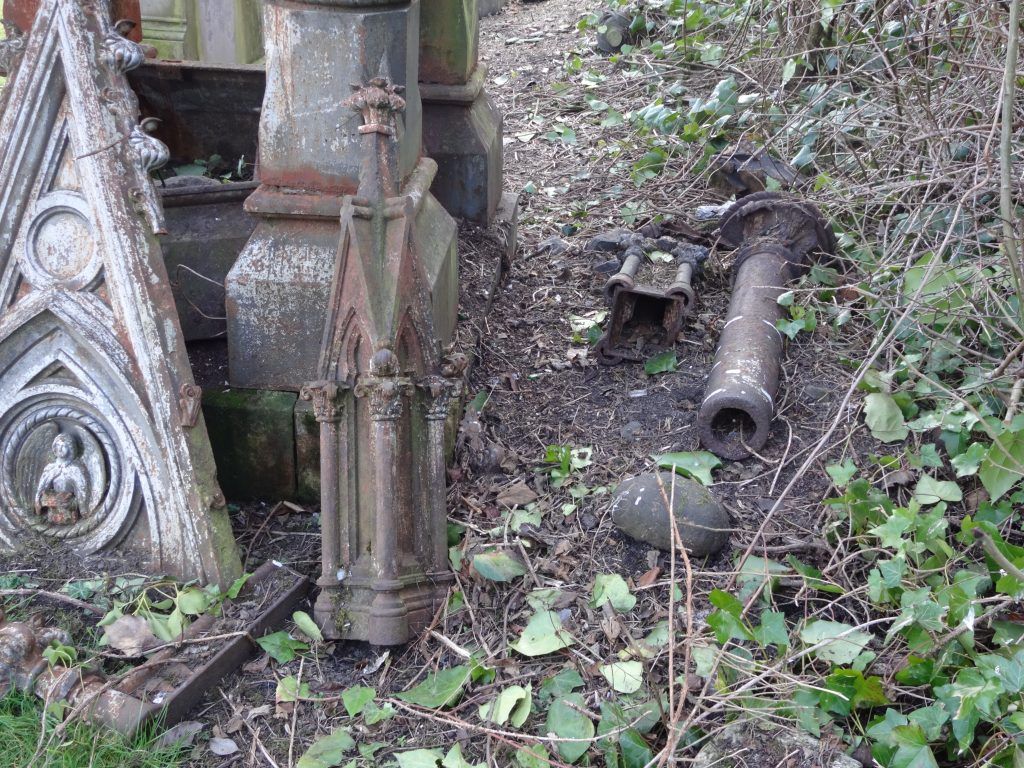
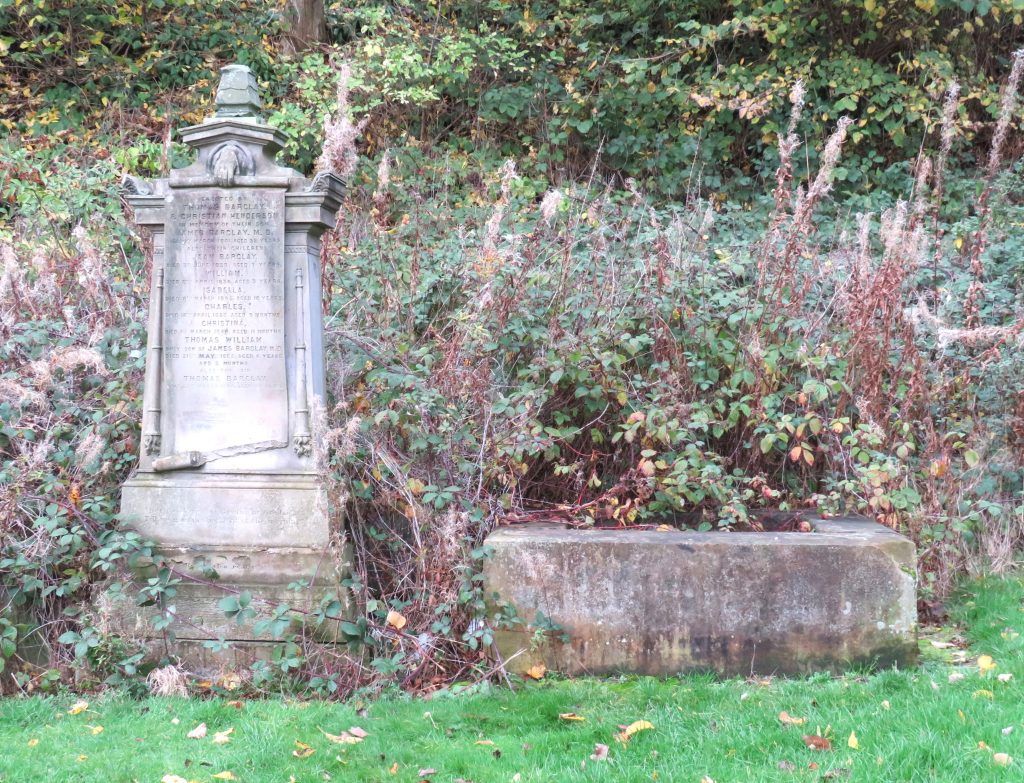
The MacKenzie monument was removed for restoration in 2018, by Covanburn Contracts Ltd of East Kilbride, a specialist heritage conservation firm. Fortunately, most of the elements that had become detached from the main structure were lying on the ground around it and collecting them was an easy task which reduced the need for recasting and extra expenditure. After the monument was dismantled and removed, its parts were stripped of their rust and the remains of its earlier paintwork, and its joints repaired and its missing parts replicated before their repainting and final reassembly in the Necropolis. Its blond sandstone base was also given a clean before the monument was re-erected. At the same time, a pavement was laid around the base and a wooden fence erected at the rear and left side of the monument. These were installed to prevent the monument from being enveloped by the ivy and bushes that had previously covered it.
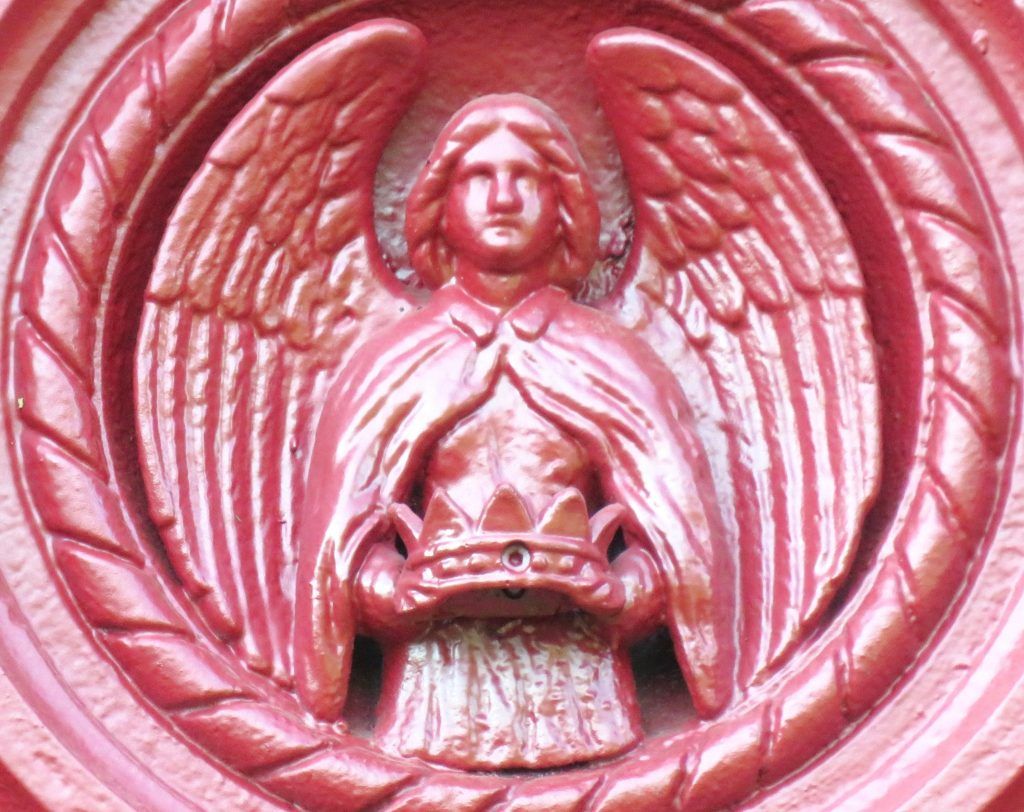
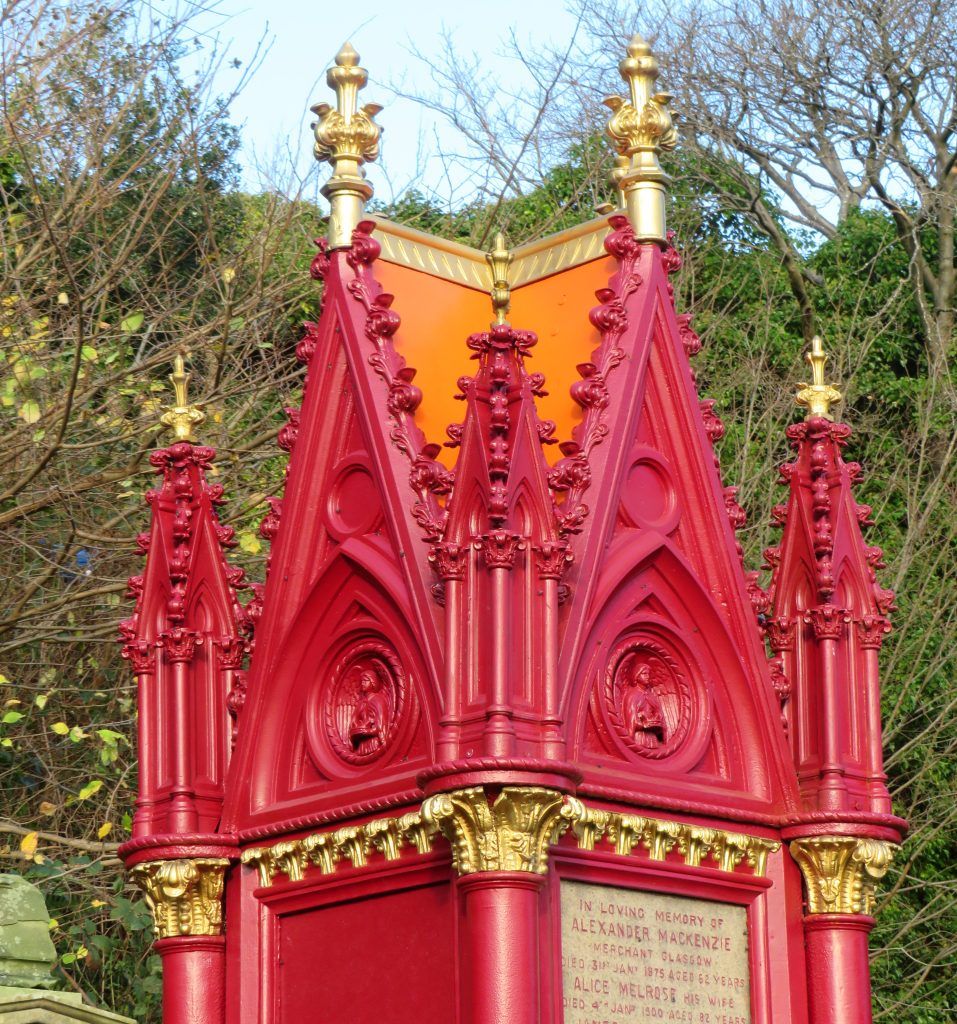
Details of the MacKenzie monument after its restoration in 2025.
The monument’s vivid, rather joyful paintwork is a modern confection devised by architect Fiona Sinclair, rather than an attempt to recreate its original livery, of which all trace had been lost. It now appears like a sparkling jewel and will no-doubt become one of the best-known and most visited monuments in the cemetery as its existence becomes more widely known in years to come.
Sources:
James S. Mitchell: Alexander Mackenzie – Glasgow Necropolis;
Glasgow Herald: Deaths (Alexander MacKenzie), 1 February 1875, p. 1;
Glasgow Herald: Deaths (Alice Melrose MacKenzie), 1 February 1875, p. 1;
Glasgow Herald: Deaths (Agnes Nelson MacKenzie), 31 April 1919, p. 1;
Glasgow Herald: Deaths (James MacKenzie), 9 May 1931, p. 1;
Glasgow Herald: Deaths (Alexander Whitson), 14 December 1936, p. 1;
Gary Nisbet: George Smith & Co. (fl.1858-1899), foundry, a biography;
Jimmy Black (1992): The Glasgow Graveyard Guide, Sighthill Cemetery, No. 15., p. 90;
Gary Nisbet: image of the Forrest monument, Sighthill Cemetery, c. 1985;
Information from Megan Watson of Covanburn Contracts;
Ruth Johnston (2007) Glasgow Necropolis Afterlives, p. 116 (ill.);
Information from Morag T. Fyfe.
******************************
Anyone who would like to help indexing the Burial Registers is very welcome to join us by contacting me at at research@glasgownecropolis.org