Complied by Morag T Fyfe
The indexers have almost completed 1879, and the number of records indexed in the last three months is as follows –
| Oct 2024 | 365 |
| Nov 2024 | 299 |
| Dec 2024 | 331 |
Our database of persons buried or commemorated in the Necropolis now stands at 51729 entries at the end of December 2024 of which 21858 entries represent persons buried in common ground with no grave marker.
Benjamin Cooke and Fanny Foy
The burial of Benjamin Foy (or Cooke) in the Necropolis in 1861 led to the discovery of a little more information about his parents. Benjamin’s death certificate only named a mother, Fanny Foy, and gave his place of death on 8 Jan 1861 as 11 Florence Street in the Hutchesontown district of Glasgow. When the census was taken on 7 April 1861 an English hat maker called Benjamin Cooke was found living in Florence Street. He was a 30 year old widower with a 7 year old son called Ambrose also English born. There was a 20 year old boarder called Fanny Foy also living in the household. At the end of July that year Benjamin and Fanny were married by Rev James Stewart, minister of Calton U P Church. Both parties gave their address as 11 Florence Street. By 1871 The couple, along with Ambrose, can be found in Dudley, West Midlands and after that the trail goes cold. Thanks to Fanny’s parents being named on her marriage certificate it was possible to identify Catherine Foy, widow, an old clothes broker born in Ireland, and three children including Fanny in the 1851 census. They made up four of the eight lodgers (all Irish born) living at 22 Briggate in a lodging house kept by another Irish couple. There were a total of thirteen people living in the house.
The Egyptian Vaults
So far there are records of the Egyptian Vaults being used 122 times between 1838 and 1915 for the temporary storage of bodies. The vast majority of these were to allow a permanent grave in the Necropolis to be prepared. In four cases the intention was not to bury the person in the Necropolis but to send the body for burial elsewhere. Catherine Latham, widow of John Latham died on 25 January 1850, her body was placed in the Egyptian Vaults 3 days later and on 1 Feb her body was sent to England.
In the case of Archibald Colquhoun Allardice his coffin remained in the Egyptian Vaults for over a month until it was removed to Edinburgh on 23 September 1857. There was already an Allardice grave in Warriston Cemetery to receive baby Archibald.
The body of Isabella Reid, aged 71, lay in the Egyptian Vaults for 3 days in April 1910 before being moved to Craigton Cemetery. She had died at 274 West Scotland Street, Govan but nothing else is known about her.~
The final example is William Harvey Inslee of 22 Burnbank Terrace, Glasgow whose body lay in the Vaults from 6 August until 12 October 1898. William Inslee was an American from Newark, New Jersey and had come to Scotland to manage the Singer sewing machine factory at Kilbowie, Clydebank.
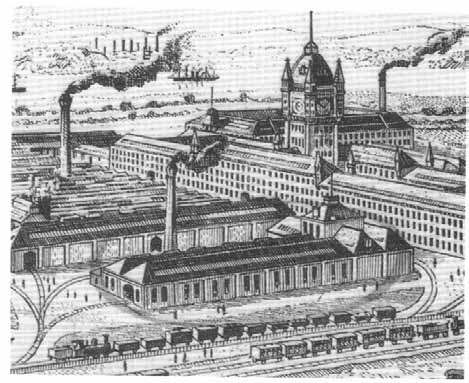
The factory opened in 1884 and passenger lists record William Inslee crossing the Atlantic from 1894 onwards. A short report in the Daily Record of 30 July 1898 reported that his body had been embalmed prior to returning it to the USA for burial.
Robert Killough and family
This is another family with no stone on their lair which makes it more difficult to research them. In this case problems have also been caused by variant spellings of the main surnames. Six burials took place in the plot before it was filled. It had been bought by Mrs Ann Shekleton/Sheckleton/Shakelton for the burial of her daughter Ann in 1873 and Ann, snr was buried there in 1885. The other 4 burials were those of a married daughter, Jane Killough/Kinloch/Killoch and 3 of her young children. Jane and her sister had probably arrived in Glasgow from Ireland by 1871. Their mother cannot be identified in the census of that year but she was in Glasgow by 1873 when she buried Ann, jnr in the Necropolis. Jane seems to have found work as a laundress at the Glasgow Royal Infirmary. She married Robert Killough in 1872 and the couple had 5 children between 1873 and 1882. No more children seem to have been born after Benjamin in 1882 and the couple are found living apart at the 1891 census. When Robert died in 1892 from bronchitis he was living with his sister Eliza Jane who registered his death and he was not buried in the Shekelton lair in the Necropolis. Jane and her sole surviving child, James, lived for many years at various addresses in Muse Lane, Cowcaddens and she died there in 1919.
A Masonic stone in Compartment Eta
There are a number of lairs in the Necropolis which contain unrelated groups of people. The most well known is probably that for East Park Cottage Home in Compartment Iota but there are others.
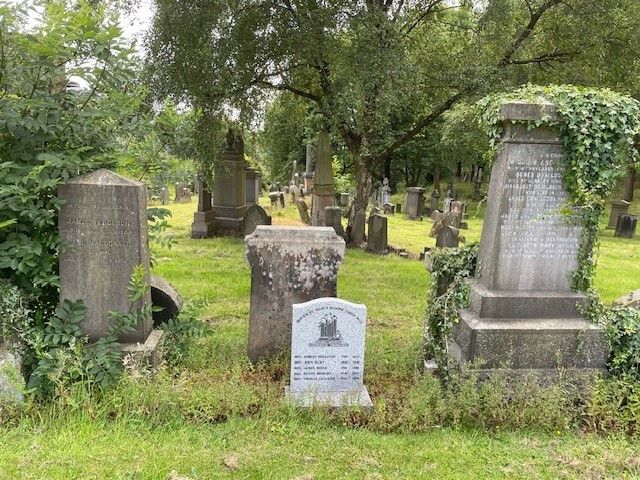
In Compartment Eta there is a stone commemorating five members of Partick St Mary’s Masonic Lodge No 117 buried between 1873 and 1902. The five men are Robert Singleton died 1873, John Hurt (sic) died 1876, James Bruce died 1886, Henry Bridges died 1887 and Thomas Granger died 1902. It is not known why these men were buried here but one might hazard a guess that their families were too poor to purchase a lair, or the men had no family to bury them. Most of what is known about them is drawn from birth, marriage and death certificates and censuses with all the problems associated with these sources.
Lair 298 was purchased by the Lodge on 17 April 1870 but the first burial did not occur until that of Robert Singleton in April 1873. According to his death certificate Robert died of old age at the age of 75. He was married to Eliza Kerr and had at least one son, John, who registered his father’s death. Robert seems to have been the only one of the men buried here to merit a newspaper announcement of his death and more particularly his burial. He was to be buried on 15 April 1873 and members of the craft were to assemble at the Lodge at 3 pm. For many years Robert had been chaplain to the Lodge and this probably explains why he was buried in the Lodge’s lair. Robert and his family have been identified in all the censuses from 1841 until his death. He was of Irish birth and came to Glasgow in the mid 1830s. Judging by the forenames, ages and places of birth of his likely wives he may have been married three times but his son seems to have been vague about this and only named Eliza Kerr as his wife. Eliza survived her husband four years but is not buried with him.
Less is known about John Hurt who was buried in 1876. It seems his surname is wrong on the stone as he has only been found in the official records as John Hurl. He is another Irishman who seems to have arrived in Glasgow before 1851 when he married Ann McKillop from Oban. As he was 40 when they married he may have been married before. He and Ann don’t appear in the censuses until 1871 and the widowed Ann can be found in 1881 and 1891. In the 1871 census, when John was 61, he gave his occupation as an ag. lab. and Ann described him as a gardener’s labourer when she registered his death. Incidentally Ann was unable to sign her name when she did so and had to sign with an ‘X’.
For a change James Bruce, buried in 1886, was a Scot and his death certificate named both parents and three wives. James was the son of a soldier, was born about 1801 and lived all his life round about Dumbarton Road, Partick. In several of the censuses his occupation is given as engine keeper/stoker and in 1851 his address is given as Clayslap Mills.
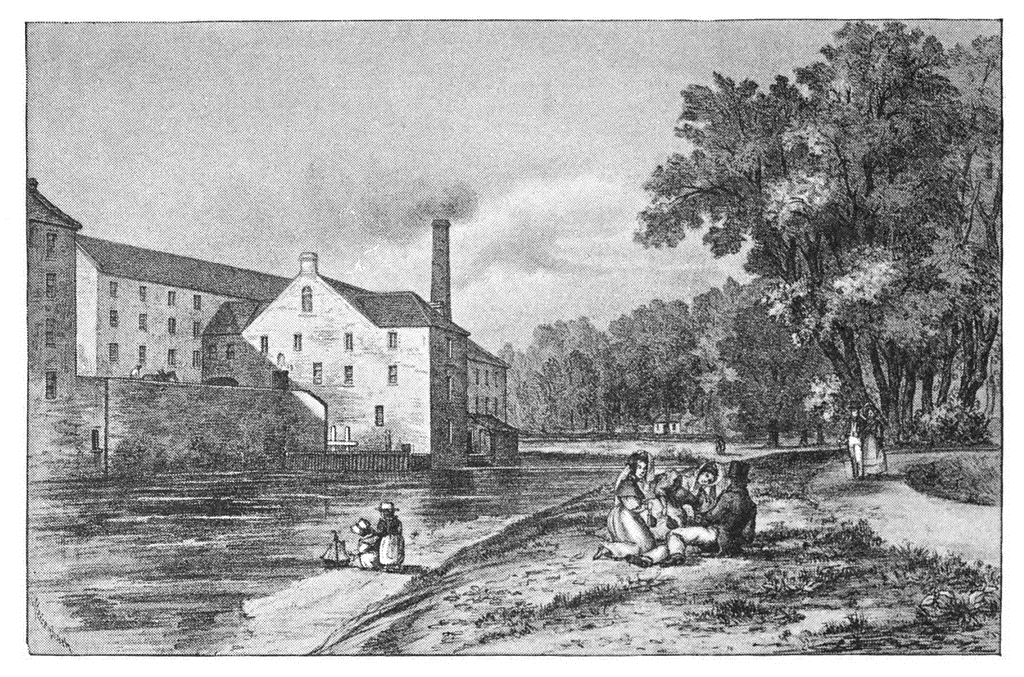
Clayslap Mills dated from the 16th century and in 1771 were purchased by the Incorporation of Bakers of Glasgow. The main motive power of the mills was three undershot water wheels driving 15 pairs of millstones. Nevertheless there is a record of a steam engine being ordered in 1800 and it is likely auxiliary power was supplied by a steam engine which James Bruce served at one time.
The first three burials had all been of men who had lived to a good age, 74 to 85 years of age. Henry Bridges who was buried almost exactly a year after James Bruce was a younger man. He was only 47 years old when he collapsed and died in the street at the corner of Peel Street and Dumbarton Road. It was presumed he had heart trouble. Born in Dundee about 1836 Henry served as a seaman from a young age. On census night in 1861 he was found aboard the 198 tons coaster Rose of Scarbre and later that year he was in Aberdeen where he married Elizabeth McDougall. He seems to have remained in Aberdeen after he married as he is found giving evidence on the loss of the steamer Hamburg on a voyage from Kirkwall to Aberdeen in 1862. By 1878 Henry is living in Partick where he marries Elizabeth McTaggart that year. Although he describes himself as a seaman at the 1881 census his widow describes his occupation as an iron driller, formerly ship rigger when she registered his death so it looks as though he had left the sea before his death. Like Ann Hurl, Elizabeth Bridges was unable to sign her name and made her mark on her husband’s death certificate.
The last man was not buried in the lair until 1902 and he poses his own problems. In the burial register he is described as Thomas Granger (or Gray) and his death from phthisis is registered as Thomas Granger (formerly Thomas Gray). He is first found in the 1861 census as Thomas Grainger, born in England, 16 years old nephew of Thomas Grainger and he continues to appear in the censuses as Thomas Gra(i)nger from then on. He was twice married (to Isabella Grierson in 1867 and Jane Scotland in 1887) and had a large family although quite a few children died young. His connection with Partick St Mary’s Masonic Lodge No 117 seems rather tenuous as he only lived in Partick until about 1876 before moving east to the Parkhead/Camlachie area and dying at Ravel Row in 1902.
Jane Cowan Wyper, RSW
On Tuesday 19 July 1898 the Glasgow Herald had the following obituary:
On Tuesday afternoon, the 12th inst., a terrible accident took place in Sark whereby a well-known Glasgow lady, Miss Jane Cowan Wyper, RSW, of 10 Highburgh Terrace, lost her life. Miss Wyper had been wintering in Jersey with her mother and sister, and on their departure a few weeks ago she went to Sark with a lady friend. This lady had left a few days before, and Miss Wyper, always in search of picturesque spots to transmit to her canvas, had taken a walk towards the western cliffs, which are among the most charming “bits” in this lovely island. “Les Autelets,” the part where the accident occurred, are about 200 feet high, and are composed of rubbly granite. Miss Wyper seems to have left the footpath in order to look over, and must have slipped and been precipitated to the shingle below; her hat was found on top. […] A daughter of the late Mr James Cowan Wyper, and a pupil of Herkomer, Miss Wyper was one of the very few lady artists who had been honoured in being elected a member of the Royal Scottish Society of Water-Colour Painters, and her work, both in oil and water-colour, had often been exhibited in Glasgow, Edinburgh, and elsewhere. Just the day before the accident she had despatched some sketches for the RSW exhibition in Edinburgh. Of a fearless and adventurous disposition, Miss Wyper was fond of outdoor sports, swimming and yacht-sailing being favourite amusements, while her noble, generous and sympathetic nature endeared her to countless friends who mourn that her life has thus been cut off in its prime.
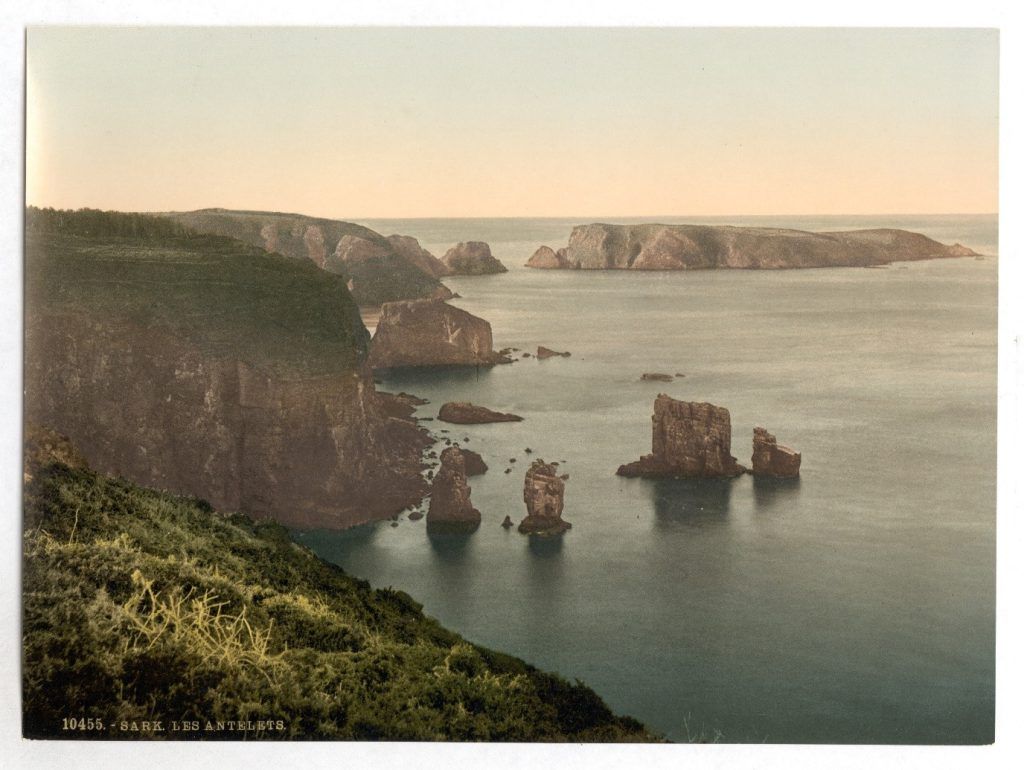
The local Channel Island newspapers provide some more details which don’t necessarily match the report in the Glasgow Herald. Jane and her mother had been living in Jersey for some months and been attending the Presbyterian Church while there. There is a suggestion that the visit was for health reasons but it is not clear whether this relates to Jane herself or her mother. The friend reported as accompanying Jane to Sark is named as Miss McLennan but it is not clear whether she was still on Sark when the accident took place or had already left.
The Wyper family grave lies in Compartment Primus and contains the remains of James Cowan Wyper (d. 1882), his wife Agnes Wilson (1829-1903) and six members of their immediate family, with another two buried elsewhere but named on the stone. Jane studied at the Glasgow School of Art and was an early member of the Glasgow Society of Lady Artists founded in 1882 In 1896 she was elected to the Royal Scottish Society of Water-Colour Painters (RSW) and in July of 1898, only a few weeks after her death four of her drawings, including one entitled ‘The Aulet Rock, Sark’ were displayed at the annual exhibition.
Mathieson family Eta 39
There is a lair in Compartment Eta number 39 which has no stone so no one is aware that between 1844 and 1909 twenty six people from eight related families were buried in the plot. Half of the burials took place before the start of civil registration in 1855 and, with one exception, burials ceased in 1878. Dates of birth are also early, twenty one occurring before 1855. The loss of the gravestone makes it difficult to establish relationships between persons buried there. The table below summarizes the family relationships of those buried in the lair as far as possible, those buried in the grave being named in bold and other members of the family in black. There are also two elderly Mathieson females (Mary Mathieson c1774-1862 and Isabella Mathieson c1800-1869) whose dates of birth suggest they may be sisters/half-sisters/cousins of Charles Mathieson but that has not been established.
| Name | Children | Grandchildren | Great Grandchildren |
| Charles Mathieson 1788-1844 marr Margaret Donaldson | Kenneth 1815-1849 marr 1835 Douglas Campbell | Elizabeth 1840-1853, Margaret Campbell 1841-1909; Mary 1842-1847 + 4 other children | Margaret C Mathieson mar Charles Adam; 3 children buried in lair |
| Janet 1817-1886 marr Robert Kennedy, shoemaker 1816-1907 Buried in Lambda 47 | Robert 1843-1850, Donald 1849-1849, Daniel 1854-1866 + 3 other children | ||
| Jean Ann 1819-1892 marr William Auld, mason | Charlotte 1844-1845, Jane 1848-1850 | ||
| Charlotte 1819-1890 marr Alexander/Archibald McPherson, hatter 1815-1847 | Alexander 1843-1844, Donald 1845-1850 | ||
| Daniel 1823-1870; d. Kent St, Calton. Phthisis. Marr 1 1844 Agnes Stevenson (1825?-1852?), marr 2 Elizabeth Pettigrew (c1838-1918) | Charles 1845-1874, Marion 1847-, Archibald 1849-1873 +1 other child | Marion Mathieson mar Donald Moir; 1 child buried in lair | |
| Margaret 1825-1872 marr George Copland, shoemaker | |||
| Rebecca 1831- |
The patriarch of the family was Charles Mathieson, a lime burner and merchant of Chalmers St off the Gallowgate who died in 1844, aged 56. He appears in the Post Office Directories until 1844 after which he is succeeded at the same address by Daniel Mathieson. A couple of years later Daniel moved to Moore Street also off the Gallowgate and the Chalmers Street property was then occupied by Kenneth Mathieson as a lime merchant and then by Mrs Kenneth Mathieson for a short time until 1851.
Charles must have been in a good way of doing as he left a Trust Disposition and Deed of Settlement. Seven children are named in the Trust but there is no mention of his wife, Margaret Donaldson, who must already be dead. None of the children’s births have been identified on Scotlands People, nor a possible marriage of their parents.
It might have been expected that Charles would leave his business to his eldest son, Kenneth but, in his Trust, executed about a fortnight before he died of influenza, he left the business to his second son, Daniel who ‘has for several years devoted his whole time and attention to my business for which continued services he has received no adequate remuneration and for which I am therefore in his debt.’ Charles did make monetary provision for his son, Kenneth, married to Douglas Campbell, and also for his youngest daughter, Rebecca, unmarried at his death, and for four married daughters – Janet Kennedy, Jean Ann Auld, Charlotte McPherson and Margaret Cop(e)land. It may be that provision had already been made for Kenneth when he married and set up in business as a lime merchant on his own account. Charles’ cash in the bank was to be divided equally between Kenneth and his five sisters.
Read in conjunction with Mathieson entries in the Glasgow Post Office directories the will and accompanying inventory give a picture of a small to middling lime burning and selling business in the east end of Glasgow in the middle of the nineteenth century. Daniel received the horses, carts, hay, beans, corn, all implements such as shovels, mattocks and planks, and the brick kiln itself. He was also instructed to burn the limestone in stock and sell the lime. The Inventory lists the amount of lime and limestone (white, blue and French) on the premises at the time of Charles’ death but there is no mention of coal required to burn the limestone. Most of the Inventory is devoted to a list of debts owed to Charles and it is notable that most of the debtors seem to be individuals and not firms although Henry Monteath & Co, the City and Suburban Gas Co and Fleming, Watson & Nairn were customers. Some of the debtors can be identified in the 1844 PO directory and are listed under trades such as builder, mason, bricklayer, plasterer. It is probably no coincidence that two of Charles’ grandsons, Kenneth junior and John Calder, both worked as plasterers.
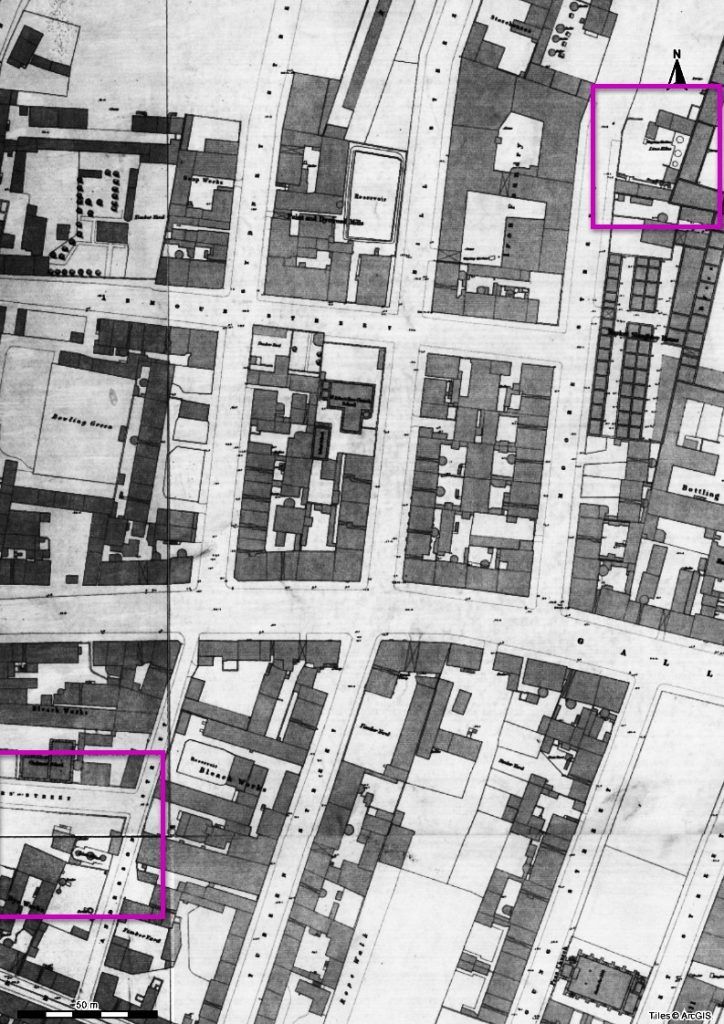
Charles Mathieson was approximately 56 years of age when he died in 1844 and Daniel was 47 when he died from phthisis in 1870. One does wonder whether their occupations as lime burners and merchants in this area influenced the length of their lives.
Daniel does not seem to have had such a head for business as his father as he became bankrupt in 1860. Although he was still living in Moore Street with his second wife and three children when the 1861 census was taken he soon moved. By 1867 when he was made bankrupt again he was earning a living as a wine and spirit merchant in Kent Street, off Gallowgate and it was at 2 Kent Street that he died in 1870. His widow Elizabeth continued in the area for a couple of years but by 1874 had moved to Roslea Drive, Dennistoun where her sole surviving stepson Charles died and where she lived until her death in 1918.
New profiles
A new profile has been uploaded for 2nd Lt Ronald S Arend and an expanded one for Lt Robert S Laidlaw.
******************************
Anyone who would like to help indexing the Burial Registers is very welcome to join us by contacting me at at research@glasgownecropolis.org