Complied by Morag T Fyfe
The indexers are just starting 1874, and the number of records indexed in the last three months is as follows –
| Jan 2024 | 332 |
| Feb 2024 | 363 |
| March 2024 | 396 |
Our database of persons buried or commemorated in the Necropolis now stands at 50353 entries at the end of March 2024 of which 21856 entries represent persons buried in common ground with no grave marker.
Mary Ann Thornton Stewart
There is a large monument in Compartment Epsilon to commemorate members of the Stephen family of shipbuilders. Like many monuments in the Necropolis some of the people named on the monument are not buried there and the names of others who are buried there are omitted from the stone. In this case a baby girl called Mary Ann Thornton Stewart was buried there by her uncle John Stephen (1855-1916) but is not included on the stone.
In 1866 Dr James Stewart, a medical missionary married 18 year old Williamina (Mina) Stephen the youngest child of Alexander Stephen, shipbuilder and Elspet Murray at her home Corona House, Broughty Ferry. The couple soon left for South Africa where James had been appointed to take charge of the Free Church mission at Lovedale 700 miles north-east of Cape Town. In 1868 their first child, a daughter named after her mother was born there and in February 1870 Mary followed.
It seems Mina and the two children returned to Scotland sometime in 1870 presumably to show off her daughters to her parents and siblings. At New Year 1871 while staying at her grandparents’ home in Broughty Ferry Mary fell ill and died from convulsions on 5th January 1871. Presumably there was a family party assembled in Broughty Ferry for the festivities as it was her uncle John who registered her death. Mary was buried in the Necropolis two days later. Her mother and surviving sister, and an African nursemaid, were still in Scotland on 2 April 1871 when that year’s census was taken. They are found visiting one of Mina’s married sisters Mary Ann Wright in Ann Street, Partick.
Mina Stephen and James Stewart spent most of the rest of their lives in South Africa where six further daughters and one son were born. James died at Lovedale in 1905 and Mina in East London, Eastern Cape in 1928.
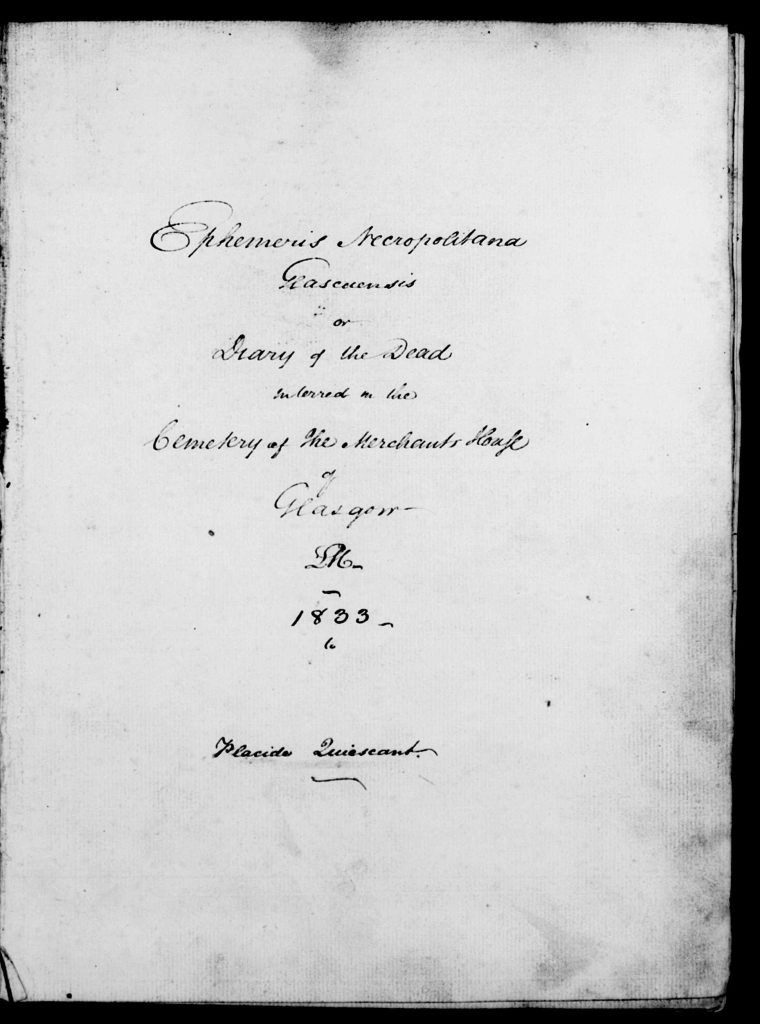
Title Page of the First Volume of the Burial Register of the Glasgow Necropolis
Martha McQuire
In Compartment Beta a stone commemorates a Mitchell family, lawyers and merchants in Glasgow. They are an interesting family, but this note concentrates on one of the two servants whose services they chose to permanently mark. Nestling beside the main family stone is an urn with the following inscription:
MARTHA JANE MCQUIRE
(MATTY)
For 65 years nurse and friend
in the family of … (rest buried)
Martha Jane McQuire can be found in the household of John Oswald Mitchell and his wife Eleanora Mary Acworth from the census of 1871 onwards as a nurse and maid. She died at the family home, 7 Huntly Gardens, Glasgow on 19 April 1930 aged 86. Her age at death is consistent with her age given throughout the censuses and points to a birth year of 1844. This allowed her baptism to be found in the registers of the parish church of Woolwich, Kent where she was one of at least seven children baptised on 3rd December 1843. Martha was recorded as the daughter of Hugh McQuire a driver in the Royal Horse Artillery and his wife Mary and had been born on 16th September 1843.
Nothing further is known about Martha until she appears in the 1871 census at 9 Ashton Terrace, Partick, the family home of J O Mitchell and his wife, employed as a nurse. The reason for this move may lie in the fact that on 2 October 1862 J O Mitchell and Eleanor Acworth had been married in the parish church of Plumstead, Kent by her father, the vicar of the church. Plumstead is the parish immediately to the east of Woolwich where Martha had been born in 1844 and it is possible that by 1862 she could have been working in Plumstead and been known to the vicarage family. If so, she could have accompanied Eleanor to her new home in Glasgow or come a year or two later when Eleanor’s children started to arrive. This explanation for Martha’s arrival in Glasgow is speculative but is, at least, plausible.
In 1871 J O Mitchell and his wife were not at home on census night. Martha, along with an under-nurse and a cook have been left in charge of four children ranging in age from an infant of less than a year to a seven year old. This suggests the father and mother found Martha reliable and trustworthy. The same thing happened at census night in 1881 when Martha and a resident governess were left in charge of a cook, a second nurse and a housemaid not to mention five children. By 1901 the youngest child of the Mitchell family at home was a 20 year old daughter and Martha’s official occupation had changed to maid. 10 years later there was a 2 year old child in the family and Martha, at the age of 67, has resumed her job as a nurse and even in 1921 when a 3 year old child was visiting on census night Martha was still described as a nurse.
Martha died on the morning of 19 April 1930 from a 5 minute attack of angina pectoris which suggests a heart attack and it is noted she suffered a previous attack about 5 years previously. Her death was registered by Andrew A Mitchell, eldest son of J O Mitchell and Eleanor Acworth who had known Martha all his life. He was able to give full details of Martha’s parents on her death certificate including her mother’s maiden name which is a tribute to the closeness of Martha to the Mitchells. She even left a will and Andrew Mitchell was one of the executors. The other executor was her nephew Charles James Haughton of Plumstead, Kent, the first time any mention is found that Martha had other family. Her estate was valued at £900 6s 6d which equates to £60,000 upwards today.
Edward and Agnes Boyes
The Boyes family originated from the Dumfriesshire/Lanarkshire border but by the mid 1850s had moved to Glasgow. Robert and Mary Boyes with their youngest children were living in Galloways Court, George Street in 1861 beside Edward Boyes their eldest son and his wife, Jane Hastie and young family. Edward was a maltster by occupation and seems to have retained the premises at 10 George Street as his business address though he and his family occupied a villa in Uddingston for many years.
In 1864 Edward purchased a grave in the Necropolis for the burial of his eldest son, 7 months old Robert, on 15 February. Later that year the infant’s grandfather Robert Boyes joined him. A second son, John aged 9 months, was buried in 1867 and in 1868 Edward lost his only surviving son, Edward 4 years old, and a daughter, Agnes aged 8 months. Both children died on 2nd October from scarlet fever. Edward died first at 3am after having scarlet fever for 11-12 days and his father registered his death the same day. Agnes didn’t die until 10pm that night after being ill for 5-6 days so her father didn’t register her death until the following day – the day both children were buried. Edward’s death appeared in the Glasgow Herald of Saturday 3 October and the notice of Agnes’ death in that of Monday 5 October. Another son Edward William was born at the end of 1870 but died on 10 March 1872.
William Skinner and family
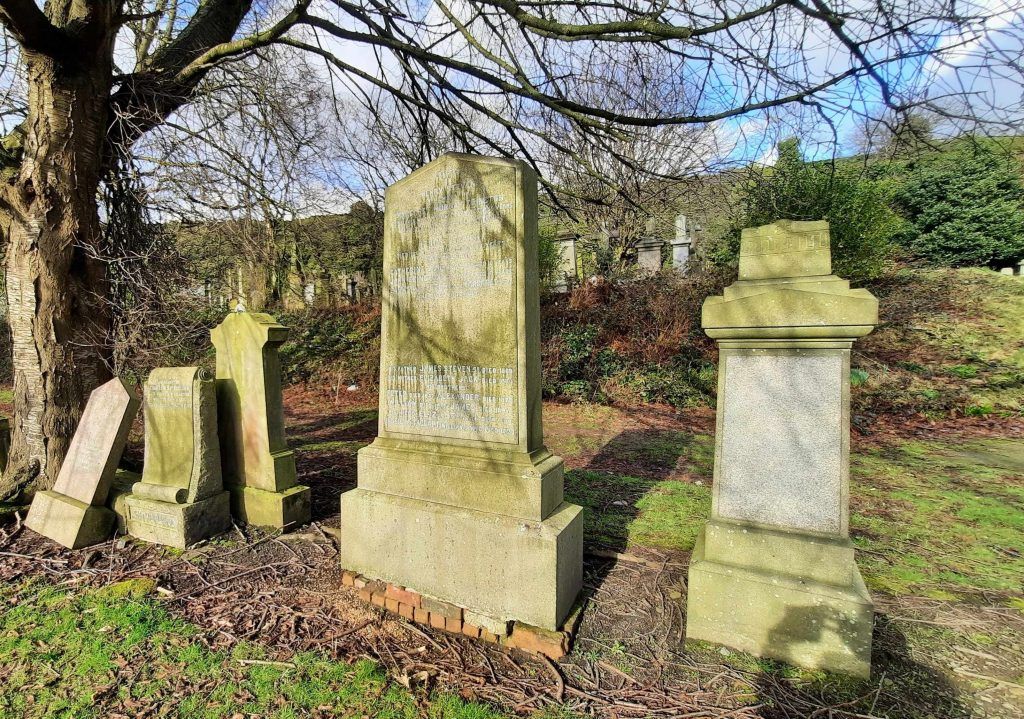
Not everyone named on a gravestone is buried in the associated lair. It may be made clear on the stone that a person commemorated is buried elsewhere but not always. There are a number of examples in the Necropolis where an adult who had previously buried family members elsewhere subsequently bought a lair in the Necropolis for their own use.
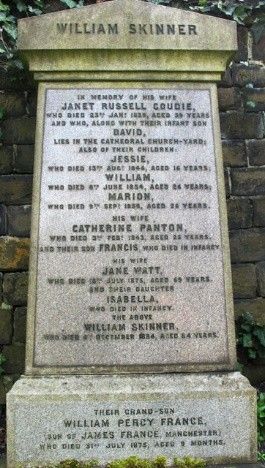
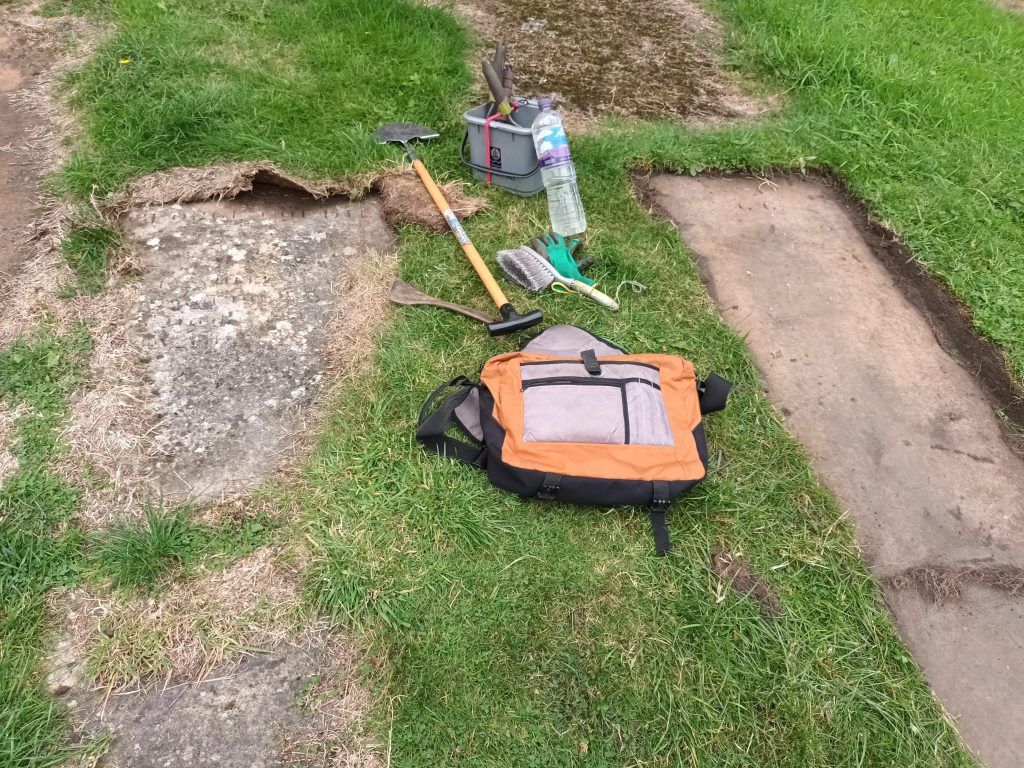
Image courtesy of Colin Campbell
William Skinner erected a stone in compartment Delta to commemorate three wives and some children. The list is headed by his (first) wife Janet Russell Goudie who died 23 Jan 1839 of heart failure aged 39 years and was buried in the Cathedral churchyard on 28 January; their infant son David was also buried there but the date is not recorded on the stone. David’s death was found in the burial register for the Cathedral churchyard showing he died on 9 October 1837 of whooping cough and was buried three days later. At the time William Skinner did not have a lair in Glasgow so both David and his mother were buried in a lair owned by George Gowdie.
Janet Goudie had married William Skinner in Dunbar and was described as ‘of this parish’ at the time of her marriage but surviving records suggest she may be the daughter of George Gowdie, manufacturer, of Glasgow and his wife Janet Scott which would help to explain the location of her burial. Janet and William had four children baptised in Dunbar before moving to Glasgow sometime after the birth of their son George in 1834.
By 1842 Skinner had remedied the lack of a burial place for his family and bought a lair in the new Necropolis. It received the body of his 8 month old son Francis on 27 March 1842 and continued in use until Skinner’s own death in 1884. William Skinner had a very successful career as a baker in Glasgow judging by the 1871 census where he is recorded as employing 50 men, 20 boys and 20 women in his business which was carried on under the name William Skinner and Son (the son being George Skinner, also buried in the Necropolis).
Mary Moore
MELANCHOLY OCCURRENCE IN TRONGATE – Yesterday afternoon, a girl named Mary Moore, 8 years of age, daughter of Mr Moore (of the firm of Moore, Taggart & Co, warehousemen, Trongate), was fatally injured in Trongate, under the following circumstances:- It is said that when the accident occurred there were several omnibuses passing the spot, and while the girl was in the act of crossing the street she appeared to become confused, and got in front of one of Menzies’ Whitevale and Cowcaddens ‘buses, and before the driver could pull up the girl was knocked down and the two off wheels passed over her body. She was immediately conveyed to the Central Police Office, but only survived about ten minutes. The police are making inquiry, for the purpose of ascertaining whether or not there is any blame attachable to the driver.
Glasgow Herald Tuesday 27 June 1871
Mary Mudford Moore was a month short of her seventh birthday when she died in June 1871. She was the oldest known daughter of William Moore and Letitia Carty from Northern Ireland and had been born there. Her’s is the only burial in lair 103 in Compartment Beta and no stone marks the location. The lack of other burials in the lair suggested that her parents might have returned to Ireland after Mary’s death but this proved wrong as William and Letitia can be found in Glasgow and Old Kilpatrick censuses up until 1901. One is left wondering why they chose not to be buried alongside their daughter when they died.
Alexander Steven
A discovery in a newspaper can often expand the brief notice of a burial recorded in in the burial register of the Necropolis.
DEAD BODY FOUND – About one o’clock on Saturday morning, a splash in the water, followed by cries for assistance, were heard in the neighbourhood of Mr M’Neill’s old boat-yard, not far from the Green Suspension Bridge. The alarm was given, and Mr Geddes speedily appeared, to render whatever assistance he could give. He arrived too late, however, to discover any traces of the drowning man; but after a diligent search for the body, it was recovered about five o’clock, and taken to the Southern Police Office, where it was afterwards identified as that of Alexander Steven, a man about 28 or 30 years of age, who resided with his parents at 8 M’Intyre Street.
Glasgow Herald Monday 10 June 1872
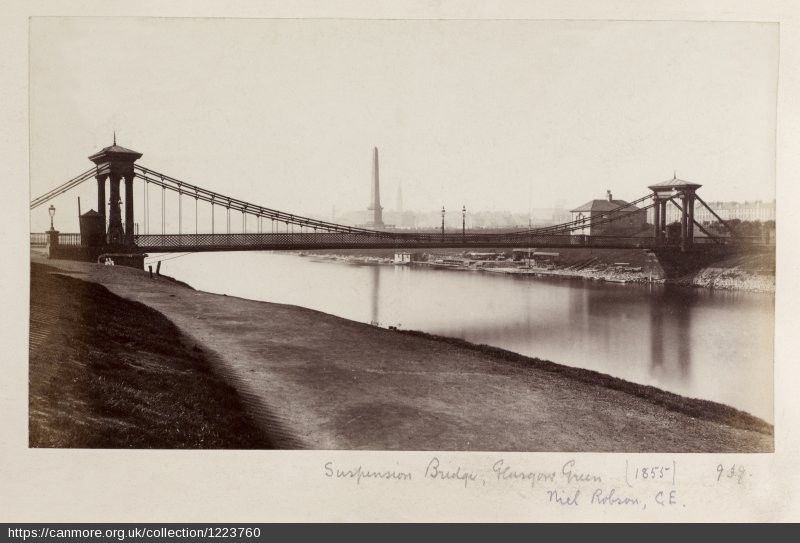
In the background can be seen the Nelson Monument on Glasgow Green and the Humane Society house
Unlike many drowning victims Alexander was not buried in common ground but in the family lair in Compartment Petra. The lair had been bought in 1867 for the burial of his elder brother Peter. Unsurprisingly there turned out to be several inaccuracies in the newspaper report. His age was given as 28-30 when, in fact, he was only 20 and the newspaper implied that both his parents were alive whereas his father had died in 1869. At the 1871 census his widowed mother was living at 8 M’Intyre Street with some of her younger children but Alexander was found in Greenock listed as a seaman on board the Queen of the South. As a seaman it is maybe ironic that he died by drowning. The Mr Geddes referred to in the newspaper report was the well known George Geddes, snr, Officer of the Glasgow Humane Society, 1859-1889. The society, the oldest practical lifesaving organisation in the world, was set up in 1790 and is still in existence.
John Duncan and family
This is a much expanded version of something that first appeared in Grave Matters 13
When studying the Necropolis burial register it is always difficult to identify members of one family who may be buried in scattered plots in common ground. A very uncommon surname may be suggestive but a more reliable clue is usually the presence of more than one person of the same surname at the same address within a short period of time.
Between September 1856 and August 1857 two females and one male with the surname Duncan, all living at 39 Sidney Street were buried in common ground in the Necropolis. Mary and Elizabeth Duncan were buried on 2nd and 6th September 1856 and David Duncan on 5 August 1857. David was 2 days old when he died but no ages were given for Mary and Elizabeth so it was not known whether they were mother and daughter or two sisters. A search of the Index to the Death Registers on Scotlands People confirmed the three deaths (all aged under a year) and gave the mother’s maiden name as Erskine in each case. Purchasing Elizabeth’s death certificate confirmed the address as 39 Sidney Street and gave her parents’ full names – John Duncan and Agnes Erskine (married Paisley High Church 1845). It turned out she had been 9 days old when she died from debility.
A suspicion that Elizabeth and Mary were twins was confirmed by an examination of the Index to the Birth Registers which showed the girls to have consecutively numbered birth certificates. If we assume the elder twin was registered first then Mary was the younger twin. The Index to the Birth Registers showed that David, who was buried in August 1857 had a twin brother Edward Cook Duncan.
At this point it seemed helpful to conduct a more thorough search of the Birth and Death Indexes on Scotlands People to try and identify more Duncan children with an Erskine mother in the right time period and geographical area. This produced a list of seven possible births in High Church, Anderston and Clyde registration districts between 1856 and 1864 and six deaths in the same registration districts over the same period. As the earliest birth found in the statutory registers was 1856 a similar exercise was carried out in the OPR Indexes with mixed results – four births were identified but no deaths. One of the births found in the OPR Index was that of George Risk Duncan and his burial was found in the burial register in 1858.
Armed with names and addresses it was possible to find John and Agnes Duncan and a selection of children in the 1851 and 1861 censuses at 39 Sydney Street in 1851 and at Bothwell Street (where George had died) in 1861. There was no sign of the parents or children in the 1871 census and one wondered whether John and Agnes had died by then. The death of a likely Agnes Duncan/Erskine was identified on Scotlands People in 1866 and there was an entry in the Necropolis Burial Register for the burial of an Agnes Duncan of 14 McAlpine Street that same year. Having purchased the Death Certificate it was obvious that the correct Agnes Duncan had been found as she was the wife of John Duncan and had died at 14 McAlpine Street of typhus fever.
Was it possible to continue the family’s story by finding John Duncan’s death? A month after Agnes was buried in November 1866, 47 years old John Duncan from the City Poorhouse was buried in the Necropolis. There was no exact match for this John on Scotlands People but 42 years old John Duncan’s death had been registered in the Central Registration District and it seemed worthwhile obtaining this death certificate. The information on the death certificate described him as a widower and gave his usual residence as 14 McAlpine Street but he died in the City Poorhouse from typhus fever. The correct John Duncan had been found. John and Agnes Duncan probably left six children alive ranging from 18 years old Matthew to 2 years old William.
| SURNAME | FORENAME | PARENTAGE | SEX | BIRTH DATE | REFN | PLACE | DEATH/BURIAL |
| DUNCAN | MATTHEW | JOHN DUNCAN / AGNES ERSKINE | M | 1848 | 1861 CENSUS | PAISLEY | aft 1861 census |
| DUNCAN | JOHN | JOHN DUNCAN / AGNES ERSKINE | M | 25/03/1849 | 573 / 1 /30 / 206 | Paisley High Church | aft 1861 census |
| DUNCAN | JAMES ERSKINE | JOHN DUNCAN / AGNES ERSKINE | M | 21/11/1849 | 644 / 1 / 380 / 421 | Glasgow | aft 1861 census |
| DUNCAN | AGNES | JOHN DUNCAN / AGNES ERSKINE | F | 10/04/1852 | 644 / 1 / 390 / 226 | Glasgow | aft 1861 census |
| DUNCAN | GEORGE RISK | JOHN DUNCAN / AGNES ERSKINE | M | 04/08/1854 | 644 / 1 / 390 / 606 | Glasgow | 25/04/1858 Necropolis |
| DUNCAN | ELIZABETH | ERSKINE | F | 1856 | 644 / 2 / 1371 | High Church | 6/09/1856 Necropolis |
| DUNCAN | MARY | ESKINE | F | 1856 | 644 / 2 / 1372 | High Church | 2/09/1856 Necropolis |
| DUNCAN | EDWARD COOK | ERSKINE | M | 1857 | 644 / 2 / 1254 | High Church | aft 1861 census |
| DUNCAN | DAVID | ERSKINE | M | 1857 | 644 / 2 / 1255 | High Church | 5/08/1857 Necropolis |
| DUNCAN | DANIEL | ERSKINE | M | 1858 | 644 / 8 / 1610 | Anderston | 1863 Clyde |
| DUNCAN | ALEXANDER KINOS | ERSKINE | M | 1862 | 644 / 8 / 1622 | Anderston | 1863 Clyde |
| DUNCAN | WILLIAM KYOSE | ERSKINE | M | 1864 | 644 / 5 / 967 | Clyde |
New profiles
Profiles have been added for Robert McCallum and family and James Adams, Josiah Flecknoe, William E Allenby, Thomas Dobie and John Sinclair, the latter five men all buried in common ground.
******************************
Anyone who would like to help indexing the Burial Registers is very welcome to join us by contacting me at at research@glasgownecropolis.org