John Battersby and Family
See you later, Glamour Boy
John Battersby and his family
By Diana Burns, November 2026
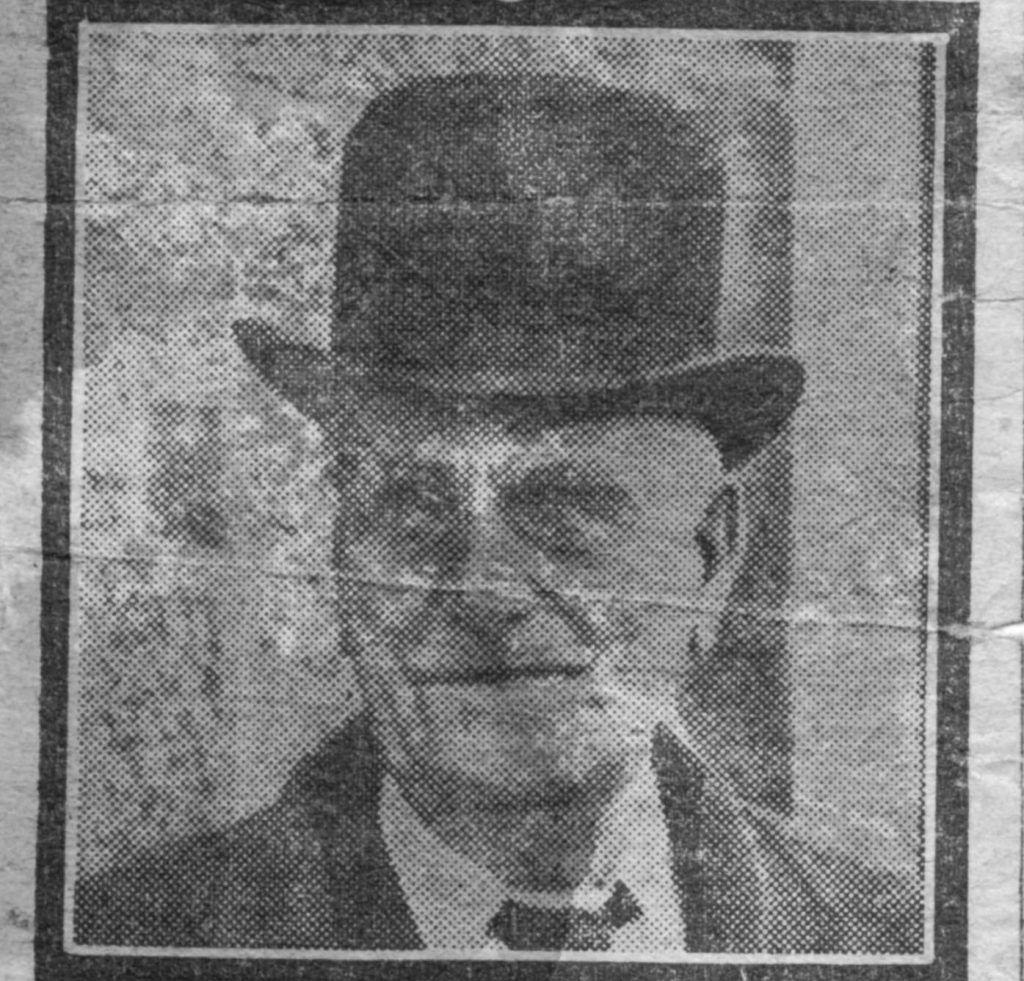
Ex-Baillie John Battersby
Glasgow Bulletin 8 March 1922
When his wife died, John Battersby spared no expense to commemorate her last resting place in Compartment Sextus, lair 376 in the Glasgow Necropolis. He commissioned a headstone from William Scott, an established company of monumental sculptors based at Cathcart Cemetery. The company had already collaborated with the architect, Alexander Skirving, in the restoration of the Covenanters’ Martyrs Stone in Old Cathcart Church graveyard, and had created the pink granite cross, adorned with an anchor, for the Adamson family in the Necropolis (Compartment Primus, lair 100). Mary’s headstone was made from white marble in three tiers, topped with a cross (presently dislodged).
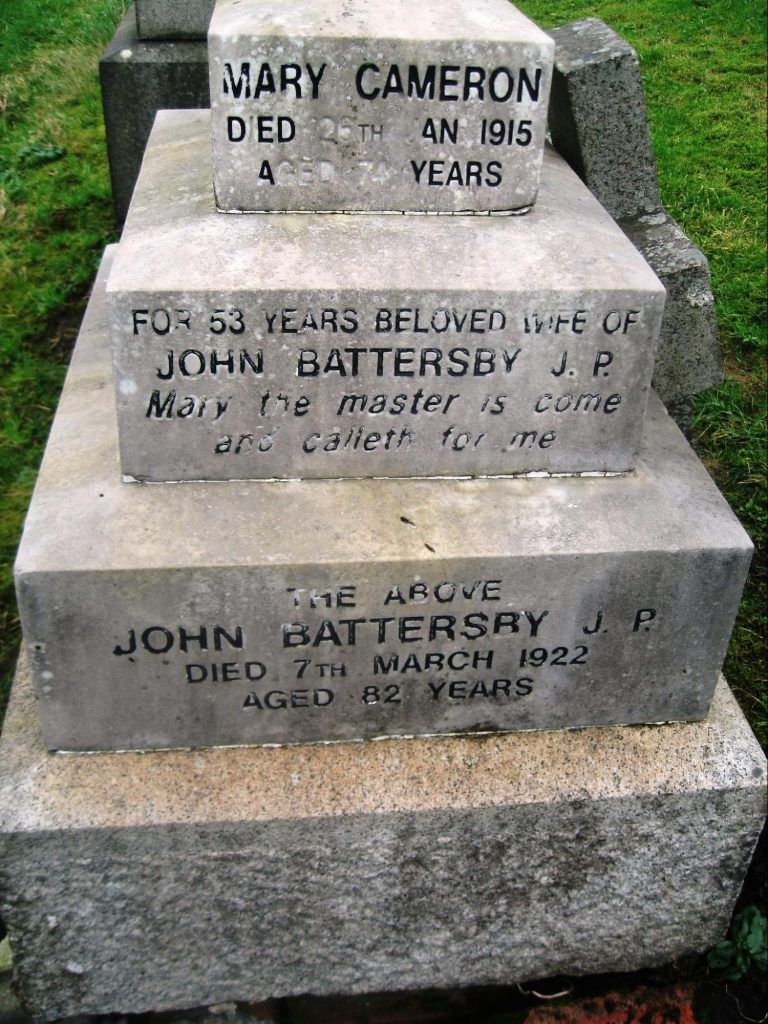
‘Honest John’ Battersby was a dedicated and energetic trade unionist and liberal politician. Early in his career, he had taken a leading part in the Trade Union movement, becoming secretary of the Typographical Association in 1873. He held this position for thirteen years, and acted as president at the first Trade Union Congress in Glasgow in 1875. He represented the Hutchesontown Ward in the Town Council for thirty years and was appointed a Bailie in 1896. In 1911, John and Mary celebrated their golden wedding anniversary and the Council laid on a banquet for them in the City Chambers. At the time of his retirement in 1920, he was ‘Father’ of Glasgow Town Council, and his fellow councillors presented him with his bust in bronze, in recognition of his public services.
John and Mary Battersby had a son, John, employed in the Glasgow Fire Brigade. In the early morning of 7 January 1898, a huge fire broke out in the premises of W & R Hatrick and Co., wholesale and export druggists and chemists, at the top of Renfield Street. The building contained inflammable chemicals, drugs, oils, spices and essential oils, and its interior was lined with wood. The Fire Brigade responded with horse drawn steam pumps and handcarts and, within two hours, fire fighters had brought the blaze under control. Believing the flames to have been extinguished, the crew entered the premises. Four men were on the top of the building, endeavouring to strip the roof and play their water hoses on the charred timbers underneath. Suddenly, there was a dull roar in the centre of the building and the whole roof collapsed, enveloping the men beneath, including John Battersby.
It was the worst disaster that had happened in the Glasgow Fire Brigade up to that time, and the public turned out in tens of thousands for the funeral. The four men were buried in Compartment Sextus of the Necropolis, overlooking Wishart Street and the Royal Infirmary, James Hastie in lair 235, David Smith in lair 241 Charles Orr in lair 244, and John Battersby in lair 238. The four men are commemorated by identical gravestones.
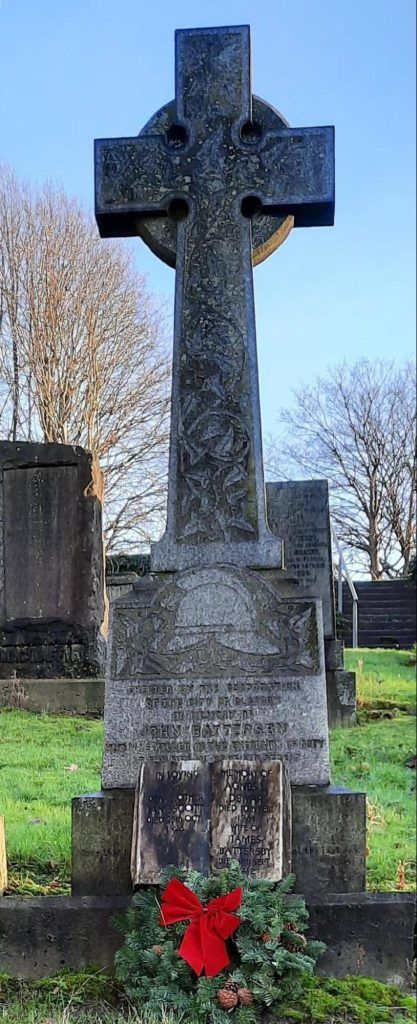
Bailie Battersby was at the head of his son’s coffin as a pall bearer and several of his grandsons walked with other relatives behind the carriages on which the coffins were carried. John’s death left behind his widow, Jane, and eight children, the youngest a baby of three months and the oldest, a girl of about sixteen. The present Glasgow Herald and Evening Times building stands on the site of Hatrick’s premises, and the tragedy is commemorated by a flagstone in the pavement at the main entrance.
In front of John, jnr’s stone is a plaque commemorating the death of Jane Scott, his wife in 1926. Erected by their daughter-in-law, Agnes Dewar, wife of James Battersby, the stone also records her own death in 1961.
On the other side of Bailie Battersby’s memorial to his wife is a surprise. Amidst the incised crosses and biblical texts of the surrounding monuments is a black relief, carved on the white marble, of a speedway rider.
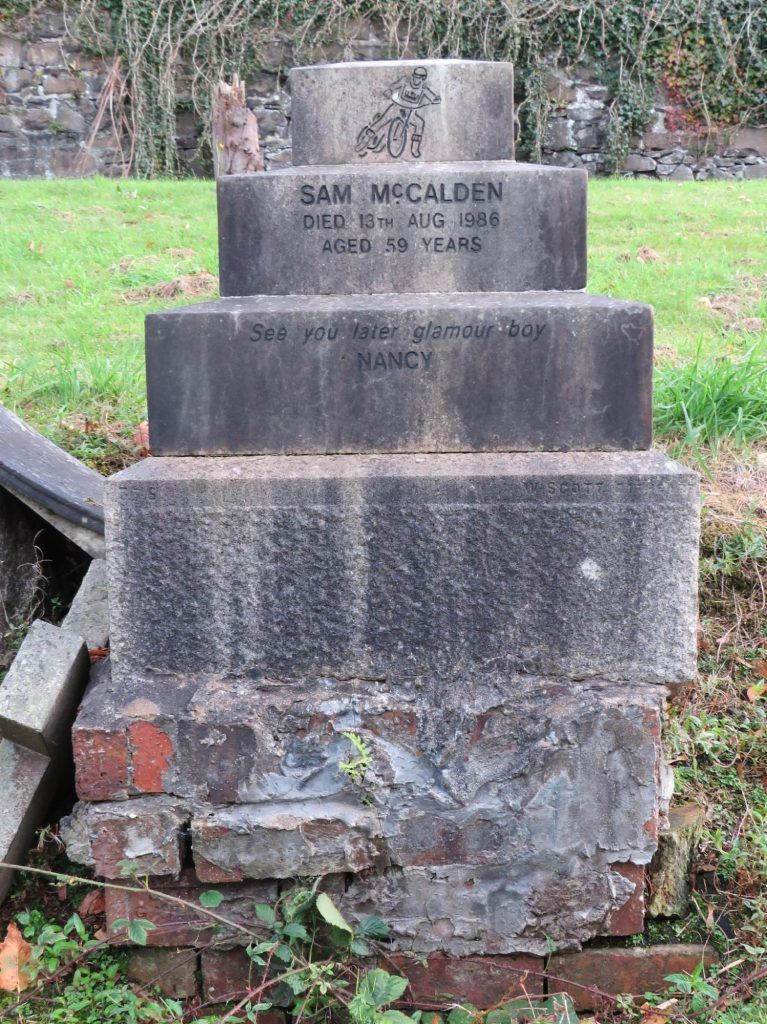
This seemingly poignant and eerie promise of a reunion in the hereafter has a more homely explanation. James Battersby, great grandson of Bailie Battersby, had inherited the family lair at the Necropolis. He had been friendly at school with Sam McCalden and when Jim was called up for military service, Sam began dating Jim’s sister, Agnes (‘Nancy’). They married in 1950 at Scotstoun West Parish Church. Sam’s work as a floor layer often took him away from home and he would send his wife postcards to keep in touch, signing them ‘See you later, glamour boy!’ Sam died suddenly and unexpectedly at the early age of 59, and his family had made no preparations to buy a cemetery plot. Jim therefore offered Nancy the family lair at the Necropolis which also lay close to where she had been brought up in the High Street. All his life Sam had enjoyed watching speedway racing but could never afford to take part himself, so Nancy commissioned the design of the speedway rider from the Co-operative Society. She recognised perfectly well the double meaning and the power of the epitaph she had chosen, telling me – ‘For me, he’ll always be my glamour boy!’
In 1998, a chance meeting took place between Nancy McCalden, and her neighbour, retired Strathclyde firefighter, Sub Officer John Jamieson. In the ensuing conversation, the connection between the two neighbours and the Glasgow Fire Service came to light. Nancy knew very little about the tragedy because her grandmother, Jane, had been too traumatised ever to discuss what had happened. Nancy and her brother, Jim, had never even seen a photograph of their grandfather. She told John how her great grandfather, Bailie Battersby, had written a poem in memory of the four firefighters, a poem which the family had kept unpublished up until then.
John Jamieson contacted his former employers and told them about the Bailie’s poem. As a result of that chance meeting, Jim and Nancy were told that a photo of the four firemen had been published in ‘A Proud Record’, a book commemorating the history of the Glasgow Fire Service, and they were able to see their grandfather’s picture for the first time. They were invited to a special ceremony held in Glasgow Cathedral on 16 July 1999, when Bailie Battersby’s poem was read in public for the first time, by deputy fire master David S Kennedy.