The indexers have just reached 1869, and the number of records indexed in the last three months is as follows –
| April 2023 | 398 |
| May 2023 | 396 |
| June 2023 | 400 |
Our database of persons buried or commemorated in the Necropolis now stands at 47995 entries at the end of March 2023 of which 20782 entries represent persons buried in common ground with no grave marker.
Stephen and Agnes Cotton
In 1842 a simple stone was erected in Compartment Lambda to commemorate Stephen Cotton and two of his daughters (Charlotte and Helen) who predeceased him. Subsequently the name of a third daughter (Agnes, Mrs McNaughtan) was added and finally his widow Agnes Fairbairn, who survived him by more than 25 years, completed the list.
Stephen Cotton was born in Burslem, Staffordshire in 1787 and it is not known why he came to Glasgow but he was certainly there by 1819 when he and Agnes Fairbairn married in the town. He may be the S. Cotton, china & glass warehouse of 63 Trongate, then Virginia Street found from 1811 in the Glasgow directories. By 1822 Stephen’s commercial life had taken a new direction and he is shown as operating commercial lodgings in Argyle Street and later in Stockwell. In 1841 he made the move from running a lodging house to running a proper hotel when he took the lease of the Wellington Hotel at the north-east corner of George Square. The hotel contained twelve bedrooms and was marketed as being convenient to the railway [Queen Street Station]. Stephen did not enjoy his new position for long as he died on 2nd November 1842 from consumption. His widow continued to run the hotel until 1847 when she and her surviving family moved to Cork to take over the Imperial Hotel there. A farewell dinner to mark Agnes’s departure was held in the hotel attended by many friends including at least eight landlords of other Glasgow hotels.
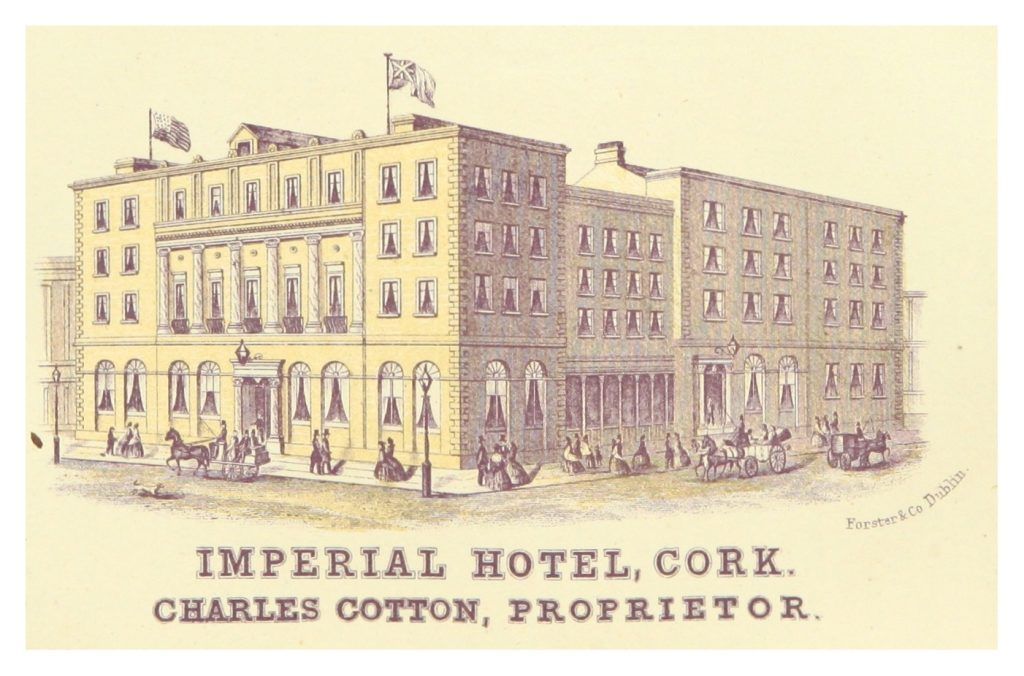
Agnes Fairbairn was born in 1800 in Edinburgh and died at Rostrevor, Co. Down in June 1868. Her usual residence at death was given as Dublin and it seems she retired from running the Imperial Hotel, Cork in 1864 when the partnership between her and her elder son, Charles, was dissolved and he became sole proprietor of the hotel. Agnes’s residence in Dublin may be as a result of her daughter Margaret’s marriage to William Jury of Dublin in 1854. In 1865 William Jury, his brother in law Charles Cotton and Christian Goodman purchased the Shelbourne Hotel, St Stephen’s Green, Dublin and comprehensively redeveloped it. William Jury died in 1872 and Charles Cotton in 1876. The hotel passed to Jury’s wife Margaret Cotton and their two sons Charles and Edward. Whereas Agnes Fairbairn was brought back to Glasgow to be buried, her son Charles was repatriated from Edinburgh where he died on 30th December 1876 to be buried in Blackrock churchyard, Cork.
William Pringle
The St Andrews Citizen of 24th December 1904 carried the announcement of the death of William Pringle of Glasgow only son of the late Captain William Pringle, St Andrews. William, jnr drowned in the Moray Firth on 13th December by the foundering of the steamer Nar. The loss of the Nar was widely reported in the newspapers and the Banffshire Journal of 20th December is typical.
Shipping disaster at Garmouth
During the hurricane early on Tuesday morning, when one the fiercest storms ever experienced in the Moray Firth was at its height, the Glasgow steamer Nar, [built in 1884 by Scotts of Greenock] the property of Mr George Webster, brother-in-law of Mr Murdoch, chemist, Garmouth, foundered about a mile off Kingston, and the whole crew of nine were lost. About one o’clock on Tuesday morning, Chief Boatman Michael Dunn, of the Kingston Coastguard, while on duty saw signals of distress from the vessel, and he had the lifesaving apparatus instantly called out. In the terrible darkness, however, nothing could be seen and the star rockets which were sent up from the shore brought no response. Thus the weary watchers hung about till morning broke, and then it was seen that all was over with the doomed vessel, for, standing above the breakers, there could be dimly seen a mast, which, however, was soon torn from its place, and later in the morning not a single indication could be got that just a mile out from the shore a terrible tragedy had taken place. Soon, however, the sea cast up its message. First there was driven on shore a life-buoy marked “SS Nar, Glasgow.” and shortly thereafter a boat broken and battered by the sea was cast on shore. Then about eight o’clock all hope was blasted, for a group of the anxious company on shore saw a body thrown up by the angry surf, and following it came parts of the ship’s lifeboat and other wreckage, while other two bodies were also found, one being identified as that of William Pringle, the chief engineer, who belonged to Glasgow. The names of the crew were as follows:— Lewis Hughes (master), Wm. Jones (mate), and Samuel Pritchard (lamp trimmer)—all of Amlwch, Wales; Daniel Mackenzie and Alexander Dawson, of Burghead; William Pringle, chief engineer, Glasgow; George Britley. second engineer, Sunderland; and the names of the two firemen are unknown [supposed to be James Davidson and James A Murray]. The Nar was a vessel of 299 tons register and was on a voyage from Sunderland to Burghead with coals to Mr Harvey, Elgin. A fourth body, that of Daniel Mackenzie. Burghead, was washed up on Wednesday.
![1 inch OS map published in 1900 [from NLS Maps] showing Kingston Coastguard Station on the left](https://www.glasgownecropolis.org/wp-content/uploads/2026/05/1-inch-OS-map-published-in-1900-from-NLS-Maps-showing-Kingston-Coastguard-Station-on-the-left-1024x329.jpg)
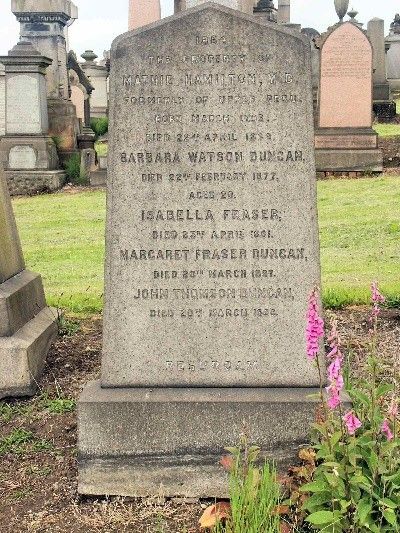
Dr Mathie Hamilton (1793-1869)
In 1844 the Report of the committee appointed by the British Association [for the Advancement of Science] in 1842, for registering the shocks of earthquakes, and making such meteorological observations as may appear to them desirable reported that it had been suggested that two or more instruments should be given to Dr Mathie Hamilton who was about to return to Peru on condition he would send back a record of their readings to the Committee in London. Unfortunately I do not know the results of this initiative.
Mathie Hamilton, a descendant of John Knox through his maternal line, was born in Glasgow in 1793 and owed his memorable forename to his uncle Benjamin Mathie. On finishing his medical degree at the University of Glasgow he left for Peru in January 1826 to take up a position as surgeon to the Potosi, Paz and Peruvian Mining Company. The 1820s saw the culmination of the fight for Peruvian and Bolivian independence from Spain and led to the establishment of many speculative companies to exploit the mineral riches of the area. By the time Hamilton reached Peru the company had folded and he found himself without a job. He soon established himself in general practice however and also became physician in charge of the Peruvian military hospitals.
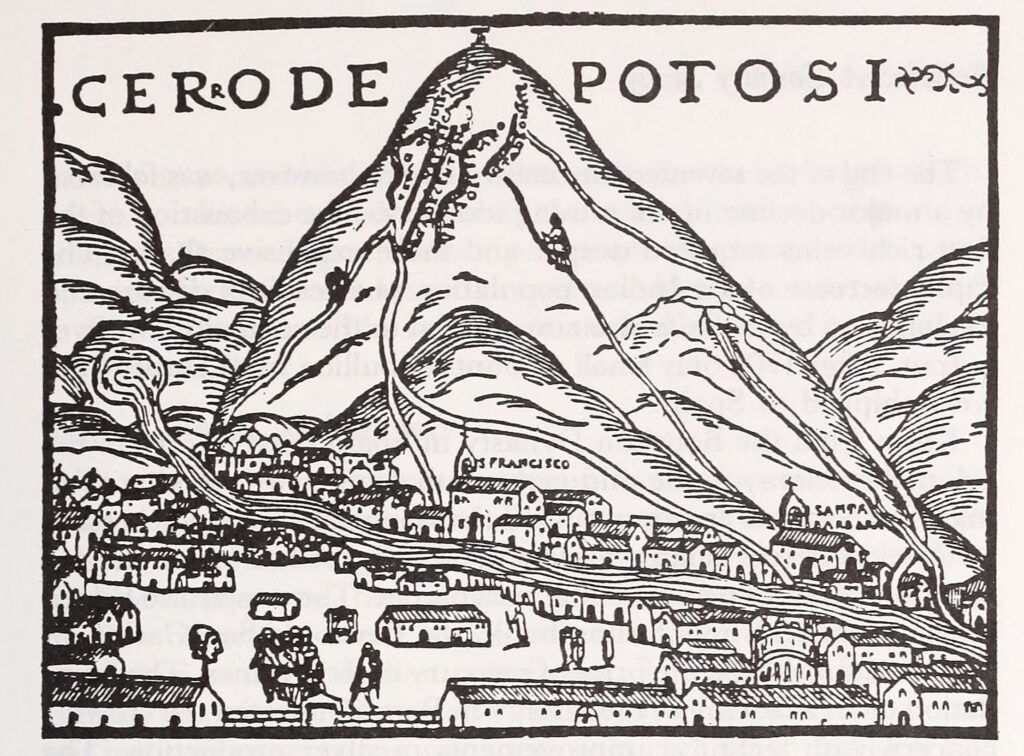
Hamilton seems to have spent much of the next twenty years in South America and is said to have sailed five times round Cape Horn and once crossed the Isthmus of Panama which suggests three return trips to Peru. It is most likely he disembarked at Arica in 1826 then as now the main port giving access to Bolivia. Due to territorial wars between Chile and Peru Arica is now in northern Chile but Tacna, 36 miles further north, which may have been Hamilton’s main base is still in Peru.
A sketchy narrative of his life can be constructed from passing remarks made in various scientific articles he published. After his initial voyage to Peru in 1826 he was back in Millport by 1830 where he wrote an article for the Glasgow Medical Journal on the dangers of charcoal braziers in poorly ventilated spaces like ship’s cabins. He had returned to Peru by 1833 as he was present in Tacna during the earthquake of that year. He returned to Glasgow about 1840 in which year he became a life member of the British Association. The 1841 census records him in Millport again while he took the opportunity to obtain his MD from Glasgow University in 1842. Judging by the British Association report noted at the beginning it seems Hamilton was planning to return to Peru in 1844 for what would turn out to be the final time. He had returned permanently to Glasgow sometime before 1851 as he is found living at 36 Warwick Street with a widowed sister, an unmarried sister and a niece at that year’s census.
As well as earthquakes, Hamilton published articles on altitude sickness and dysentery and translated an important article on yellow fever from Spanish for publication in the Glasgow Medical Journal.
James Black (1816-1867)
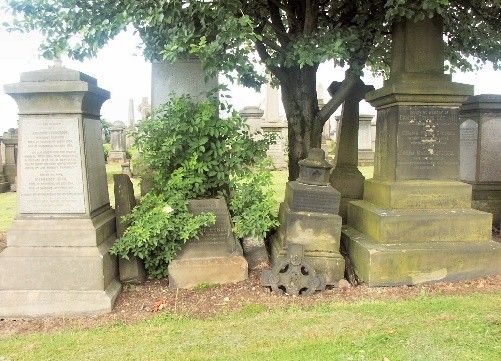
Two small seemingly unrelated monuments sit side by side on a lair in Compartment Epsilon. That to the left commemorates James Spens Black of Craigmaddie and his fourth son Arthur Henry while that on the right marks the burial place of his Sands inlaws. The memorial gives no clue to the detailed family history of Black with his two wives and nine children. His description of himself as James Spens Black of Craigmaddie alludes to the fact that he owned the mansion and estate of Craigmaddie near Milngavie from 1851, the same year in which he married his second wife Mary Sands from Liverpool. The house had been built c1800 by an unrelated James Black, Provost of Glasgow (1808-10 and 1816-18) and passed through several hands before being bought by James Spens Black. Black had been associated with the Milngavie area for many years through the firm of John Black & Co., calico printers who established their print works there c1835. He was living at Allander House, Milngavie when as chairman of the Milngavie Gas Light Company gas was introduced into the village in 1850.
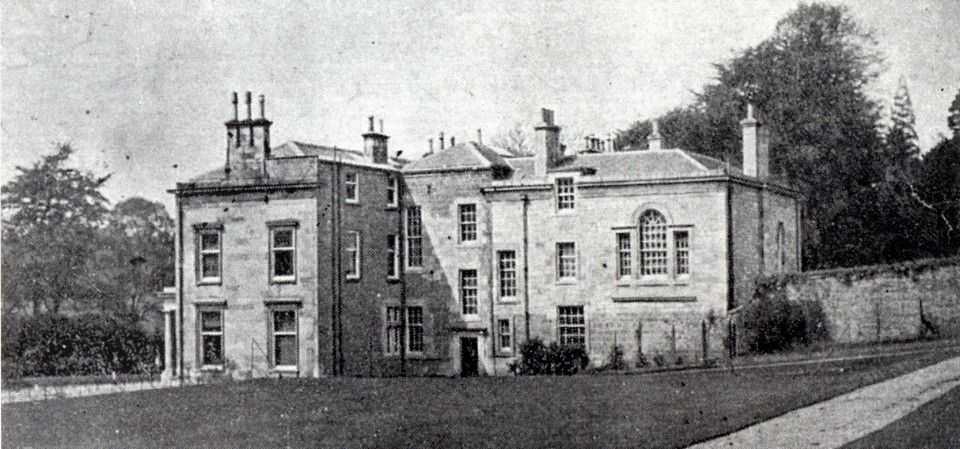
James Spens Black’s first marriage, to Mary Loag/Logue, was registered in Barony parish on 28th February 1848 as an irregular marriage. Two children had already been born to the couple, Sophia Spens Black, named after her paternal grandmother in 1844 and James Spens Black, jnr in 1847. Mary did not long survive her marriage and died at Allander House, Milngavie on 7th May 1850. Her place of burial is presently unknown.
Almost exactly a year later, 13th May 1851, James Spens Black married again to Mary Jane Hattersley Sands, youngest surviving daughter of Thomas Sands, merchant and Mayor of Liverpool (1843-44). In sixteen years of marriage the couple had seven children all of whom survived their father.
In the 1850s a decision was taken to beautify Glasgow Cathedral by installing stained glass windows. The majority were made by the Royal Bavarian Stained Glass Establishment but those in the Lauder Crypt were designed by Thomas Willement of London and were donated by James Spens Black in 1863/4.
Cathedral Monuments
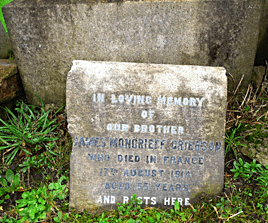
Recent thoughts about the monuments in Glasgow Cathedral led to an investigation of links between the Cathedral and its burying grounds with the Glasgow Necropolis.
My interest was originally sparked by some military memorials in the Cathedral. Lieut General Sir James Moncrieff Grierson (died 17 August 1914) is buried in the family grave in the Necropolis and has a much fancier memorial in the Cathedral.
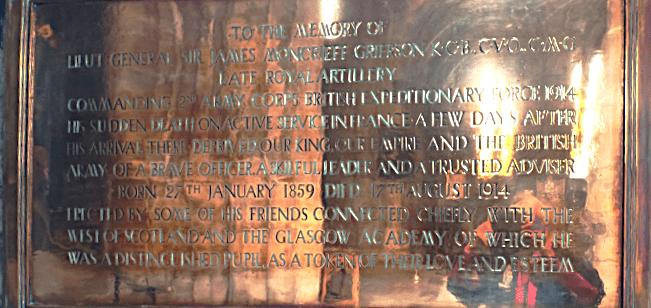
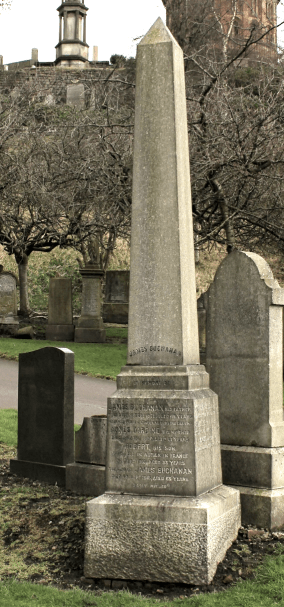
Some families who already owned a lair in either the old or new burying ground at the cathedral decided to buy a lair in the Necropolis and use it for future burials. Sometimes the relationship between the old and new burial places is explained on the gravestone as on this one erected by James Buchanan in memory of his father James Buchanan, senior who died on 14 September 1872 and is ‘interred in the Cathedral Burying Ground’.
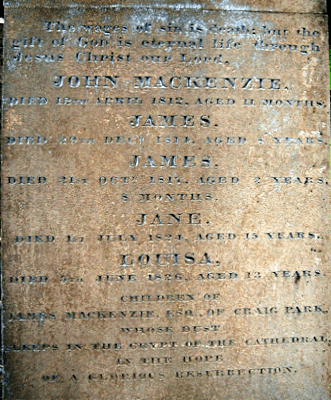
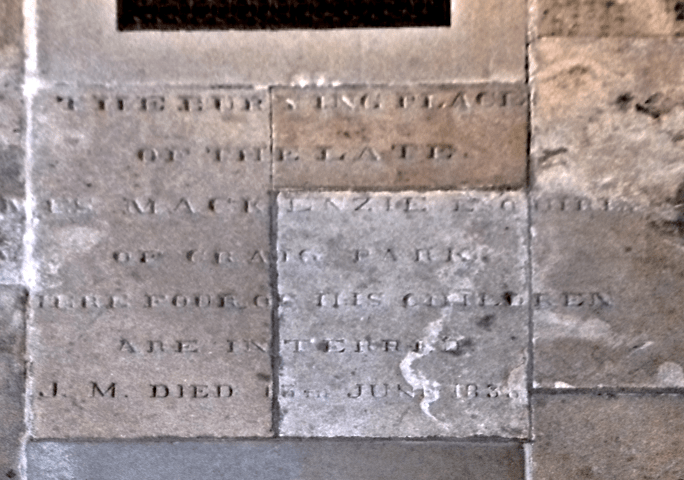
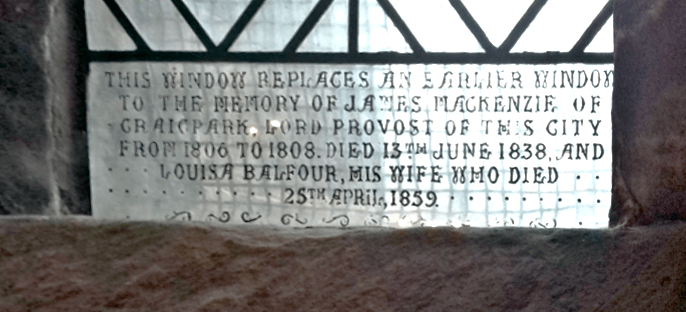
James Mackenzie of Craigpark and his wife Louisa Balfour lost five children in childhood and when the family erected a stone on their new lair in the Necropolis these children were not forgotten. John (died 1812), James (died 1814), James (died 1817), Jane (died 1824) and Louisa (died 1826) were all listed on their parents’ stone although they had been buried in the crypt of the Cathedral. A slab marks the original burying place in the crypt and there is also a memorial window (see below
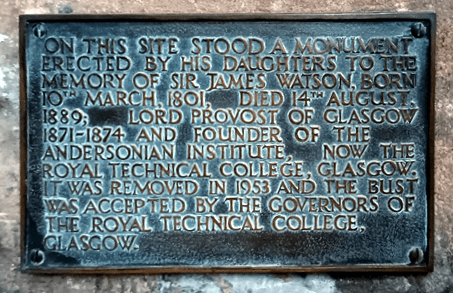
Finally I want to mention a monument in the Cathedral that is no longer there. This plaque tells the story of Sir James Watson’s (1801-1889) memorial and an old photograph below shows what is now lost.
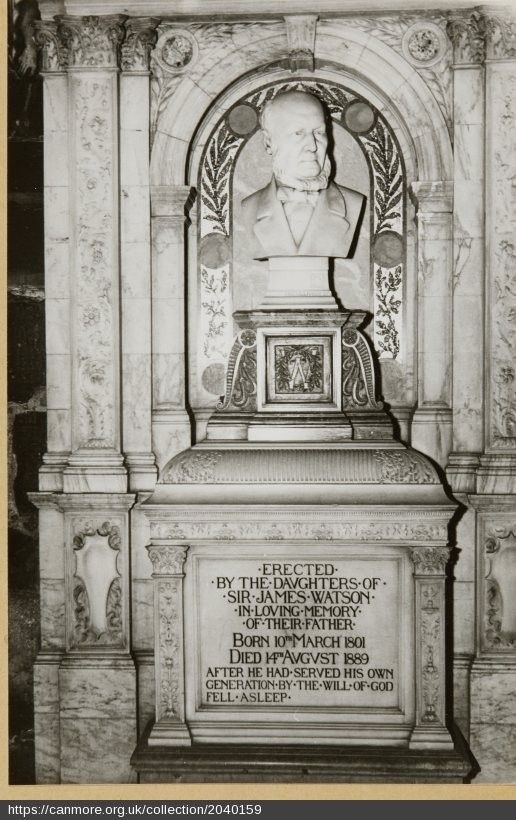
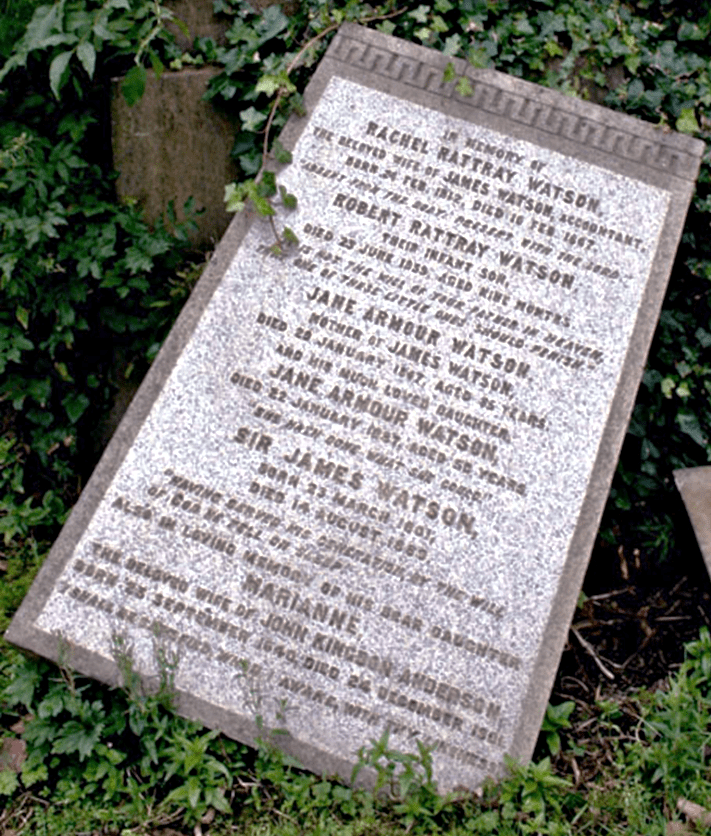
My thanks to Colin Campbell for the images of the memorials in Glasgow Cathedral.
Reburials from common ground
There have been several mentions in previous issues of Grave Matters of bodies being transferred from one lair to another, sometimes more than once. In all these cases the bodies were in family graves whose locations were known. It might seem impossible to do likewise with burials in common ground but two instances have been found in the Burial Registers where this took place.
There always seems to have been more than one class of burial in common ground but it has been impossible to tell what the differences were simply by examining the Burial Registers; the Merchants House records would need to be consulted. From November 1866 changes were made to the method of burying in common ground, or at least the method of recording the location of these burials changed. The Burial Registers showed that some burials in common ground were now being given a specific lair number and it may be suggested that some graves were being laid out in rows although this is only supposition at the moment.
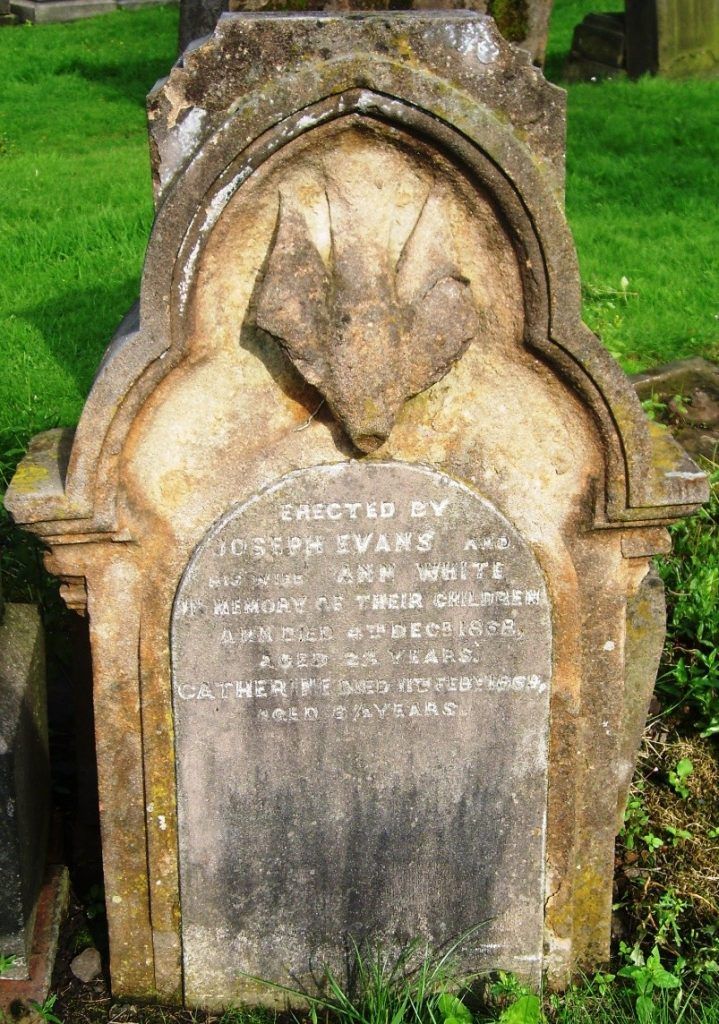
For example on 3 December 1868 Ann Evans was buried in common ground in Compartment Eta lair F/36, which could mean the thirty-sixth grave in row F. Although these graves had no permanent grave markers their locations must have been known as Ann’s body was retrieved from this grave and placed with her sister Catherine who died on 11 February 1869 and was buried in Compartment Eta lair 140. A stone on this lair commemorates Ann and Catherine, daughters of Joseph Evans and Ann White (below).
A second example is that of James Cowan, a patient in the Royal Infirmary who was originally buried in B/47 in Compartment Eta’s common ground on 10 January 1867 only to be removed to a family grave in Compartment Mnema on 29 September 1869. James turned out to be the only burial in Mnema 43 and at the moment nothing more is known about him.
New profiles
No new profiles have been uploaded this quarter.
******************************
Anyone who would like to help indexing the Burial Registers is very welcome to join us by contacting me at research@glasgownecropolis.org