Complied by Morag T Fyfe
The indexers have now reached 1864, and the number of records indexed in the last three months is as follows –
| January 2022 | 406 |
| February 2022 | 463 |
| March 2022 | 522 |
Our database of persons buried or commemorated in the Necropolis now stands at 42611 entries at the end of March 2022 of which 16590 entries represent persons buried in common ground with no grave marker.
19th century Superintendents of the Necropolis
In the first sixty years of the Necropolis’s existence there were only four Superintendents from three different families. This is a preliminary note about them with gaps to be filled.
George Milne, the first Superintendent was appointed in May 1832 before the Necropolis officially opened. Nothing is known of his antecedents although it is known he was the son of George Milne and Elizabeth Miles and married to Margaret Stephen with a son called David. This information is drawn from the burial registers of the Necropolis which record the burials of his mother, son and wife 1833-1837 but in spite of this information the family has not been found in official records. Ronnie Scott mentions Milne frequently in his thesis The cemetery and the city: the origins of the Glasgow Necropolis, 1825-1857 which provides an outline of his career at the Necropolis between 1832 and 1842. He was dismissed in 1842 and disappears from the record. An unexpected discovery was that Milne remarried in 1840 after the death of Margaret Stephen. His new wife was Agnes Bell, widow of Frederick F LeNeve. Agnes was living in Rothesay at the 1851 census and describes herself as married but there is no sign of George. When Agnes died in 1875 she was buried in a Bell family lair in the Necropolis.
Milne was followed by John McLeish between 1842 and 1853. McLeish came from Dyke, near Forres in Moray but had worked in Northumberland for a number of years where he married and where several of his children were born. He returned to Scotland by the mid-1830s and in 1841 was working in Hamilton as a gardener from where he moved the following year to the Necropolis. He left the employment of the Merchants House in 1853 but it is not known whether he was dismissed or left by mutual consent. By 1861 McLeish had moved to Alnwick, Northumberland where he and his family were living in Park cottage, Alnwick Hulme Park and he was employed as a wood bailiff.
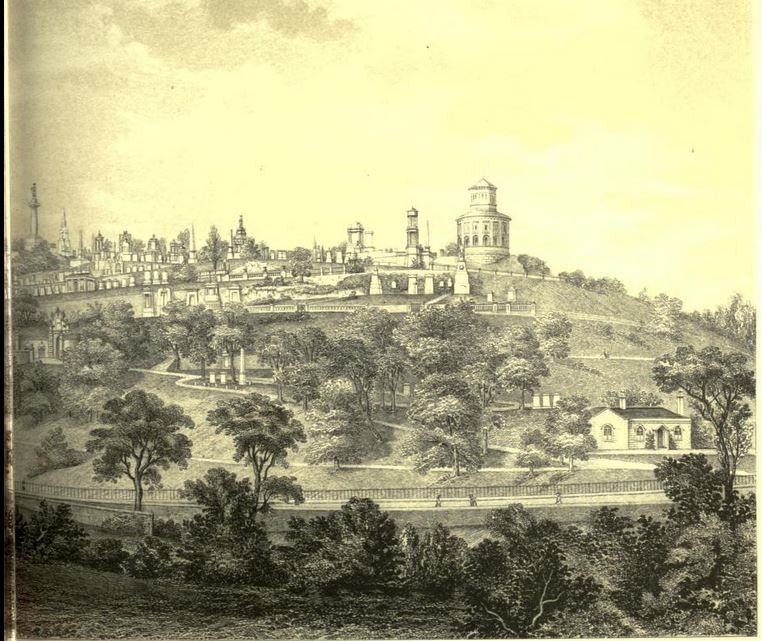
The first two Superintendents either lived in a house provided by the Merchants House or received a housing allowance. Several addresses are recorded for George Milne in the Post Office directories – Ladywell Cottage, Firpark; Molendinar Cottage, Drygate and Westercraigs. John McLeish is known to have moved into Milne’s house when he finally vacated it and he seems to have stayed at Westercraigs for most, if not all, of his time. Neither Milne nor McLeish lived in the present Superintendent’s house which was only built in 1858 ‘upon a spot of vacant ground immediately behind the Barony Church’ according to a report of the Dean of Guild Court. The Merchants House had previously built a house for the Superintendent according to the annual report of 1849 but map evidence confirms this was not on the site of the present house. Further to the question of where the Superintendents lived there are a few mentions of a Necropolis Cottage in Ladywell Street which was occupied by other people. For example Euphemia Wilson, wife of James Fleming died at Necropolis Cottage, Glasgow in 1863 having lived there since at least 1861. In the 1871 census Necropolis Cottage is found at 78 Ladywell Street and William Dowie, a gardener is living there. Maps of the period show a building inside the Necropolis roughly where the present service entrance is at the bottom of Wishart Street and it is likely that this was Necropolis Cottage which occupied for periods by George Milne and was later rented out by the Merchants House.
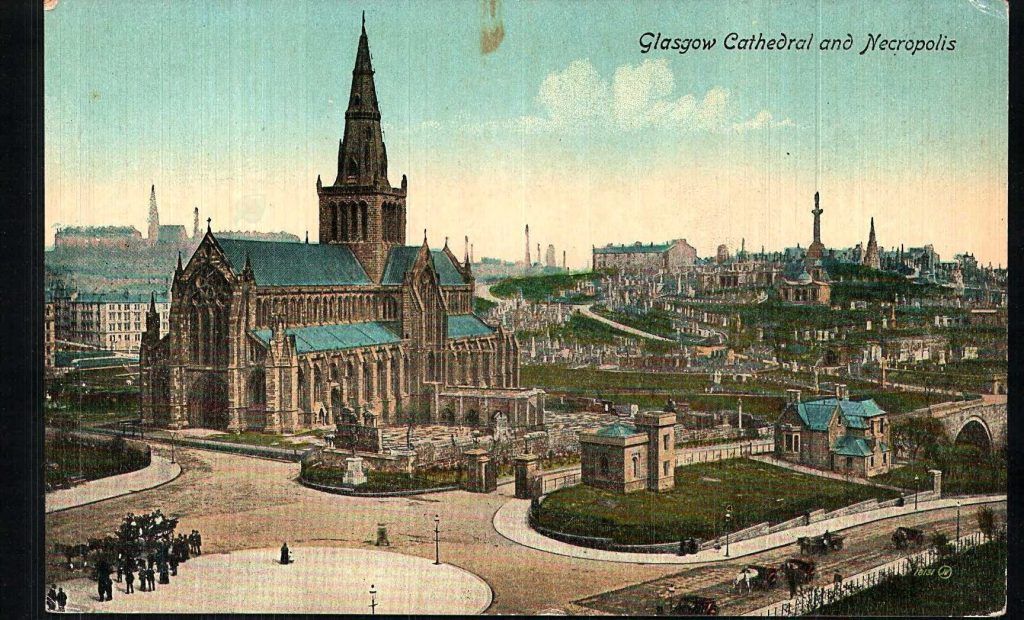
The succeeding Superintendent was Ninian Slight who, together with his son William, held the post for the next four decades. It is possible to recover a little of Ninian’s career before he came to Glasgow in 1853. Born in Roxburghshire about 1795 he spent the 1830s working in Dunbartonshire and raising a family. By 1841 he had moved across the river to Inchinnan and the census of that year is the first indication that he was a gardener. Ten years later he was found at Geilston House, Cardross and it is likely that it was from there that he moved to the Necropolis. By 1851 his son William who succeeded him at the Necropolis was also working as a gardener somewhere in Govan Parish. Ninian died at Necropolis Cottage in October 1867 when he must have been approximately 72 years old. In his death announcement he is described as ‘late superintendent’ which suggests his son William may already have taken over. Once William felt his position to be secure he married an English girl Hannah Penman at Peterborough in 1868. William remained Superintendent for the next twenty-five years but in 1892 he resigned his position in disgrace after he was cited in the divorce petition of Peter Smith against his wife Isabella Thomson in which Smith sought damages from William. By early 1893 William (and his wife) had left Glasgow. They can be traced to Hertfordshire where William described his occupation as a poultry keeper in the 1901 census and gave no occupation in the 1911 census. After that the trail goes cold.
John Knox
We recently received an enquiry from Australia regarding the man on top of the column, or rather his statue. Gordon Ashley is researching statues of Robert Burns and, as Robert Forrest the sculptor of our statue also produced one of Robert Burns, Gordon has been investigating Forrest’s life. He was interested in William Warren who designed the statue but knew virtually nothing about him. I was able to trace Warren in the Glasgow Post office directories between 1816 and 1835, and also found some adverts in the 1820s regarding the classes he offered. By 1826 he was describing himself as ‘Professor of the Practice and Theory of Drawing and Painting’ with his Academy in a building at the corner of George Street and High John Street. There he offered classes in anatomical, figure, natural history and medical drawing. Naturally I checked to see if he was buried in the Necropolis but without any luck.
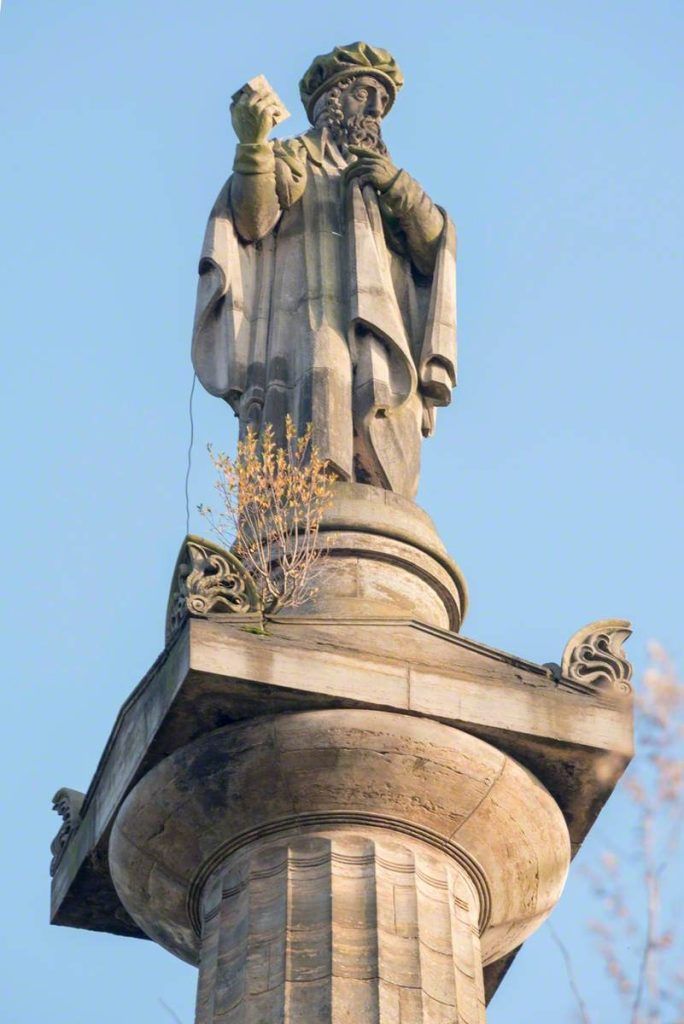
Photo credit Gordon Baird – Art UK (CC BY-NC)
The Selkirk Family
Recently one of the indexers recorded the burial of a still born daughter of R J Selkirk and this led to her researching the eleven burials that took place in lair number 69 in compartment Theta between 1856 and 1881. No stone survived on the lair so she was forced to work from the information in the burial registers which seldom provide details of relationships. Five different surnames were listed for this lair and one problem was trying to link them.
It seems the lair was bought in 1856 by Robert Murdoch, iron master and used once for the burial of a still born infant. It is presumed that Murdoch subsequently sold the lair to Robert John Selkirk before the burial of Sarah Selkirk in 1863. At this point Robert was a young married man who had come to Glasgow from Jedburgh a year or two previously. Although he had trained in a solicitor’s office he mainly made his living as a tea and commission merchant in Glasgow. Between 1863 and 1870 he buried three children, a sister, his mother and his first wife (Margaret Stevenson). Margaret Stevenson’s death is 1867 left Robert with two young children and by 1871 he was employing a housekeeper. Margaret Henderson was a widow a few years younger than Robert with a young son of her own, ages with his children. Unsurprisingly Robert and Margaret subsequently married in 1876. This second marriage only lasted five years as Robert died in 1881 at the early age of forty-eight. He died on 17th June 1881, the day after his sixteen year old stepson William James Henderson was buried in the family grave. Margaret Henderson survived her husband and son by almost forty years but is not buried with him.
Thomas Rees from Cardigan, Wales
In Issue 17 of Grave Matters the death of David Evans, master of the schooner Willima of Cardigan was recorded. In September 1864 another seaman from Cardigan was buried in a common grave in the Necropolis. Many Scottish newspapers picked up the story and the report from the Greenock Telegraph and Clyde Shipping Gazette of Friday 16 September 1864 is typical.
Glasgow—Man Killed at the Harbour. —About ten o’clock yesterday morning, while Thomas Rees, mate of the schooner Schilizzi, of Cardigan, lying at [Berth 63] the South Quay, Glasgow, was standing on the deck of said vessel, with his elbow resting upon the bulwark, a plank, which was extending from the quay to the boom of the schooner Commerce of Belfast, lying outside of the Schilizzi and across the latter, fell upon Rees’ head, killing him on the spot. The plank was about three and a-half feet above the deceased, and slipped in consequence of the rising tide. Deceased was a native of Wales, fifty-three years of age, and has left a widow and four of a family.
In the 1860s the ship was captained by John Rees which may suggest a family connection between the two men.
Allenby feedback
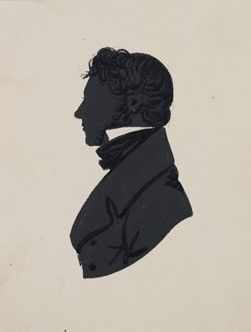
Issue 8 of Grave Matters contained details of William Everette Allenby a 56 year old artist who was buried in common ground in May 1847. Sean Paton recently got in touch and has filled in Allenby’s biography considerably. It turns out Allenby was a minor portrait artist and sillhouettist who worked in London in the 1820s and 1830s. By the late 1830s competition from early photography was beginning to affect his business. According to his adverts Allenby left London and focussed his efforts in the provinces and later Ireland. In the early 1840s he returned from Ireland and made his way to Scotland where adverts have tracked his travels to Edinburgh, Perth, Dundee and finally Glasgow where he died of typhus fever. He was married at least twice though there is a lack of documentary proof for the second marriage and he fathered at least five children.
James Hopkins
Recently several drownings have turned up in the pages of the burial registers. Some have been noticed in the newspapers, others haven’t. James Hopkins’ death was widely reported and, unusually, the reports differed somewhat in the depth of detail. The entry in the burial register recorded the basic details that the body of James Hopkins was found floating in Port Eglinton Canal Basin. His body was found at the coal crane about 6am on Tuesday 11 October 1864 by Robert M’Nicol, case-maker of 62 Surrey Place and taken to the Southern Police Office. He was estimated to be between fifty and sixty years of age, was 5 feet 7 inches tall and had grey hair and whiskers. He had been dressed in a black cloth dress coat, brown trousers and half Wellington boots. Two pawn tickets with the name James Hopkins were found in a pocket along with a pair of spectacles and a hatter’s measuring stick with ‘Andrew Fulton, hatter, Argyle Street’ written on it. The body was thus identified as that of James Hopkins of 56 Bell Street. Hopkins had left home the previous night saying he was going to see someone at the Central Police Office.
The death of Robert Black whose body was found in the Harbour at Stobcross Wharf and who was buried on 21 October 1864 passed unnoticed in the newspapers.
Mary Bruce nee Ferguson
On 2 November 1864, thirty-four year old Mary Bruce the wife of Robert Bruce, chair-maker went missing from her home at 119 Main Street, Gorbals. Her body was found in the river Clyde near Rose Street, Hutchesontown on 18 November and she was buried in a common grave two days later. The cause of her death was drowning with the additional note ‘suicidal’.
Patients of Glasgow Royal Infirmary
At present we know of 156 patients from the Royal Infirmary buried in the Necropolis between 1855 and 1864. These persons are specifically noted as being ‘patients’ but there are others like nurses and domestics from the Royal Infirmary also buried here. The only address given for these individuals is the Royal Infirmary so without a home address it is impossible to identify them in the 1861 census. The majority of them are buried in common ground so it seems a reasonable assumption that most came from the poorer areas of Glasgow. It may even be that no family member came forward to claim the body and arrange for its burial and the Infirmary authorities had to make the arrangements instead, but the burial registers do not provide evidence of this. With so little information provided by the burial registers for these people (often no age) it can be problematic identifying the correct death in the civil records.
Rev William Cowan
In 1855 the building in Blackfriars Street, Glasgow formerly occupied by Rev John Graham and his congregation before their amalgamation with the Duke Street congregation was re-opened as a mission church under the care of Regent Place United Presbyterian Church. Rev William Cowan of Buckhaven U P Church, Fife accepted the call and a year after arriving in Glasgow to begin work as missionary he was inducted into his new charge. He served for eight years until his early death, at the age of 47, in August 1863 and was buried in the Necropolis on 19th August. William Cowan was a native of Selkirk and began his ministry at Buckhaven U P Church where he was ordained in 1846. Later that year he married Ann Biggar who died in 1850/51 after the birth of two children. William remarried in 1852 but Eliza Hislop died three years later after the birth of three children. William’s third wife was Isabella M Boucher and, like her predecessors, she died young after only three years of marriage in 1860. Isabella and two of her infant sons are also buried in the grave in the Necropolis. A son of the first marriage Robert J R Cowan followed his father into the Church being minister of Hallside U P Church, Cambuslang from 1877 until his sudden death, at the age of fifty-two in 1903.
In 1872 the congregation of Blackfriars U P Church moved to a new building in Townhead on the corner of Taylor Street and Albert Street.
How time flies
Spring 2022 marks 40 years since I started recording gravestones in the Necropolis with paper and pencil for my own amusement. I was very green and naïve and had no idea what this little hobby would lead to …………….
New Profiles
The newest profile on our website is one for John MacDiarmid and family.
******************************
Anyone who would like to help indexing the Burial Registers is very welcome to join us by contacting me at research@glasgownecropolis.org