James & Robert Lillie
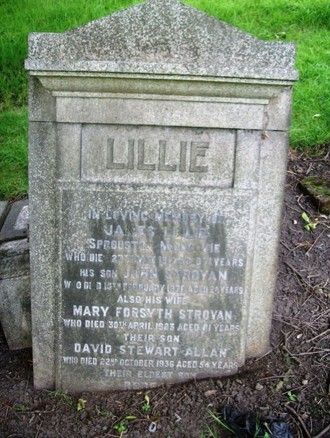
by Stephanie Brady
James Lillie
In the Glasgow Necropolis in Compartment Theta Lair 294 lie six members of the Lillie family: James Lillie, his wife Mary Forsyth Stroyan, and four of their children – John, David, Robert and Jane.
James Lillie was born in Humbie, Haddington 11th July 1841 to Robert Lillie, a schoolmaster from Sprouston near Kelso and Agnes Storrie. He grew up in North Leith & Linlithgow, where his father was schoolmaster. By the age of 19 he had moved away from his family to take up a post as a bank teller and accountant for the British Linen Bank in Carluke. On the 9th July 1864, the Hamilton Advertiser, reports that on the 30th June a supper had been held in his honour at the Commercial Inn at Carluke on the occasion of his promotion to the bank’s head office in Edinburgh. It was noted he was presented with a portable writing desk as “a token of esteem and a memorial of endeared friendship hoping that in his new sphere he would continue to command the same respect which he had attained during a long term of diligent application to business and growing worth in Carluke”.
On the 27th August 1866 he married Mary Forsyth Stroyan, from Glenluce, at Stane near Calderhead and together they raised nine children. The sons of James and Mary followed their father into the financial world becoming clerks, agents and managers.
In 1902, the Lillie family moved to Milngavie, where they lived in a house named Sprouston, after the Borders village near Kelso where the Lillie family’s ancestors had lived.
James passed away suddenly, of a cerebral haemorrhage, while playing golf alone at Milngavie Golf Course on the 27th May 1912 and was buried on the 29th May at the Necropolis with wife Mary following eleven years later on 30th April 1923.
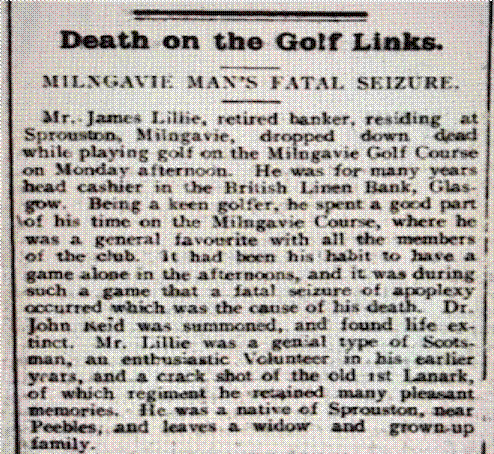
Kirkintilloch Herald – 29 May 1912
Robert Lillie
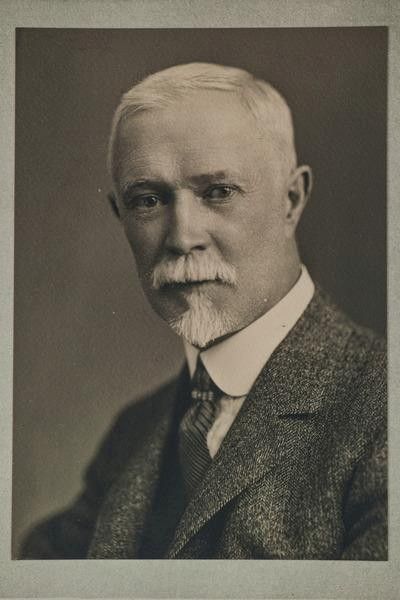
Robert Lillie was born in Edinburgh on 29 June 1867, the eldest of nine children born to James and Mary Lillie. His working life began at an unusually young age. At only 15, he entered the banking profession, following the career path of his father. He became a clerk at the Saint George’s Cross branch of the British Linen Bank in Glasgow, beginning a career in banking that would span 43 years.
Lillie’s progress within the bank was marked by a number of promotions. In 1902, when he transferred from the Pollokshaws branch to take up the position of Agent at the Ibrox branch, local customers presented him with a “bureau and bookcase as an expression of their appreciation of his promotion”, as reported by the Berwickshire News and General Advertiser .
Although banking provided Robert with his principal occupation and livelihood, art became a major part of his life. He gained qualifications that enabled him to teach art and later to work as an art master teaching evening classes through the Glasgow School Board, including classes at Woodside School and Napiershall School.
Robert continued to work in banking while developing his own artistic practice. He worked across several media, including oil painting, watercolour and etching. Landscape was a particular focus of his work, although his output also included portraits and still-life subjects. His artistic activities were not simply a private pastime, he exhibited his work extensively during his lifetime.
His paintings and prints appeared in exhibitions associated with many Scottish and British art organisations. These included the Royal Glasgow Institute of the Fine Arts, the Royal Scottish Academy, the Royal Academy in London, the Walker Art Gallery in Liverpool, the Paisley Art Institute, Stirling Fine Art Association, Greenock Art Club, Society of Artist Printmakers and Milngavie Art Club. He also exhibited with the Royal Institute of Painters in Water Colours and the Royal Institute of Oil Painters.
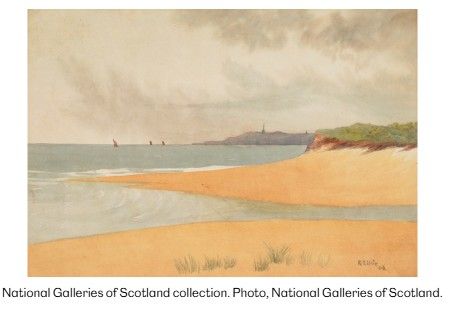
One example of his work, the watercolour Beach Scene, completed in 1906, is now held in the collection of the Scottish National Gallery of Modern Art.
Despite the extent of his artistic activity, Robert did not depend upon painting as his principal source of income. Banking remained his main profession for most of his working life but in 1925, after 43 years with the British Linen Bank, Robert left the profession at the age of 58.
His retirement allowed him to devote himself more fully to his artistic work and to concentrate on developing his painting and etching.
His interest in art eventually developed into a much larger ambition. In 1938, Robert prepared his will and specified that the residue of his estate should be used to establish an art gallery in Milngavie. The proposed gift was intended to cover both the construction and furnishing of the gallery, while his own artworks were also to be included in the bequest.
Robert died at Sprouston his home in Milngavie on 26 April 1949, aged 81. His death certificate recorded senile myocardial degeneration as the cause of death. His intended gift, however, could not take effect immediately. The terms of his will were subject to a life rent, meaning that the estate could not be applied to the proposed project until the relevant life interest had ended. This did not occur until the death of his youngest sister, Jane, in 1959.
Once the provisions of the will could be implemented, the scale of Robert’s bequest became clear. Milngavie Town Council, together with Robert’s executors, sought expert advice on whether the proposed gift should be accepted. Dr Tom Honeyman, formerly Director of Glasgow Art Gallery, was appointed to assess the feasibility of the bequest. His consideration covered both Robert’s collection of artworks and the financial provision he had made for the construction of a gallery, which amounted to approximately £23,000.
Following this assessment, Milngavie Town Council formally accepted Robert’s bequest in January 1960. The gift ultimately provided the foundation for the creation of a permanent public art gallery in the town and ensured that Robert’s own collection would remain part of his legacy.
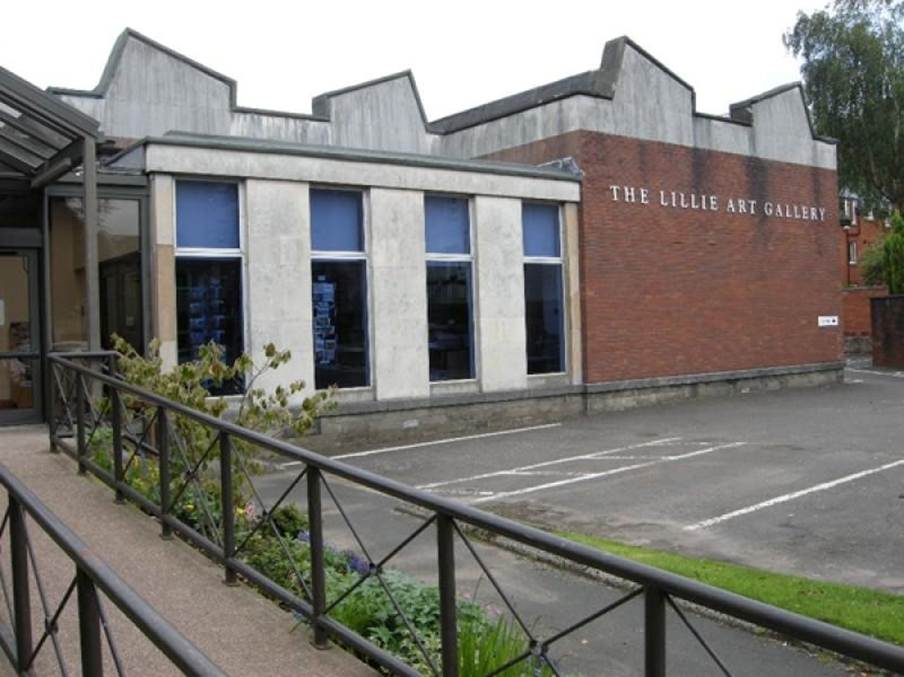
The new Lillie Art Gallery was designed by architect Michael Bowley, who also designed the neighbouring Milngavie Town Hall. The two buildings were constructed as part of the same contract, linking the gallery physically and architecturally with the civic centre of the town. Both buildings were formally opened on 31 March 1962 and remain open to the public to this day.
Examples of some of Robert Lillie’s artwork below include portraits of his mother Mary nee Stroyan and sister Jane Lillie.
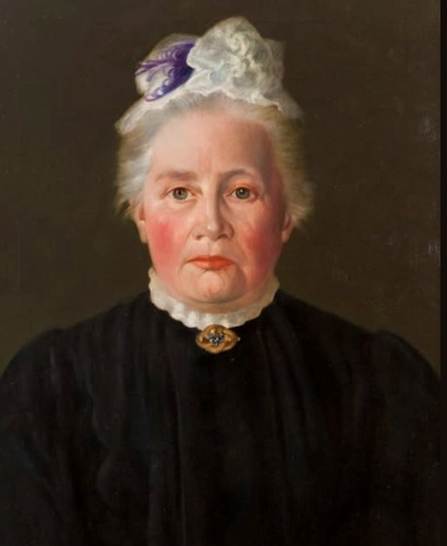
Portrait of my mother – courtesy of East Dunbartonshire Council
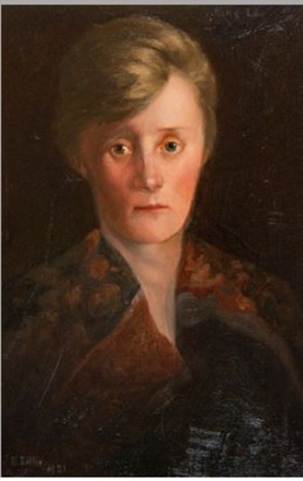
Portrait of my sister Jane – courtesy of East Dunbartonshire Council
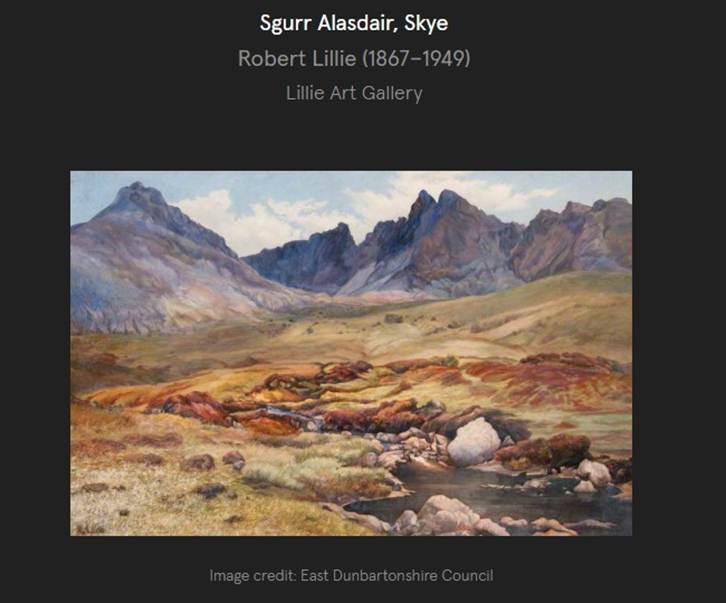
Sgurr Alasdair, Skye – Courtesy of East Dunbartonshire Council
Images courtesy of artuk.org, – Lillie, Robert, 1867–1949 | Art UK
National Galleries of Scotland – Beach Scene by Robert Lillie | National Galleries of Scotland
East Dunbartonshire Council