Compiled by Morag T Fyfe
The indexers are still working hard and the number of records indexed in the last three months is as follows –
| April 2021 | 530 |
| May 2021 | 430 |
| June 2021 | 442 |
Our database of persons buried or commemorated in the Necropolis now stands at 38958 entries at the end of June 2021. It is worth reflecting that 13800 (35%) of these entries represent persons buried in common ground with no grave marker.
Definitions
“Expressions such as burial ground, cemetery, graveyard etc. are often interchangeable, yet there are subtle differences worth noting. A burial ground is just as it states, a site used primarily for interment and it can take on many guises, be it in a field, a cave, up a tree or even in water. Such sites usually have a sacred element attached to them, but they are not traditionally associated with regular religious worship. Naturally, there are exceptions to the rule, one example being the graveyards/churchyards found in the Highlands of Scotland that are often referred to as burial grounds. Graveyards and churchyards are almost always associated with a church, are located in the church environs and are places where the community congregates regularly for prayers. Cemeteries, on the other hand, are not defined as sites of religious worship and are for interment only. […]. The Victorian garden cemeteries of the nineteenth century always have a church/chapel sited within the landscape [in England], although it is important to stress that these were used for funerary services only.”
Burying the dead: an archaeological history of burial grounds, graveyards and cemeteries by Lorraine Evans. 2020. p xii
Common graves in the Necropolis
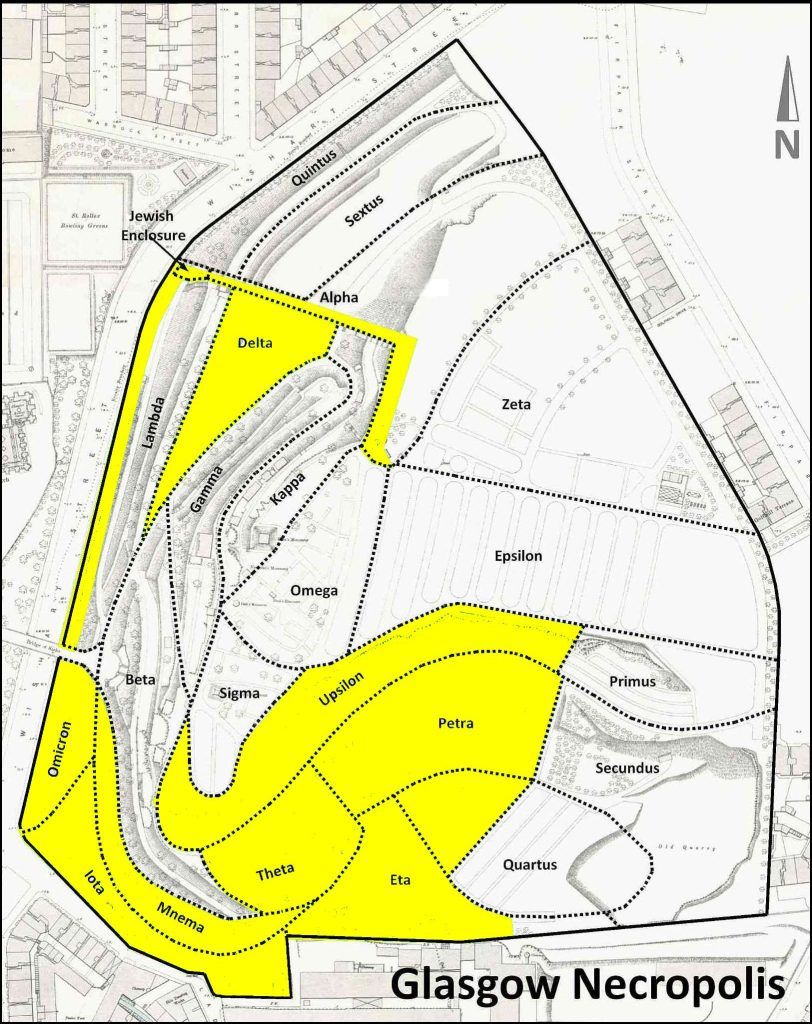
Between 1833 and 1840 thirteen compartments within the Necropolis were made available for burials. Seven of these had areas set aside for common graves (Alpha, Delta, Eta, Iota, Mnema, Theta and Upsilon) while the topography of the remainder was generally unsuitable for such graves. In the 1850s and 1860s two further compartments (Omicron and Petra) accommodated common graves but none are found in compartments laid out during the cemetery’s later expansions which happened after common graves were phased out in 1872.The plan of the Necropolis shows that, with the exception of Alpha and Delta, all the compartments with common graves are to be found in the quarry to the south and its approaches.
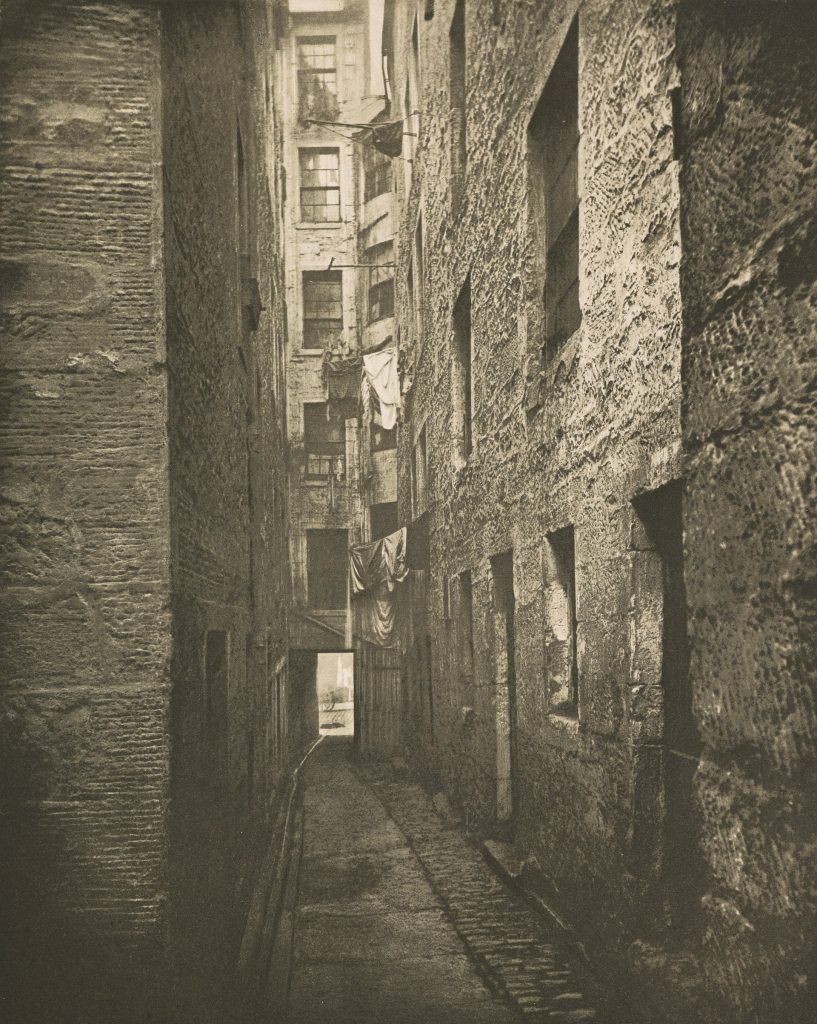
For the majority of people buried in common graves the only information we have is their name, age and address, and sometimes not all of these, which makes it is very difficult to find out more about them. Many of them lived in the closes and wynds that led off the High Street, Gallowgate, Trongate and Saltmarket and Thomas Annan’s photographs of the 1870s give a flavour of these places. For example Castlepen’s Close at 136-148 High Street (below) was home to twenty four children and five adults buried in common graves between 1853 and 1861.
Occasionally there is something distinctive in the burial entry which allows a little more to be found out about the person and some recent examples are given in this issue of Grave Matters.
James Adams
James Adams was buried in a common grave on 11 March 1861. The burial register records his place of death as ‘The Brigantine Tanner of Brookhaven of New York lying in Glasgow Harbour, South Side.’ This information was enough to identify a short newspaper article.
SUDDEN DEATH ON BOARD SHIP – On Sunday evening, about ten o’clock, a seaman named James Adams, employed on board the brigantine Tanner, of Brookhaven, became suddenly unwell, and dropped upon the deck. He was immediately carried to the cabin, and Dr M’Farlane, Dundas Street, Kingston, who was sent for, was speedily in attendance. The poor man never rallied, however, and expired yesterday morning shortly after twelve o’clock. Deceased, who was a native of Dublin, was 50 years of age. Apoplexy is supposed to have been the cause of death.
Glasgow Herald 12 March 1861
Forty years later the Tanner went aground near Port Townsend, Washington State, USA.
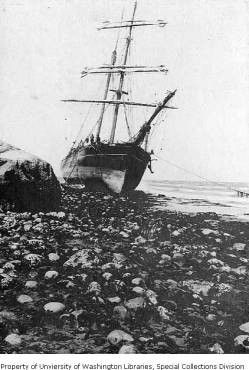
She survived this grounding but in 1905 her crew abandoned her when she became waterlogged. They were picked up by the British steamer Queen City and taken to Victoria, British Columbia while the abandoned hulk was later towed into Port Townsend.
George Farrow or George Yarrow or George Palmer?
In November 1860 several Scottish newspapers picked up the story of a seaman who drowned in Glasgow Harbour. The fullest account can be found in the weekly Scottish Banner for Saturday 24 November 1860.
Painful Death by Drowning. — Late on Saturday night, George Farrow, mate of the schooner Eclipse, of Yarmouth, lying at No. 82, North Side of the Harbour, was going on board of his vessel considerably the worse of liquor, and was in the act of placing his foot upon a ladder extending between the rigging and the quay, when be stumbled or slipped his footing, and fell into the water from a height of fifteen feet. In his descent he struck against the gunwale of the vessel, sustaining severe injuries on the head. A shipmate who was accompanying Farrow, at once gave the alarm, when Sergeant M’Lane, the constable on the beat, made every effort to rescue the drowning man; but it being low water at the time, and the schooner aground close to the quay, the drowning man became jammed between the vessel and the wall, and twenty minutes elapsed before his body was secured and brought to the Clyde Police Office, where Dr. Milner used every appliance (sic) to restore animation, but without success. The deceased was about 28 years of age, and was a native of Wisbeach, Cambridgeshire, England.
In some newspaper reports the man is named as George Farrow and in others as George Yarrow. The details in the above report match those of a man buried in a common grave in the Necropolis on 20 November 1860; this man was 28 years old and came from the schooner Eclipse. His death had been registered the previous day by John Blackless, master of the Eclipse sailing vessel. The only problem is that the man named by the newspapers as George Farrow/Yarrow was buried, and his death registered, as George Palmer.
James Nelson/Neilson
James Nelson was recorded as having “died in Great Hamilton St from being run over with a cart” when he was buried in a common grave on 24 August 1861. A report in the Glasgow Herald of 24 August 1861 gives more information.
MELANCHOLY ACCIDENT. – On Thursday evening, a carter, named James Neilson, in the employment of Mr. John Knox, Parliamentary Road, was suddenly deprived of life in Great Hamilton Street. Neilson, it appears, was somewhat affected with liquor, and while driving a horse and cart along the street he fell off the cart, which was loaded with three barrels of oil, and one of the wheels passed over his head, causing instantaneous death. Deceased was about forty years of age, unmarried, and resided in Bell Street.
Skating on Loch Lomond Victorian style
The burial of Thomas R Brown is recorded in the burial registers under 18 February 1860 with minimal details and would have gone unnoticed if it had not been for the information on the surviving gravestone. This stands in compartment Sigma and records the death of Thomas Russell Brown, son of Samuel R Brown “who was drowned whilst skating on Loch Lomond 15th February 1860 his 20th Birth Day”.
The following report of the accident is one of the more succinct. It originally occurred in the Glasgow Citizen and was picked up by the Inverness Courier on Thursday 01 March 1860.
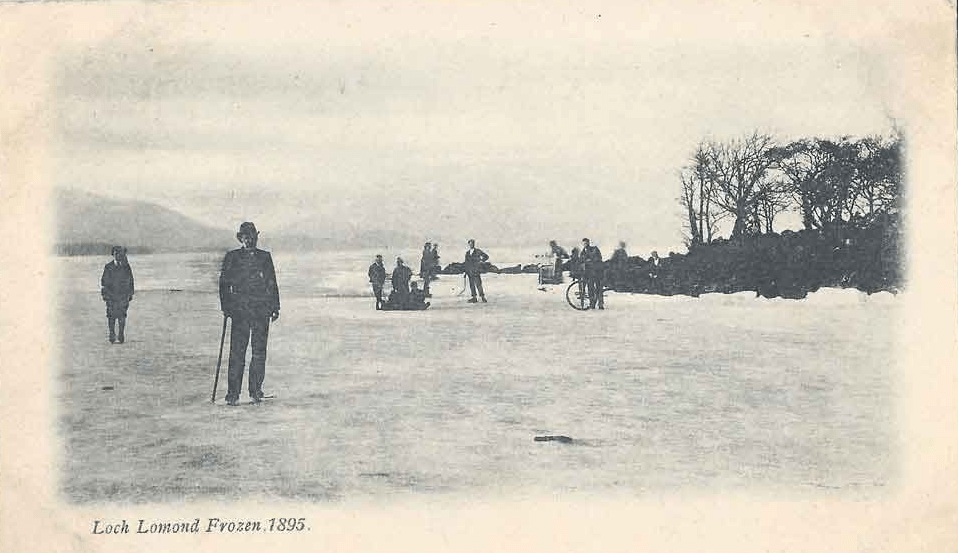
Melancholy Accident on Loch-Lomond It is with feelings of intense sorrow that we have to record an accident of peculiarly heart-rending character, which occurred on the 15th ultimo, on Loch-Lomond, resulting in the death of two gentlemen, one of whom belongs to this city, and the other to Partick. Owing to the keenness of the frost in the beginning of the week, Loch- Lomond became frozen over, a thing which happens only at long intervals, but which, when it does occur, presents great attractions to those who delight in the exhilarating sport of skating. On this occasion, when it became known that the loch was sheeted with splendid ice, and altogether secure, crowds of people flocked to the scene, eager to enjoy themselves, among whom were a number of gentlemen from Glasgow. When enjoyment was at its highest, great consternation was caused by the report that the ice had given way beneath two skaters opposite Cameron House. The report only turned out too correct. Two young gentlemen were seen to sink, and the crowds around were unable to render any assistance. The ice for a considerable space round the place where the accident occurred was so thin as to render it impossible for any one to approach it. One gentleman, Mr Macarthur, a young man belonging to Partick, in the employment of Messrs Auld & Buchanan, made most heroic efforts to save the unfortunate gentlemen, and had a very narrow escape with his own life. The ice gave way beneath him, and he had to be dragged out with ropes. Life-buoys were brought from the steamer a mile or two distant, and boats from considerable distances were carried over the ice, but by that time all hope of rendering succour to the two poor gentlemen was at an end. The name of one of the young men thus lost is Mr James Stewart, belonging to Partick, in the employment of Messrs George Younger & Co., Exchange Square. The other gentleman is the son of Mr Samuel R. Brown, sewed muslin manufacturer, Queen Street, Glasgow. The part of the ice where the accident occurred is believed to have been the track of the steamer when it last ascended the loch on Monday, and was consequently much weaker than that on the other parts. The body of poor Brown was recovered on Thursday, at one o’clock, after a search of three hours. In all quarters, we may add, the keenest sympathy is expressed for the bereaved families.
Reading the newspaper reports it is clear that although it was mid week a considerable number of people had taken advantage of a relatively new train service direct from Glasgow to Balloch to visit Loch Lomond on a lovely sunny winter’s day. It is also clear that the skaters did not necessarily stay close to the shore on the thicker ice but ventured out into the middle of the loch near Inchmurrin.
Commonwealth War Graves
Most readers will be familiar with photographs of CWGC gravestones, either as regular rows in cemeteries or individual ones scattered through a cemetery. There are twenty CWGC gravestones scattered through the Necropolis (sixteen WW1 and four WW2) though many more men who lost their lives can be found commemorated on family stones.
During the various lockdowns visiting local cemeteries here in Leeds where I am based has provided a number of pleasant quiet walks. Spotting CWGC stones always gives some purpose to the visits and it has become apparent that some stones have been personalised by the surviving family.
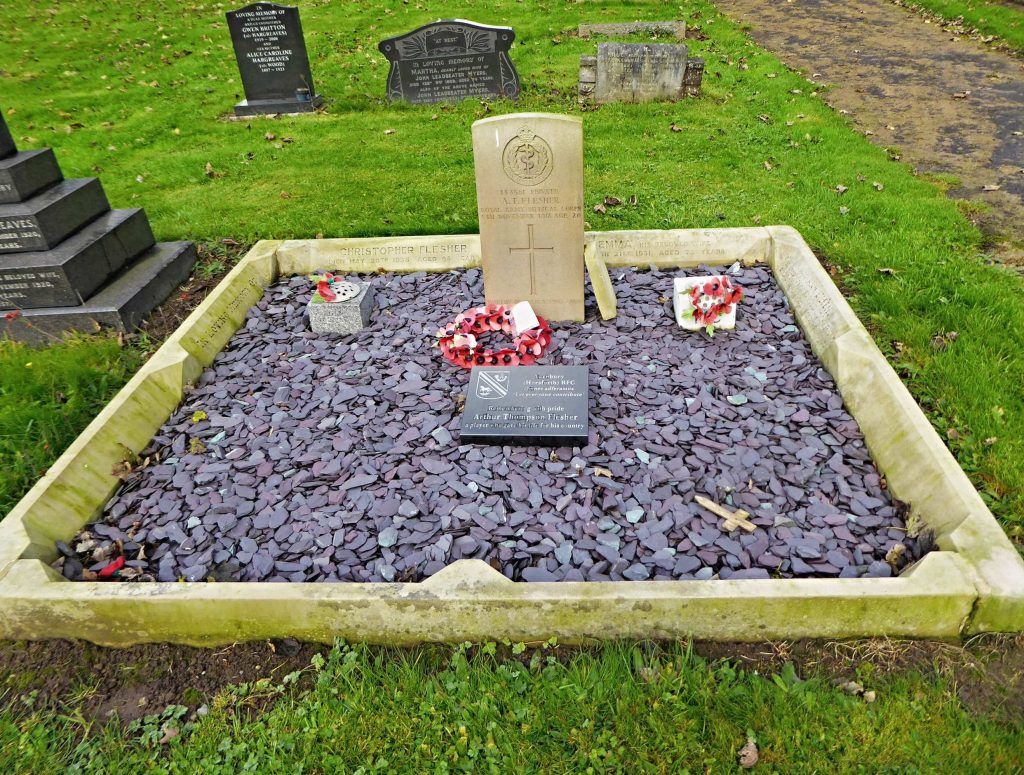
In Yeadon cemetery is the grave of Private A T Flesher, RAMC who died 5th November 1918 age 20. The grave is surrounded by a stone kerb on which other members of the family are commemorated. I do not know whether his parents are buried there, their ashes interred or simply commemorated. There are variations on this theme; sometimes the grave is surrounded by a wooden kerb and the interior filled with pebbles or there may be a simple stone inserted in the ground in front of the gravestone to commemorate other members of the family.
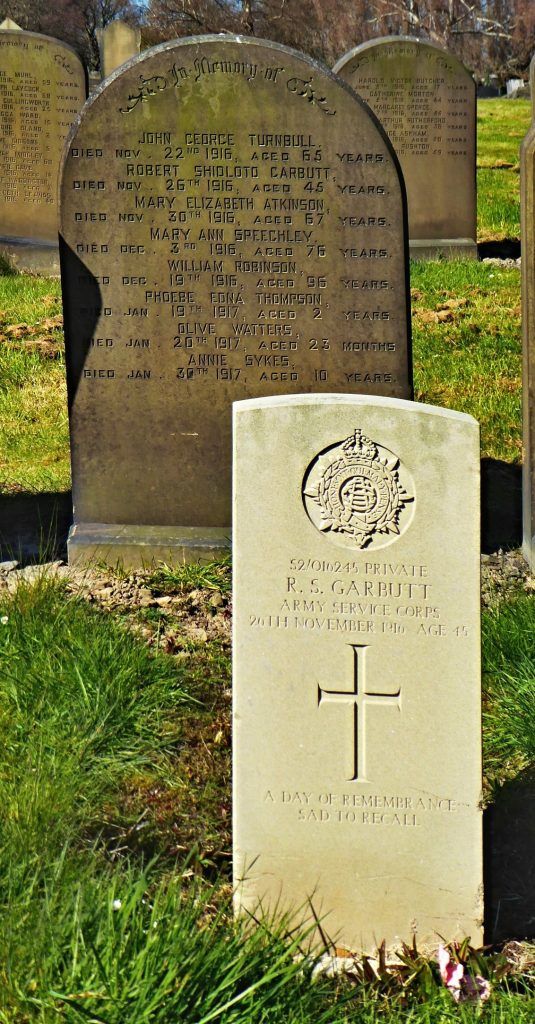
A feature of some Leeds cemeteries is their guinea graves where the family of the deceased paid a guinea (£1 10p nowadays) to have their relative’s name inscribed on a gravestone placed on what was, to all intents and purposes, a common grave. Some men buried in these graves turned out to be entitled to a CWGC gravestone and, rather oddly, their stones are placed on the grave, in front of the original stone. In this example Robert Shioloto Garbutt’s name is the second name on the headstone and his CWGC stone is in the foreground. Incidentally CWGC records give his middle name as Shilito but the crisp carving on the main stone leaves no doubt that, there, his middle name is spelled Shioloto.
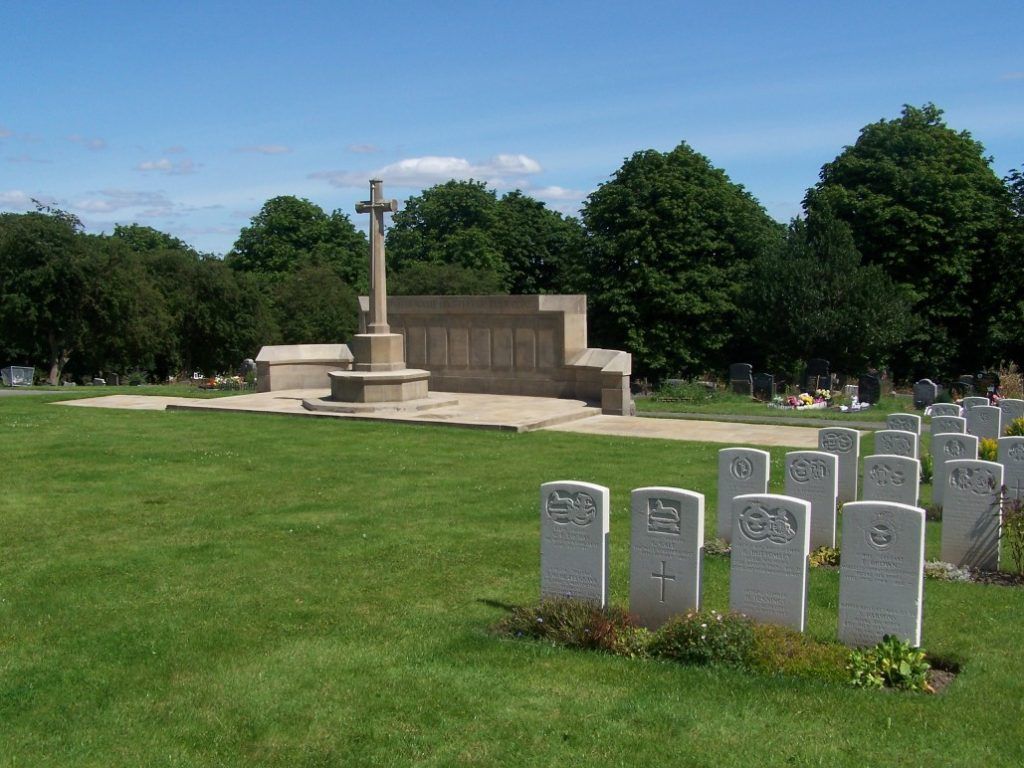
R S Garbutt is buried in Harehills Cemetery which has a small official CWGC plot. A photograph of the plot (below) suggests there is plenty of room for new graves but this is misleading. The open area on the left hand side of the photograph actually contains graves, each marked by a small numbered metal plaque. To find out who is buried in each grave one has to consult the list of names on the wall behind the cross.
New Profiles
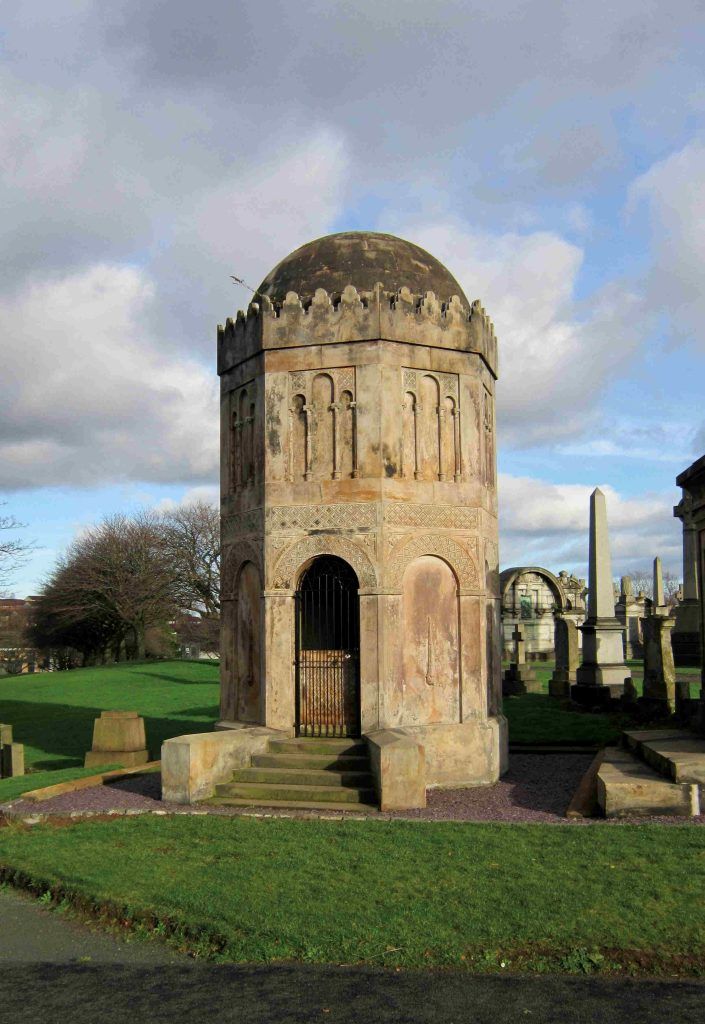
A profile has now been added to the web site for William Rae Wilson of the Moorish Mausoleum (below).
Other new profiles are of Helen Rough and her sister and brother in law James Bell and Jane Rough. Helen Rough founded the Glasgow and West of Scotland Co-operation for Trained Nurses in 1892. Her brother in law, James Bell, was English master at the Glasgow Academy and then the High School of Glasgow.
Glasgow Necropolis Afterlives
Readers should be aware that the second edition of Ruth Johnston’s Afterlives is available from the Friends for £12 (including UK P & P). There is no need to spend £500 (five hundred pounds) at the Oxfam online bookshop for a copy!
******************************
Anyone who would like to help indexing the Burial Registers is very welcome to join us by contacting me at research@glasgownecropolis.org